BOOKS
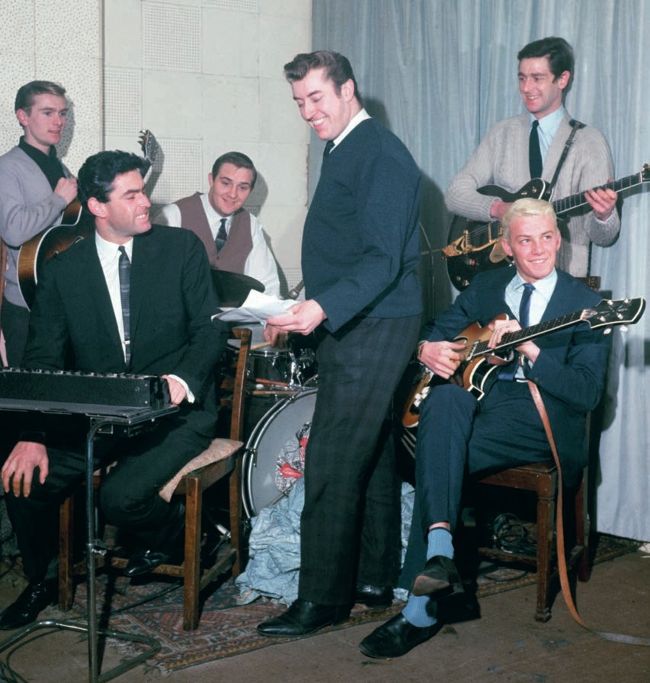
Outta space: Joe Meek with The Tornados at his Holloway Road studio, 1962
KEYSTONE/HULTON ARCHIVE/GETTY IMAGES
D
ARRYL W Bullock’s biography of Joe Meek is called Love And Fury, but there is more fury than love. The legacy is something else, and it is well served by Bullock’s encyclopaedic approach to the recording career of the producer, whose fame rests – with fluctuating intensity – on his innovative approach to sound, the eerie charm of the 1962 instrumental “Telstar”, and the fact that Meek murdered his landlady Violet Shenton and shot himself dead on February 3, 1967.
Can you praise Joe Meek’s approach to reverb and ignore the shooting of Mrs Shenton? Does “Telstar” still sound as innocent and otherworldly if you don’t? When Margaret Thatcher cited “Telstar” as “a lovely song” in a 1987 Smash Hits interview with Tom Hibbert, she was most likely harking back to the tune’s optimistic evocation of a scientific age, but it’s hard to imagine a politician making the same choice in these more censorious times. Unfair, maybe. But consider the “explosive” phone call in January 1964, between Phil Spector and Joe Meek. It was Meek who did the exploding. “Don’t you phone me up…” he told Spector. “You’re pinching my ideas, listening to my records and stealing my sounds.”