R.E.M.
MAPS & LEGENDS
Forty years ago,R.E.M.travelled to London to make their third album,Fables Of The Reconstruction. A cryptic record, rooted in the mythology, history and geography of the rural American South, it arrived in difficult circumstances – yet it played a critical role in the band’s transformation from lively and mysterious post-punk outfit to concerned and influential rock band.In candid and revelatory interviews,MICHAEL STIPE,PETER BUCK and MIKE MILLS shine new light on their early years. “By the time we got to Fables, we were all crazy, to one degree or another,” hears Michael Bonner
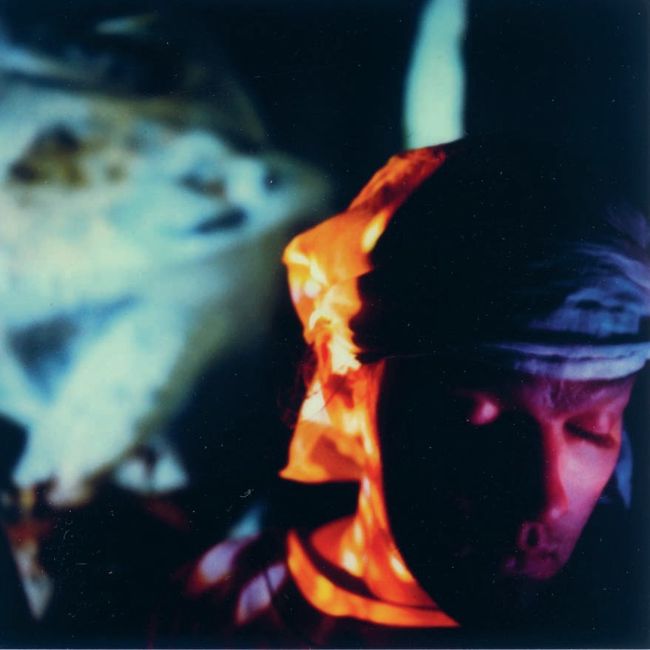
Polaroids by MICHAEL STIPE
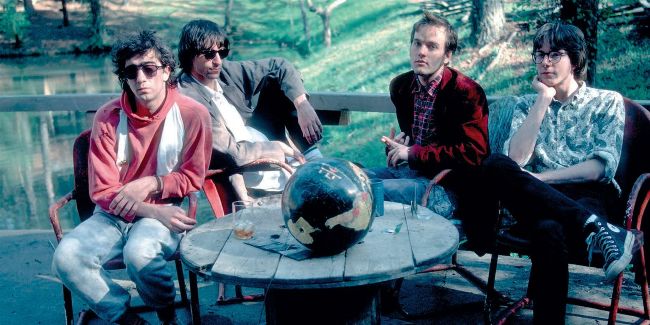
Fabled four: (c/wise from top left) Michael Stipe, Peter Buck, Mike Mills, Bill Berry, 1985
PLUSFABLESLIVE!
Michael Shannon and Jason Narducy on touringFables…and reuniting R.E.M.: “They’re canonical, like The Beatles or Dylan.”
Home and away: R.E.M. in Athens, Georgia, 1985; (inset) Livingston Studios, Wood Green, north London
ED COLVER; SHANGARA SINGH/ALAMY STOCK PHOTO
WALK down Mayes Road, past the row of Victorian terraced houses, turn right just before Iceland, and you’ll eventually arrive at a white-fronted building with a gable roof, set back from the pavement. Once the site of St John’s Church Hall, this has been Wood Green’s Livingston Studios since 1980: a music-industry outpost on the fringes of north London.
In early 1985, Joe Boyd – the famed producer who had recorded mesmerising albums by Fairport Convention, Sandy Denny, John Martyn and Nick Drake – was hard at work in Livingston’s Studio 1 with a young band from Athens, Georgia, in London to record their third album in as many years. By their own admission, it was an intense and lonely time for R.E.M. Tired, homesick, skint and malnourished, beset by miserable weather and working to a tight deadline, these pressures manifested themselves in unusual ways during the album sessions.
“At one point, Joe asked me my opinion of how something sounded,” says Michael Stipe today. “He’s probably still in therapy over it – but I said it sounded like ‘a large turnip in a metal cage up against a ceramic shower wall’. You know, when I hear music, I see things. So I wasn’t being a little 25-year-old shithead. I was being as honest as I could! But I look back on it and I’m horrified. I still remember the look on Joe’s face. ‘Oh, my God. Where do I go with that?’”
“We’d been on the road for five years solid,”says Peter Buck. “We went over to London. No money, no way to get around. I hate to say it was ‘hard’, because any job on Earth is harder than being a musician, but it wasn’t easy. We were all stressed; some of us weren’t talking to each other. We were doing really long days in the studio trying to come up with something. It was a tension-filled time.”
“We were committed to doing the best job we possibly could, despite whatever circumstances there were, so we forged on,” says Mike Mills. “There’s a lot of fraught emotion that manifests itself in the sound of this record. It’s a combination of the type of studio we were in and the various states we were in.”
“THERE’S A LOT OF FRAUGHT EMOTION THAT MANIFESTS ITSELF IN THAT RECORD”
MIKE MILLS
Fables Of The Reconstruction, the record they made at Livingston Studios, is a complex album from a band already committed to oblique strategies. Full of shadow and depth, it contained some of R.E.M.’s most gorgeous and uplifting music. The songs delivered emotional heft even while they remained coded and mysterious. Building on their powerful, euphoric live shows, the album proposed a new kind of folk-rock. While bound to its predecessors Murmur and Reckoning, it anticipated the radical shift of their next album, Lifes Rich Pageant. Although recorded in north London, the end result evoked the storytelling traditions of the American South. Buck describes Fables… as “kind of magical”, while for Mills it is, perhaps more practically, “the closing of our initial, three-record chapter”. For Stipe, it “was a very difficult record for us to make, but I’m proud of it now”.
Recently, the album has been brought back into focus by actor Michael Shannon and guitarist Jason Narducy’s 40th anniversary Fables… tour. Such was Stipe, Buck, Mills and Bill Berry’s enthusiasm for Shannon and Narducy’s work that when the tour hit Athens’ 40 Watt Club on February 27, all four members took the stage for “Petty Persuasion”. Following last June’s reunion at the Songwriters Hall Of Fame, this was only the second time the original quartet has played together in public since Berry left the band in 2007. “Seeing the Fables… tour these last couple of weeks, it just threw me,” says Buck. “All of a sudden, I was right back in 1985 – and it was really intense!”
Now, with memories unearthed after decades in hibernation, Stipe, Buck and Mills, along with friends and associates, relive the period when they transitioned from a lively and mysterious post-punk outfit into a concerned and influential rock band. It is characterised as much by emotional crisis, questionable diets and unusual lodgings as it is by the music they made and the curious journey they took from Athens, Georgia to Wood Green, north London to make it.
“The job of R.E.M., as we saw it then, and to the last chord that we ever performed together, was to not repeat ourselves,” says Michael Stipe. “We didn’t want to be one of those bands that found a song and just did the same thing over and over and over again. So there were a lot of experiments, most of which kind of worked, some of which didn’t. But that’s OK. I think that shows the earnestness, the realness and the vulnerability of what we were trying to do.”
F
OR a resourceful young band, the maps and legends of the South offered plenty of conceptual potential. Here were railroads, small towns and colourful locals – rewarding detours in a landscape both physical and allegorical.
“In the rural South, people kept their history alive through storytelling,” says Mike Mills. “Knowing who begat who, as it were, why your relatives were the strange way they were and why people lived in the houses they did kept the truth alive. I say ‘truth’, not as in literal truth, but the truth of how things are, how things had been and why things are the way they are today.”