SUBSCRIBER SPOTLIGHT
Share your writing success stories. If you subscribe to Writing Magazine and would like to feature here, email Tina Jackson, tjackson@warnersgroup.co.uk
A deeper perspective
‘In 2011 I left my job as a part-time learning support assistant at a local college to become a full-time housewife,’ writes subscriber KA Hitchens.
‘I had tried to juggle the needs of my work, a husband, two young children, and a live-in nephew, but once I became the official carer for a family member I knew I needed to be more available than my job would allow. Although it was the right decision, I missed my work colleagues and the routine of going out of the house every day. I soon felt lonely, bored and depressed. The one upside was that for the first time I was able to consider the possibility of owning a dog.
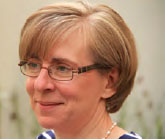
‘We started scouring rescue centres and the internet for dogs under the age of two. Eventually, we rehomed a sixteen-month old Rhodesian ridgeback called Harley. As a city girl, walking Harley in parks, fields and local beauty spots was the first time I really observed the changing of the seasons. Long buried creative juices began to stir and I began to conjure up stories as I walked, jotting down my ideas on my return. To my surprise, I managed to complete my first novel, The Girl at the End of the Road, in a couple of months at the beginning of 2012.
‘I had wanted to write a romance which wove together plotlines involving care for the elderly, end-of-life issues and disability. To prevent the story becoming a personal rant, I developed a male narrator. The story is written from the point of view of Vincent Stevens, a victim of the credit crunch, who loses a high flying career, swanky flat, and trophy girlfriend. Like me he has to give up the superficial things he holds dear to gain a new, deeper perspective on life.
‘Not really knowing what to do next, I signed up for a creative writing course with Carer’s in Hertfordshire. I immediately felt comfortable with the group. I think it helped that we all understood what it was like to be a carer and the challenges and restrictions this brought to our lives. As a result of the advice I received, I subscribed to Writing Magazine, went back to my rushed first draft and completely rewrote it.
‘I then began the arduous task of proofreading it and sending it off to agents. I also posted it on Authonomy, an online writing community. It slowly rose up the rankings, reaching fourth place in January 2015 out of more than 5,000 entries and winning feedback from an editor at HarperCollins. They called it ‘a compelling read’ and asked me to tweak a minor character and submit it to them for consideration. However, I had signed a contract with Instant Apostle four days previously!
‘I was delighted to receive an endorsement from Michele Guinness, author of Archbishop, who wrote:
‘“This is a wonderful first book from KA Hitchins – touching, poignant, inspiring, and beautifully written... Like Vincent, her sympathetic yet shallow narrator, I don’t think I’ll ever see life in quite the same way again, thanks to the extraordinary Sarah Penny, one of the most memorable and unlikely heroines ever created.”’
Website:www.kahitchins.co.uk
Indie all the way
‘As soon as I arrived in Australia (having moved here from Scotland in July 2015), I signed up for four publishing workshops run by the Writers Victoria group,’ writes subscriber Mark Gillespie.
‘Each workshop was led by a different industry rep. We had a traditional publisher, a literary agent, an indie publishing expert, and a media/publicity advisor.
‘By then, I was almost ready to publish. But in terms of options and which route to take, I was still sitting on the fence waiting to be bowled over.
‘The traditional publishing and media sessions were okay. The literary agent, however, didn’t impress me at all. In particular, the agent (who I won’t name) was very standoffish when it came to the notion of unknown writers submitting manuscripts to her agency. The message was this: submit your book and hope for the best. It doesn’t matter if you’ve got a great story to tell because if we can’t figure out how to sell it, we won’t take you on. Lovely! These are the age-old truths of traditional publishing of course, but the overall sense of distance and lack of encouragement was disappointing.