Punk
Punk celebrates 40 years as one of the most iconic movements of modern times. It inspired music, film, art and fashion and represented a social ideology that continues to resonate today. It attracted a loyal following of queer men. Some were stridently public about their sexuality. Yet others, even within the radical nature of Punk ideology, still felt compelled to hide their identity.
WORDS: JON SAVAGE
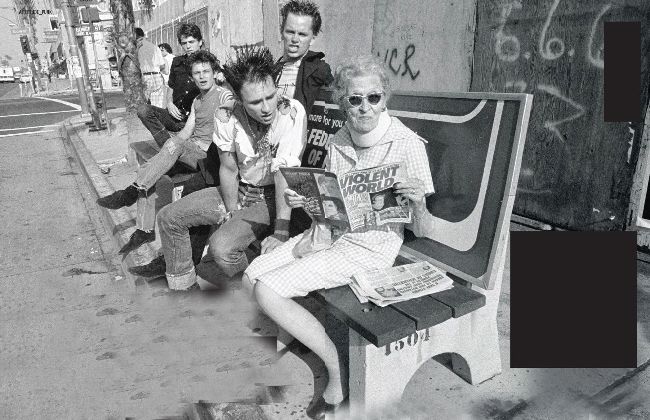
THE SCREAMERS WROTE A SONG… “IT’S A VIOLENT WORLD AND YOU BETTER GET USED TO IT.” BAND MEMBER TOMATA PICKED UP HIS FAVE MAG, VIOLENT WORLD, AT GOWER GULCH, EARLY SPRING, 1977. THIS IS ONE OF THE EARLIEST PHOTOS OF THE SCREAMERS. PEOPLE LOVE THIS PHOTO MORE THAN ANY OTHER. TOMATA WOULD BE PLEASED. – PHOTOGRAPHER JENNY LENS
PHOTOGRAPH: JENNY LENS
Let’s start with four letters. The word ‘Punk’ has a long and tortuous history that goes back to Shakespeare and that takes in such meanings as rotten wood, Chinese incense, a harlot, a strumpet, and a prostitute. Around the turn of the 20th century, it entered underworld slang as the young man who allows himself to be taken by an older, more experienced prison inmate. In Prison Memoirs of an Anarchist, Alexander Berkman quotes the following exchange: “Ever read Billy Shakespeare? Know the place, ‘He’s neither man nor woman; he’s punk,’ Well, Billy knew. A punk’s a boy that’ll…”
“There was an elephant in the room: three out of the five of us were gay, we all knew we were, and yet not one of us breathed a word about it.Not one single word”
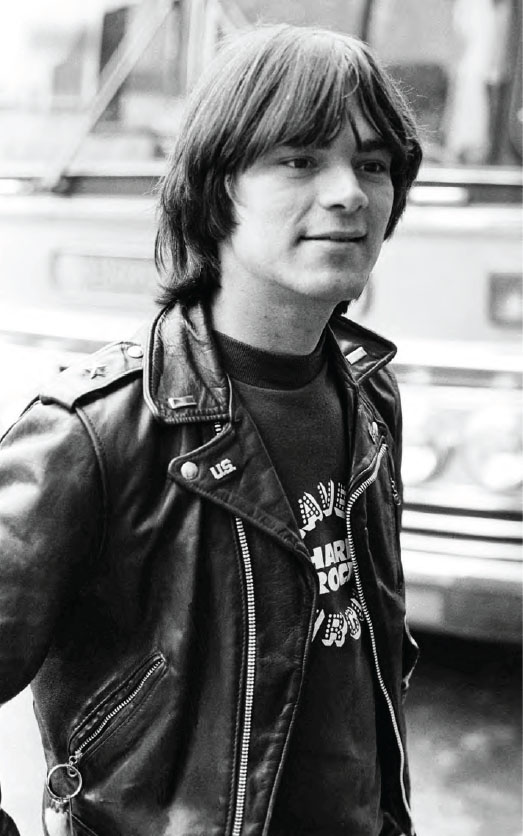
Dee Dee Ramone of The Ramones
“What?”
“Yes, sir. Give himself to a man. Now we’se talking plain.”
These grace notes of catamite slowly transmuted into the more general idea that a punk was a worthless person, a young, petty criminal, in fact a juvenile delinquent – and as such the term became commonplace in the early 1950s. The American series Happy Days, which revived the 1950s in the mid-1970s, reintroduced the word into the pop culture mainstream at the time when critics, fans and activists were using Punk as a shorthand term for the raw, basic music that could be the rock of the 1970s. After the launch of the magazine Punk in late 1975, the word stuck: it crossed the Atlantic almost exactly 40 years ago.
Naturally, there were problems as the word’s deeper meanings met resistance from rockers. In early 1976, there was a famous fight at CBGB, New York’s premier punk club. Wayne County [now Jayne County] was playing when Handsome Dick Manitoba – the lead singer of The Dictators – began to heckle: this was par for the course, but when Manitoba started shouting ‘queer’, County – a tough, street queen – took exception and smashed his microphone stand on his opponent’s shoulder. It was messy: Manitoba was carried out of the club, blood pouring out of the wound, while County was arrested and had to pay a series of expensive legal and medical bills.