BOLOGNA where pasta power reigns
The capital of northern Italy’s Emilia-Romagna region has long been revered for its food by its country folk. Now it seems we’ve all caught on, with increasing numbers of tourists drawn to this booming culinary hub. Resident Sarah Lane shares the best her city has to offer
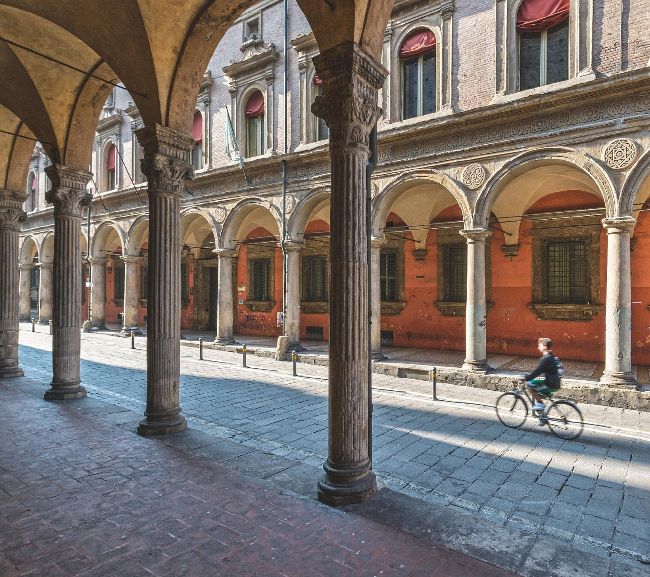
Ancient porticos in Bologna’s University Quarter
When I moved to Bologna 20 years ago, tourists were something of a rarity. Now the city is fast becoming one of Italy’s top travel destinations. Bologna’s compact medieval city centre, with its piazzas, towers and porticos, has had a welcome facelift, and the airport is in the middle of a major enlargement programme.
The city’s been dusting itself off and dressing up to welcome a growing number of culture-hungry (and just plain hungry) travellers.
Bologna is considered by many – including the proud locals – to be Italy’s food capital, and good eating is deeply ingrained in the city’s culture (it’s not nicknamed La Grassa – the fat one – for nothing). Wherever you go there’s an embarrassment of riches when it comes to eating options. The famous tagliatelle, tortellini and other pasta specialities abound, and the deft skills of the sfoglino (fresh pasta-maker) are ever more in demand.
The food scene is booming. The Bologna edition of La Repubblica says there are now nearly 50 per cent more restaurants and bars than there were in 2009, and a third more than there were five years ago. Thankfully (and my Bolognese husband Enrico, a stickler for his local traditions, agrees), for the most part quality isn’t being compromised by quantity. There’s so much going on right now that there is no better place for a dedicated food-lover to be.
A TALE OF TWO MARKETS
Nowhere is the changing face of Bologna’s food scene more obvious than in its markets. Occupying a grid of streets between the main square, Piazza Maggiore, and the city’s landmark the Due Torri, the Quadrilatero is the ancient mercantile centre of the city. Here you’ll find the Mercato di Mezzo (9am-midnight daily), the oldest market, dating back to medieval times. The fishmongers, butchers and delis put out so many tables it’s often hard to navigate the narrow passageways. It’s difficult to believe it was once the realm of local shoppers with just the occasional bar.