GLAZING
HOW TO FRAME VIEWS
Close attention to detail is essential when it comes to maximising the outlook from your house, says architect Julian Owen
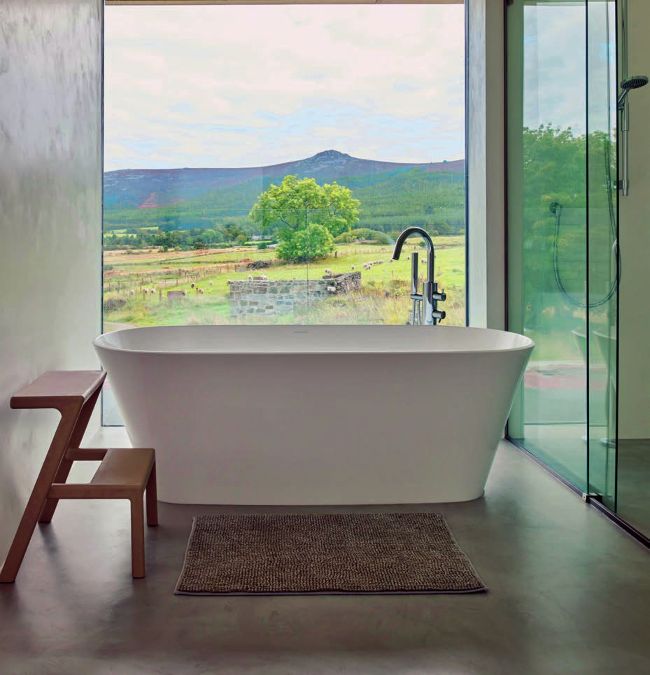
Designed by Brown & Brown Architects, this modern self build home features a bathroom with a view. Situated on an elevated site in Aberdeenshire, the house was laid out to maximise the rural outlook
NIGEL RIGDEN
When designing your own home, lots of time and effort goes into planning how it will look from the outside. Though it’s great to stand back and admire the exterior of your completed project, you’ll probably spend a lot more of your time inside, looking out at the surroundings. To get the most out of the views, the position and shape of the windows needs to be planned carefully – especially if you’ve paid for a location with exceptional vistas.
The best vantage points should be considered at the planning stage of the build, along with the layout. What you see from the windows will have a big influence on where you place the most important rooms in the house. Typically, the master bedroom and the living room feature the best aspects, but for some, a good view is essential as they chop the veg in the kitchen or rest their eyes from the computer screen in the study. Zones where you’re less likely to be affected by the view, such as utility rooms or toilets, are best placed facing out onto the less exciting areas surrounding the house, such as a side alley or the neighbour’s bin store. If you want to extract the maximum benefit out of your home’s outlook, here are some ideas and tips for how to achieve it.
Picture windows
This solution is ideal for framing a cracking view, especially if you want to focus on the finest parts of the surroundings and exclude others. Positioning is crucial, so if you want to decide the best location you could stake out the rooms according to the design drawings. Then, imagine yourself looking out from them before building work starts. This arrangement is fairly straightforward to execute if you stick to a rectangle or square. Circular or odd shaped openings need to be planned carefully so that they fit in with the rest of the elevation.