Eco-friendly bricks
Could low-carbon bricks and blocks be contenders for a sustainable self build?
Nigel Griffiths
investigates the innovative options entering the market
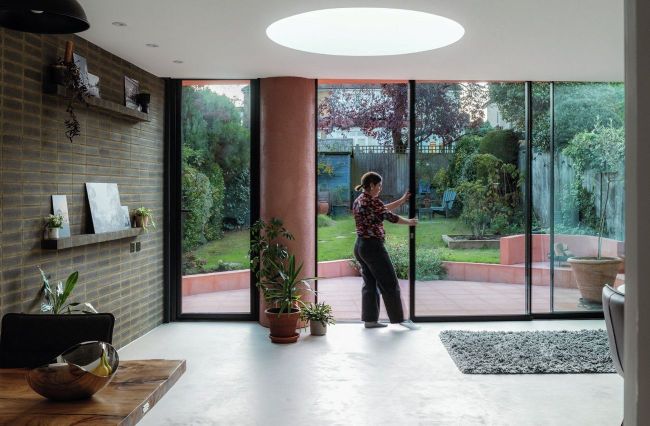
Scottish innovation K-Briq (in Medero Dark Grey) was used to create an interior feature wall in this stylish rear extension project designed by Whittaker Parsons – saving 300kg of embodied CO2 versus using conventional bricks. K-Briq can also be used as an external facing brick
CHRISTINA HANCOCK
With every update to Building Regulations, newly constructed homes become ever more efficient in use. We eco builders are therefore now more focused on the energy required to build new houses – in other words, the embodied carbon emissions arising from the manufacture and installation of materials. This affects many of the big-ticket items we install in our homes, such as insulation, windows, roof coverings and floor constructions. But there’s one set of products that stands out as having a particularly high environmental impact: bricks and blocks. So, what are the options to reduce embodied energy in a brick build?
What makes bricks high carbon?
Cavity wall construction has three main components: an outer skin to keep the weather out; insulation; and an inner load-bearing skin (supporting the upper floors and roof). Depending on their specification, bricks or blocks can be used in either of these skins.
Conventional bricks are made from clay and fired at high temperatures to make them hard and weatherproof (although the material can also be used unfired). Clay is plentiful and extracting it does little damage to the environment. But it takes a large amount of energy to get a kiln to over 1,000°C, and it’s this process that gives brick such a high embodied energy/carbon. It also takes energy to extract and process the raw material (the clay). Composite bricks are also traditionally high in embodied energy. A key factor is that most of them use cement as a binder to hold the aggregates (sand, crushed stone, concrete etc) together.
The are several approaches that can reduce the embodied energy present in bricks and blocks:
Clay bricks:
• Reduce the temperature at which clay blocks need to be fired by adding other materials to the mix.