NEW ORDER
STEVE HARNELL
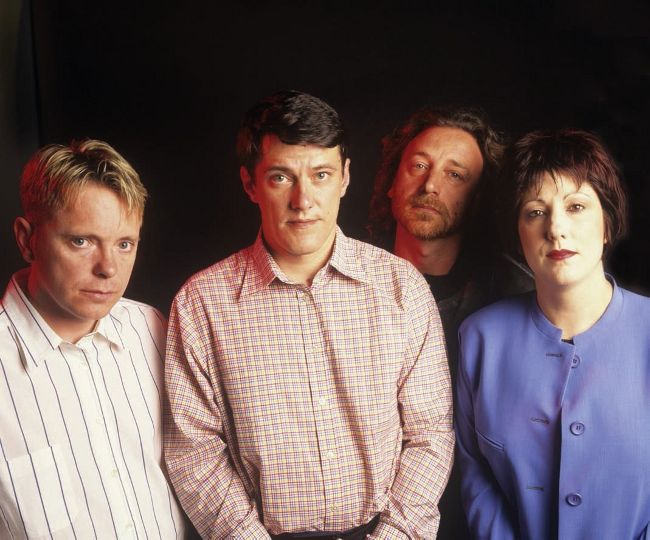
© Bob Berg/Getty Images
“THE GHOST OF IAN CURTIS HOVERS OMINOUSLY OVER THE CONTENTS OF NEW ORDER’S DEBUT ALBUM”
Tentative, but oddly determined, Movement sits at the epicentre of a Joy Division/New Order Venn Diagram where the past is still close at hand and a clear path ahead seems tantalisingly out of reach.
The ghost of Ian Curtis hovers ominously over the contents of New Order’s debut album, both in the vocal mannerisms of Bernard Sumner and Peter Hook, who contribute lead vocals, and the distinctly Joy Divisionsounding arrangements and ambience. Realistically, how could it be anything else?
Crushed by the suicide of Curtis in May 1980, the day before a planned US tour, the remaining members of Joy Division were unsure if they could continue in any form.
Encouraged by band manager Rob Gretton and Factory label boss Tony Wilson, Hook wrote Movement’s opener Dreams Never End within hours of Curtis’ wake. Just two months after Curtis’ death, Sumner, Hook and drummer Stephen Morris had enough new material to tentatively play a nerve-wracking live show at the Beach Club in Manchester, each alternating on lead vocals. There’s a sense of forward momentum with the move but, at the same time, a lack of focus where the nascent New Order (they dubbed themselves The No Names at The Beach Club where they were last-minute replacements for Factory Benelux act The Names) are still unclear as to where their strengths lie.
By October 1980, the classic-era New Order quartet was complete with Morris’ girlfriend Gillian Gilbert joining on keyboards to allow Sumner to concentrate on his lead vocals and guitar.
But the man who defined and elevated Joy Division – mercurial producer Martin Hannett – was the very same individual who held New Order back. This new band lacked confidence, and they were crushed by withering criticism from Hannett who once flippantly described Joy Division as “one genius and three Manchester United supporters” (his praise, of course, was aimed at Curtis).
Sessions for Movement were painful – Hannett was by now deep into heavy drug addiction and locked himself in a tape store cupboard with a tiny speaker for long stretches of the sessions, only emerging if he found anything to his taste. In the end, Movement is as much an historic document of a band in flux as it is a standalone release. Opener Dreams Never End, sung by Hook, is the standout, with a propulsive melodic bassline, ominous vocal and Morris’ hyperactive hi-hat riding groove. Meanwhile, there’s a dark allure to the ticking drum machine and ghostly melodica of Truth and Gilbert’s synth contributions shape Chosen Time, the latter simultaneously pointing towards the synth-rock hybrid that would eventually become their calling card.
MOVEMENT
Released 1981
Label Factory
Chart Position UK No.30 and US –
Two game-changing songs feed into the genesis of Power, Corruption & Lies, and like many of New Order’s early singles, they were both resolutely left off its attendant album.
Released in May 1982, Temptation was a joyous freeing of the shackles; a realisation by the band that they could step out from underneath the shadow of Ian Curtis and forge a new future for themselves. Synth textures weren’t just a background element in the mix, they were a lead instrument. Temptation is New Order’s eureka moment, an interlocking sound that the band have refined over the next four decades; Morris’ propulsive rhythms, Hooky’s melodic bass, Barney’s slashing guitars (and simplistic lyrics) allied to Gilbert’s instantly memorable synth lines.