ARCHITECTURE & MORALITY
MERGING THE MACHINATIONS OF GERMAN ELECTRONICA WITH WARM MERSEYSIDE MELODIES AND OTHERWORLDLY CHORAL SAMPLES, ON THEIR THIRD ALBUM, ARCHITECTURE & MORALITY, OMD STRUCK THE PERFECT BALANCE BETWEEN EXPERIMENTALISM AND COMMERCIAL APPEAL…
MARK LINDORES
As Liverpool braced itself for a homecoming concert from its favourite musical son Paul McCartney on 15 September 1975, the city’s Empire Theatre played host to a sparsely attended show four days earlier as avant-garde auteurs Kraftwerk arrived in the city as part of their Autobahn tour. Though the gig was far from sold-out, the chosen few that did attend ensured that its influence was far-reaching as the clued-up technophiles that formed the majority of the crowd left the venue convinced they had just witnessed the dawning of a new era of music and were inspired to become part of it.
Among those embarking on a journey of sonic adventure courtesy of Düsseldorf’s alternative fab four were friends Paul Humphreys and Andy McCluskey, a pair of local musicians who had developed a kinship thanks to their shared love of the German synth-pop pioneers. Although they had both played in a number of traditional rock bands, the pull of the industrial, minimalist soundscapes of their heroes led them to head in a different direction – with electronics as their foundation.
With finances and rehearsal space scarce, the duo was forced to improvise to make their ideas a reality. Like many of their friends in bands, the DIY ethos of punk was fundamental to Orchestral Manoeuvres In The Dark’s success. Finding themselves as part of Liverpool’s thriving scene of the late 70s, they shared bills with Joy Division, Pete Wylie and Julian Cope, playing at local live music mecca Eric’s and Manchester’s Factory club, where they caught the attention of Factory Records’Tony Wilson and namesake Carol Wilson.
Though he recognised the obvious potential of OMD, Wilson felt that Factory had neither the scope or the finances to support what he deemed to be a hugely successful mainstream pop act in the making. He signed them to a one-single deal to release their debut Electricity in 1979, purely to get them attention from the major labels.
As the majors began to close in on the band, OMD signed instead to Carol Wilson’s newly-established Dindisc label, an imprint of Virgin, feeling it would give them the artistic freedom of an independent, but the financial security of a major. Upon the signing, Carol Wilson said: “OMD were a perfect fit for what I had in mind for Dindisc – they had a serious, artistic side with real depth, as well as a commercial, pop side.”It was this duality that was key to OMD’s rapid success.
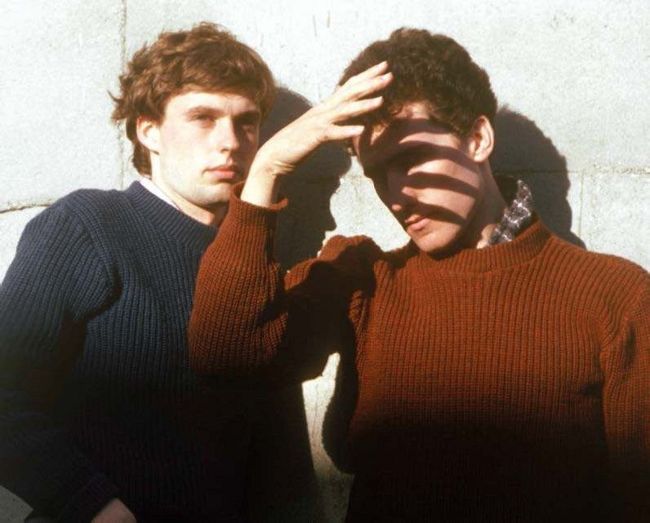
Andy McCluskey wishes he hadn’t missed the ‘pop stars must wear sunglasses’memo
© Peter Noble/Redferns
THE PLAYERS
ANDY MCCLUSKEY
A well-known face on Liverpool’s live music circuit, McCluskey played in various bands including VCL XI, Equinox, Pegasus and The Id, before forming OMD with Paul Humphreys. After OMD split in 1989, McCluskey carried on recording under the OMD name before disbanding the group in 1996 to write and produce acts including Atomic Kitten, Gary Barlow and The Lightning Seeds. OMD reformed in 2005.