WHEN BRITISH REGGAE WAS KING
REGGAE MAY HAVE BEEN BORN IN JAMAICA, BUT IT GREW UP IN 80s BRITAIN AT A TIME OF EVOLVING MULTICULTURALISM, FINDING AN UNLIKELY ALLY IN PUNK AND BECOMING A MAINSTAY IN THE CHARTS. CLASSIC POP TALKS TO SOME OF ITS KEY PLAYERS.
DAVID BURKE
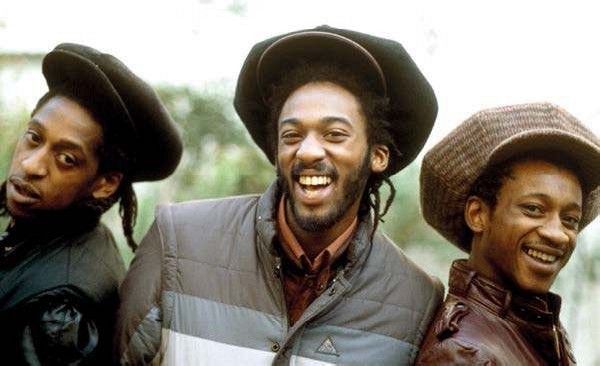
Aswad in their 1980s heyday, including Brinsley Forde (right)
For such a small island, Jamaica has made a mighty big noise in UK music. Bob Marley, Jimmy Cliff and Toots & The Maytals crossed the Atlantic and conquered the former Mother Country in the 1970s. But more than that, they inspired the sons and daughters of an emerging Black Britain to remake the irresistible rhythms of reggae out of their own social and cultural experience, to incubate a uniquely British strain.
Producers Mad Professor and Dennis Bovell – also a member of Matumbi, he anchored Janet Kay’s 1979 hit Silly Games – and bands such as Aswad, Steel Pulse and Misty In Roots, were among the pioneers of this new sound, one that would bleed into the punk and pop movements with The Clash, The Police and Culture Club offering up their own individualistic takes. And, of course, UB40, whose myriad ethnic identities reflected a burgeoning multiculturalism. Their 1983 album, Labour Of Love, was exactly as its title declared – a paean to the reggae songs that were the soundtrack to their childhoods.
As Ali Campbell told Classic Pop last year: “The reason we formed a band was to promote reggae and to let people know what dub was. It was the love of my life. I couldn’t understand why people didn’t love it the way that I did.”
BABYLON’S BURNING
Brinsley Forde, the scion of immigrant parents, was searching for his selfhood when he found that “roots music supplied many of the answers”. As he progressed through his teens, Forde became increasingly frustrated playing Jamaican reggae, which he felt had little resonance with his own experience in Blighty.
So the London-born singer began writing and formed Aswad. “The concept was to tell the story from our point of view,”he explains. “I learned of the life in Jamaica from the music. My life was in the heart of London. I could feel the rhythm had a different line, its own melody.”
In their early incarnation, Aswad articulated the Black British story on tracks like Three Babylon and It’s Not Our Wish. Theirs was a variation on roots reggae, and roots reggae was impelled by political awareness. So, was it their objective to become a mouthpiece for young black Britons?