TALK TALK
ESCAPING FROM A NEW ROMANT I C POST ER BOY IMAGE NOT O F THEIR OWN MAKING, TAL K TALK VENTURED INTO EVERMORE E XPERIMENTAL SONI C T ERRI TORY TO PURSUE THEI R UNCOMPROMI S ING ART I S T IC V I S ION
STEVE HARNELL
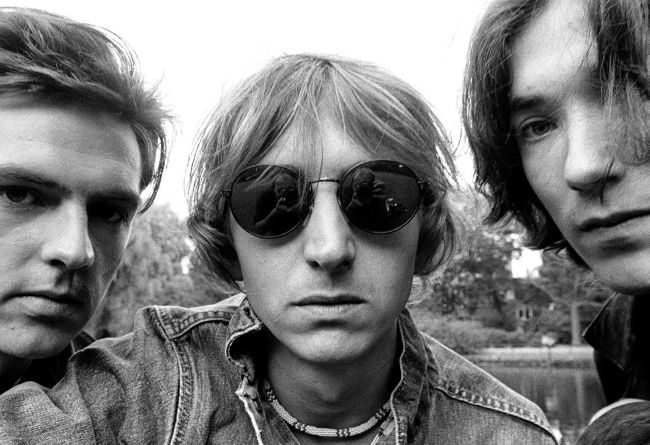
©Rob Verhorst/Redferns
For the majority of their extraordinary, groundbreaking career, Talk Talk’s music was timeless and visionary – free of the shackles of faddish genres and living in a rarefied weightless realm of its own making. But their 1982 debut is very much of its time, an early-80s fretless bass sound imbued with strident synth textures. It was, ironically enough, a totemic example of the New Romantic movement that frontman Mark Hollis in particular grew quickly to loathe and set about kicking against.
There was, though, always something ‘other’about this London outfit. They may have been groomed as poster boys in the same mould as Duran Duran but they were cut from very different cloth. Hollis’mournful croon – he was happier namechecking Otis Redding as an influence than any of his contemporaries – and even the downbeat, cynical title of this debut is evidence of this; The Party’s Over is hardly the callto- arms that many bands would announce their arrival with.
Hollis had previously dipped his toe into punk-pop with The Reaction – they released their only single I Can’t Resist in June 1978 – before forming Talk Talk. He brought a much wider range of influences to the table; experimental jazz icons John Coltrane and Ornette Coleman, plus prog rock mainstays King Crimson and Pink Floyd.
Early Talk Talk demos were produced by Jimmy Miller, an unlikely foil who had previously helmed classic-era Rolling Stones and Traffic albums among others. For their debut, though, EMI turned to Colin Thurston, a veteran of the spiky likes of Magazine, but more pertinently the man who had produced Duran Duran’s eponymous first LP. Talk Talk’s paymasters were keen for them to position themselves as a thoughtful faction within the New Romantic movement. The band supported Duran during an extensive winter tour of 1981, an experience Hollis found thoroughly dispiriting when faced with the fervour of a rabid mainstream pop fanbase.
Thurston threw every 1982 production trick in the book into the mix: electronic drums, a Fairlight synth, fretless bass and fake strings.
However, the songs and arrangements remain singularly strong with Talk Talk and Candy in particular rising above their synthetic surroundings.
The former opens the album as a canny exercise in brand awareness with a hooky “Hey! Hey!”refrain in the intro. The Monkees, they very much aren’t, though. In fact, Talk Talk could be argued to be a lyrical takedown of the New Romantic movement itself, railing against its superficiality.
The introspective It’s So Serious is pure synth-pop with a decidedly downbeat pallor: “I’ve given everything, With nothing in return.”
Paul Webb’s bass-playing on Today, while excellent, is locked into the era – a style that would be almost trademarked by super session man Pino Palladino. There’s evidence of Hollis’punky roots on Hate and he casts himself as a societal misfit during Have You Heard The News, sitting outside the glamorous frontman characterisation of contemporaries Le Bon and Hadley.