David Bowie Changed my Life
Plucked from obscurity at 22 to replace Mick Ronson as Bowie’s sideman guitarist, Earl Slick ’s life was never going to be quite the same again. Nor was his lifestyle.
Words: Ian Fortnam
MAIN: CHUCK LANZA/PRESS; INSET: GETTY
When David Bowie hired Earl Slick as guitarist for 1974’s Diamond Dogs tour, expectations were high. While Bowie’s star was cresting, Slick cut an enigmatic figure and, although virtually unknown outside of the clubs of New York City, was to replace Mick Ronson, the ultimate exemplification of the glam guitarist. Most UK fans became aware of Slick’s existence only after carefully scrutinising the cover of David Live. So who was this Earl Slick, and how did he become ennobled with such a charismatic title?
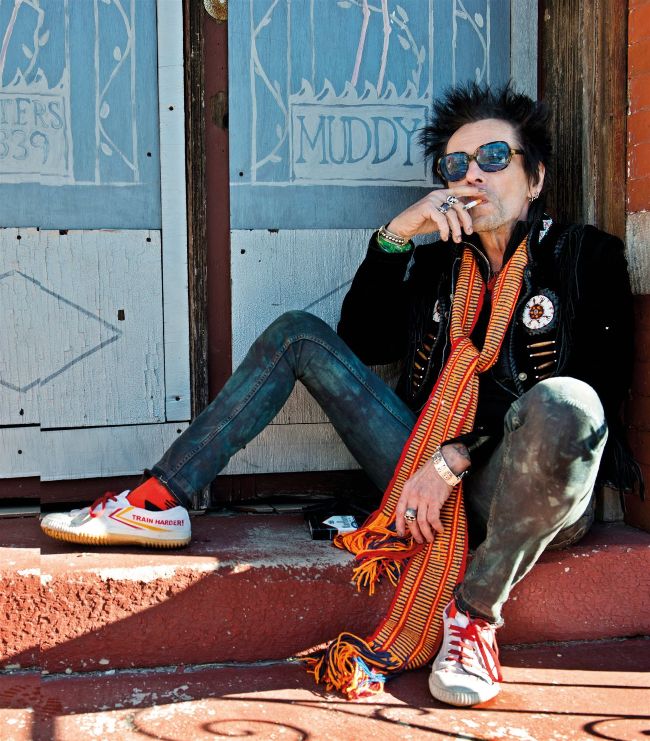
“I was about nineteen years old,” recalls whipthin Slick today, ebony locks casually Keefed, shades indoors, plugged-in guitar nestled in lap with which he punctuates salient points, every ounce the rock star, “playing in a covers band with a singer named Jack O’Neill. We did Stones, a bunch of blues, Jimmy Reed, Muddy Waters, five nights a week, and we’d get goofy some nights. Jack would give us all weird names when he introduced us. One night he called me Earl Slick, and it stuck.”
It’s memorable, stands out on a record sleeve. “Yeah, that’s the best thing about it, you can’t forget that one, it’s so ridiculous.”
“Bowie walked in the room, said hello, and we noodled around on guitars for a little while.”
Rock’n’roll originally came into the life of the artist formerly known as Frank Madeloni on the evening of February 9,1964. He was 11 years old, settled in front of the family TV in Brooklyn for The Ed Sullivan Show when The Beatles changed his life.