SYMPHONY FOR THE DEVIL
With Metallica’s S&M reaching the grand old age of 25, we look back at how, and why, the world’s leading metal band teamed up with – shock, horror – an orchestra. True, but not sad.
Words: Mick Wall
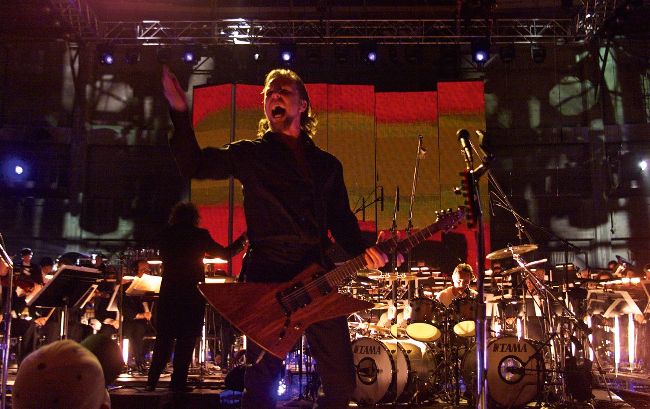
MICHAEL MACOR/THE SAN FRANCISCO CHRONICLE VIA GETTY
For Metallica, the 90s were just like the 80s – only in reverse. The 10 years it took them to go from unloved New Wave Of British Heavy Metal copyists, when they formed in LA in 1981, to globe-straddling multi-platinum-selling rock titans on a sales-par with Michael Jackson and U2, with the release of their fifth album, Metallica, aka the Black Album, in 1991, saw them evolve faster than a speeding bullet. The move from hair-metal LA to anything-goes San Francisco, occasioned by bringing in SF natives, bassist Cliff Burton and guitarist Kirk Hammett; the sparking of a whole new genre in rock – thrash metal – and in its wake close-but-nocigar imitators such as Megadeth and Slayer; the ability to fit comfortably onto the front covers Kerrang!, NME, the Village Voice, Rolling Stone and The Times of London, New York and LA; the death of Burton and the resulting exultation of a band afforded legend status before they’d even made a video; the conquering of first Britain then Europe then America then the rest of mankind.
They achieved all that between 1981 and 1991. Surely the next 10 years would follow a similarly skywards trajectory. All Metallica seemingly had to do was keep their eyes on the prize. Instead, they appeared to wilfully steer the great metal bird Metallica headlong into the ground, as they spent the 90s veering from one ‘controversial’ decision to another. First they cut their long hair short, applied garish make-up, and lost more than half their global audience with release of the provocative post-Black Album Load (1996) and, more contentiously still, Reload (’97). Had Metallica gone grunge? Had Metallica sold out? Didn’t Metallica care about their metal-loving fans any more? What were Metallica thinking?
“I don’t think we could have done this kind of project five years ago, because I don’t feel that we had the balls to do it.”
Lars Ulrich in 1999
The answer to all those questions was: no. Metallica hadn’t changed their thinking at all. If anything they were staying true to their nature, pushing boundaries, riding their lightning back out to the edge again; exploring those places – musical, cultural – no other metal band would have considered. It was their defining characteristic: a gift and a curse that made Metallica both the only ‘thrash band’ to successfully transcend their origins – and singled them out for special punishment when these experiments exploded in their faces.