CAMERA CINIC
Master the art of modern photography
This month: Flash You can’t take photos without light, but with a flash, you can shoot 24/7
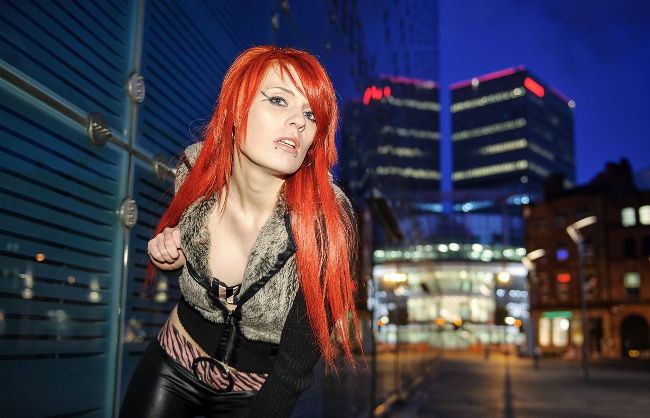
Add flash to your locker and take your photography to the next level.
Will Cheung
An imaging journalist and freelance photographer based in London, Cheung has a wealth of experience over several decades. www.williamcheung.co.uk
With the incredible high ISO performance of modern digital cameras, you can shoot in near darkness and still get remarkable results. So, you could argue, who needs flash? But a flash, whether one that sits on the camera or a standalone unit, is one of the most valuable and useful photo accessories money can buy. Whatever your budget, needs and interests, there’s an option for you.
Cameras with a built-in flash used to be standard but now the most popular flash is the speedlight, a batterypowered device that sits on the camera’s accessory shoe and provides point-and-shoot simplicity with the option of manual override and a range of great features.
To many photographers, the on-camera speedlight is the limit of their relationship with flash but with so much more potential, it is a great place to start. The quality of light from a speedlight can be improved by using a modifier, which can be anything from a piece of plastic to sophisticated contraptions that do a great job of diffusing output. With features including HSS (high-speed sync), second or rear-curtain sync and a bounce and zoom head, a wide range of creative effects can be achieved, too. However, on-camera flash is limiting and if you want better light modelling, the next step is to get the speedlight off the camera, using a wireless trigger to control it and perhaps adding an extra flash for even more creative potential.
If your interest in flash photography deepens, it may be time to invest in studio flash units that offer greater power, more modifier options and modelling lamps so you can see the lighting effect. These can be battery or mains-powered so invest in the type that best suits your needs. If you’re new to flash, now’s the time to get involved. You might be surprised how a brief burst of light can make better images.
Get the knowledge
What type of flash to buy to fulfil your visions
While all flash units are designed to do the same job of delivering a brief burst of light, there are various designs with different skills and feature sets. It’s important to buy the type of flash that best suits your photography.
Taking two extremes, a macro photographer’s needs will be very different from that of a keen portrait worker. For most photographers, the speedlight is the best, all-round option. It’s compact and convenient and sits on the hot shoe so you can either leave it in full auto mode for simplicity or take more control by digging into its advanced features and adding accessories such as a wireless trigger and a range of different modifiers. To help out, here’s our guide to the type of units you’ll find when you go flash shopping.
Types of flash
Invest in the type of flash that best suits your style of photography
THE SPEEDLIGHT
Battery-powered flashguns that sit on the camera’s hot shoe are known as speedlights. They have the circuitry for advanced functionality, communicating with the camera via the contacts on the hot shoe.
A decent speedlight links up with the camera and gives TTL (through-the-lens) auto-flash. It may have the option of front and rear-curtain flash sync, a bounce/zoom head to reflect light off a white surface and HSS (high-speed sync) to allow flash sync up to 1/8000 sec. A top-end speedlight, such as the Sony HVL-F60RM2, costs £499/$548.