CAMERA CLINIC
Master the art of modern photography
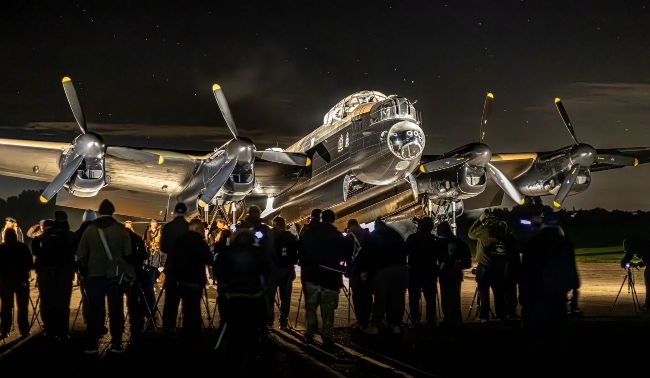
It isn’t often that your fellow photographers make for a good shot. Exposed at ISO 25,600.
This month: Get creative with ISO
Part one of a mini-series on getting the most from the exposure trinity
A paid-up member of the exposure trinity, the ISO you use has a profound impact on your photographs. Aperture, shutter speed and ISO are inexorably linked, and you can’t adjust one without altering one (or both) of the others to maintain a correct exposure. The skill of taking pictures is in using the trinity to create great shots. ISO has a direct impact on the technical quality of the result, but the effect is not as pictorially evident as it is when adjusting the aperture or trying a different shutter speed. That makes ISO a special member of the trinity.
Every imaging device has a base ISO, the speed that gives the lowest levels of noise and the best dynamic range. Usually, in a camera’s specs, this is the lowest native speed quoted in the ISO range, typically ISO 100 or 200. If you have the lighting and fast aperture glass, the base ISO is the speed to use if you want the ultimate quality from your camera but, of course, there are many variables to consider. In early digital capture, it was better to stick to the base ISO and not venture too far up the scale if you wanted top quality pictures because noise kicked in and images could be marred by weak blacks, detail loss and colourful streaks. Over the years, that has changed and better sensors, innovative sensor designs, superior image processors and circuitry have all played a part. With modern cameras, you can shoot at ISO 1600 and higher and still get excellent results with minimal noise. Add a dose of denoising in editing and ISO 3200 and 6400 can give incredible results.