Minding the Gaps
Paradoxically, the absence of a great many 1960s episodes from the BBC’s vaults has made them some of the most analysed TV instalments ever.
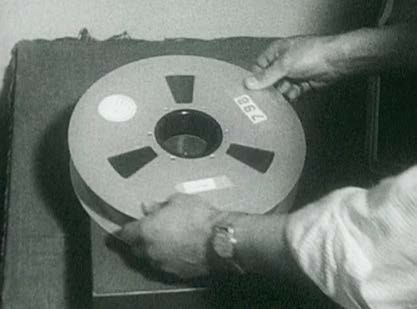
A powerful magnet is used to wipe a videotape for reuse.
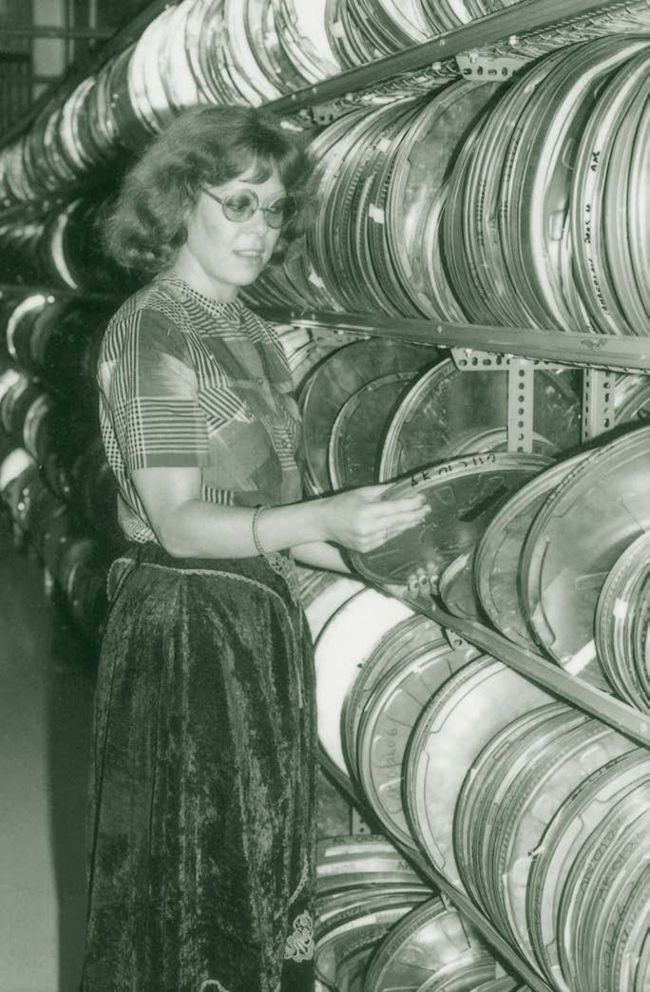
Sue Malden, the BBC Film Library’s first archive selector, in 1981.
Nearly 100 episodes of Doctor Who broadcast in the 1960s are missing from the BBC archive. Some serials are entirely absent; others exist only in part. How this came to be is a long and complex story, but it should be noted that nobody ever set out to deliberately destroy Doctor Who’s history.
The BBC didn’t routinely archive programmes in the 1960s, and had no reason to do so. This may seem shortsighted now, but the television landscape was very different then. Limited airtime and union agreements restricted repeats, with programmes very rarely rerun outside a two-year window. There were no repeats channels or home-video releases. Television was considered an entirely ephemeral medium; its programmes were usually expected to be seen once and then disappear forever.
The majority of programmes at that time, including most Doctor Who episodes, were recorded on two-inch videotape. These tapes were expensive and large, but they could be wiped and reused once a programme had been broadcast. Videotape wasn’t considered a medium for permanent storage. In fact, few of Doctor Who’s tapes could be reused because they had been edited with physical splices. Even so, with no reason to keep them, the BBC routinely disposed of them to free up space. By the end of 1974, every Doctor Who videotape from the 1960s had been wiped or destroyed, plus a handful from the early 1970s.
Meanwhile, BBC Enterprises, the Corporation’s commercial arm, did good business selling Doctor Who to overseas broadcasters. Film was the universal format for international distribution and, consequently, Enterprises made film duplicates of nearly every episode of 1960s Doctor Who prior to the destruction of the videotapes. But they had no reason to keep a permanent archive either. Once sales had dried up, or the rights to exploit a programme had expired, Enterprises would routinely mark the prints for destruction. Many sales prints escaped this fate, however – which is why we can still enjoy so many early episodes of the series.