On Target
With a wheezing, groaning sound, a range of novelisations materialised. These prose versions of Doctor Who made writer-in-chief Terrance Dicks a legend.
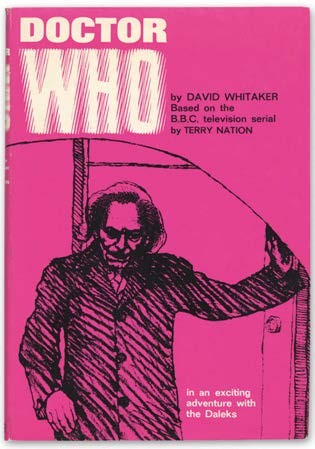
Doctor
Who
in
an
Exciting
Adventure
with
the
Daleks
(Frederick Muller, 1964), based on the first Dalek story (1963-64).
Art by Arnold Schwartzman.
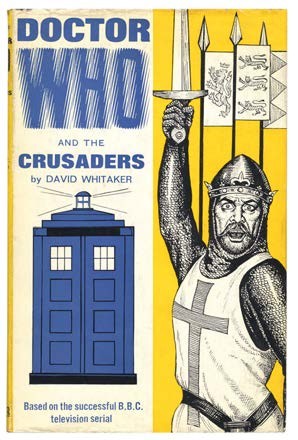
Doctor
Who
and
the
Crusaders
(Frederick Muller, 1966), based on The Crusade (1965).
Art by Henry Fox.
For decades, novelisations of screen stories represented publishing at its most commercial. Fittingly, one of the earliest TV tie-ins was an adaptation of 1956’s Flight into Danger. This, the Canadian teleplay later spoofed in Airplane!, had been successful enough for its producer Sydney Newman to be headhunted by British television, eventually spearheading Doctor Who.
During this era of limited repeats, the humble novelisation was a canny enterprise, converting scripts into slim paperback volumes with broad commercial appeal. Doctor Who’s long line of novelisations – approaching almost 200 stories, including a few adapted twice – differs in two respects. First, it’s a complete library of the original, 20th-century series (and it’s not impossible that it might one day encompass all of the 21st-century series, too). Second, rather than being planned to meet a broadcast date or cinema release, the majority of the books were published long after broadcast. The ones that fulfil the straightforward mission of novelisations are today the least interesting; the best novels break loose from their source material, expanding their stories beyond 405-or 625-line television.
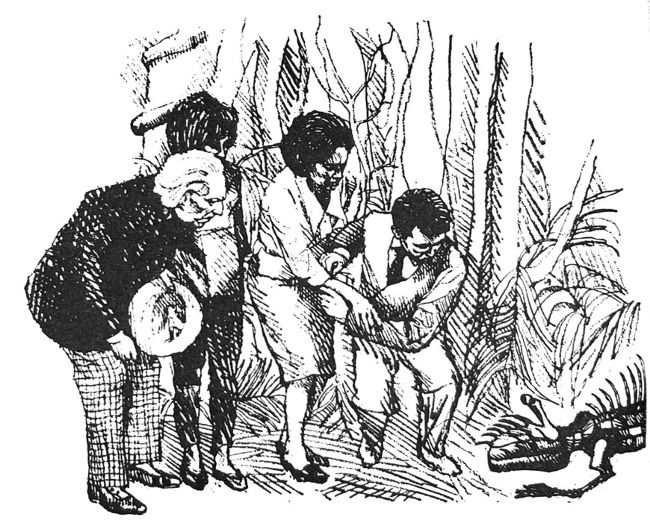
One of Arnold Schwartzman’s illustrations from Doctor Who in an Exciting Adventure with the Daleks.
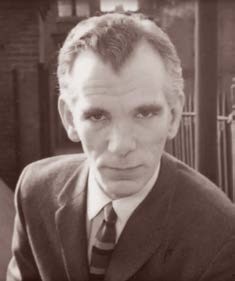
Author David Whitaker.
Luckily, the very first does just that. David Whitaker’s loose retelling of the first Dalek story (1963-64) – published in 1964 and based on Terry Nation’s scripts – was a happy marriage of invented origin story, screen highlights and some nifty character work. As story editor on the original serial, Whitaker would have been acutely aware of Nation’s tendency to favour plot over characterisation, so his conceit of making companion Ian Chesterton the first-person narrator was inspired. Similarly, having lived through the protracted development of the show’s pilot episode, Whitaker invented a new beginning for the series – an efficient, streamlined replacement that feels guided by hindsight. And for tens of thousands of readers who grew up in the days before repeats, this is where Doctor Who began – with an old man’s face lit up by an everlasting match in the shadows of Barnes Common.