HARD CORE
How MiSTer emulation is redefining the art of resurrecting gaming’s past
By ALEX WILTSHIRE
Last Christmas, José Tejada encountered a weird issue in Contra. A player of his recreation of Konami’s original arcade PCB had reported that the music was playing too slowly if you compared it with the genuine 1987 hardware. The pitch was right, but the pacing wasn’t – and that, to Tejada, was very odd.
You’d be hard-pressed to find someone in the world with a better understanding of Contra’s PCB and its Yamaha YM2151 sound chip than Tejada, known as Jotego in retrogaming circles. A microelectronics engineer with a love of classic videogames, he’d become interested in reverseengineering the chips that defined the sound of many arcade games, computers such as the MSX range, and consoles such as Sega’s Mega Drive, so that he could simulate them perfectly on his PC. He’d painstakingly measured the voltages and timings of the original chips, figuring out exactly how they directed flows of data around them. To find his recreation not performing exactly as it should, then, was a surprise.
So Jotego dug once again into the minute architectures of Contra’s PCB and the YM2151, following connections between components until he found an anomaly in the way the real Yamaha uses the PCB’s power-distribution unit as a timer for its music. Jotego’s recreation had made a logical assumption about how the chip’s timer operates, and it didn’t match: the Yamaha timer was failing to properly reset itself as it looped. “So the Yamaha design was actually wrong, because the counter was out of control!” Jotego says. This tiny error, made decades ago when the chip was designed, was inserting random values into the timer which has meant that, ever since its release in 1987, Contra’s music has been running just a little faster than it was meant to.
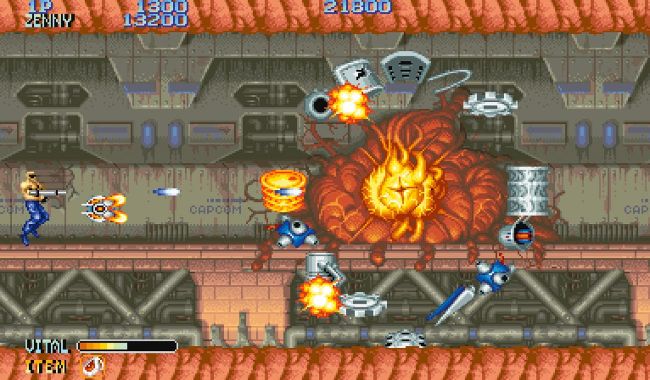
Forgotten
Worlds
(the
first
game
on
Capcom’s
CP
System
hardware);
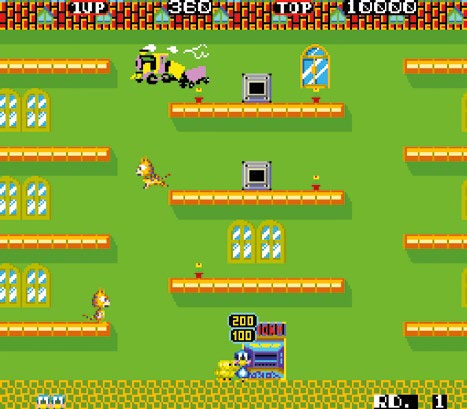
Sega’s
1984
arcade
platformer
Flicky;
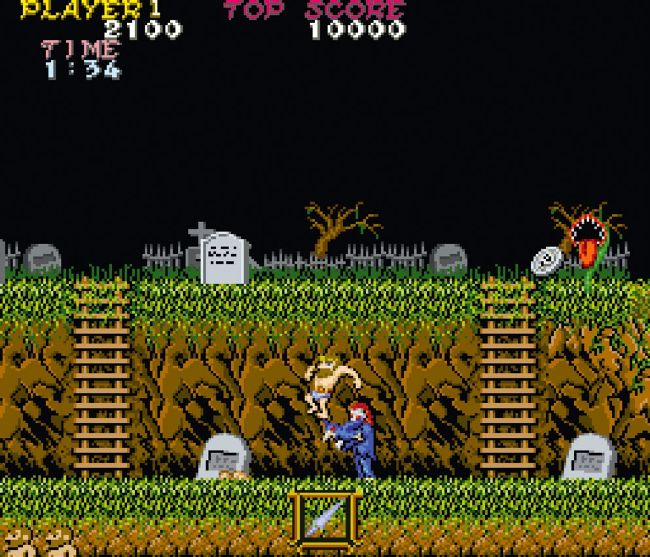
Capcom’s
1985
Ghosts
’n
Goblins;
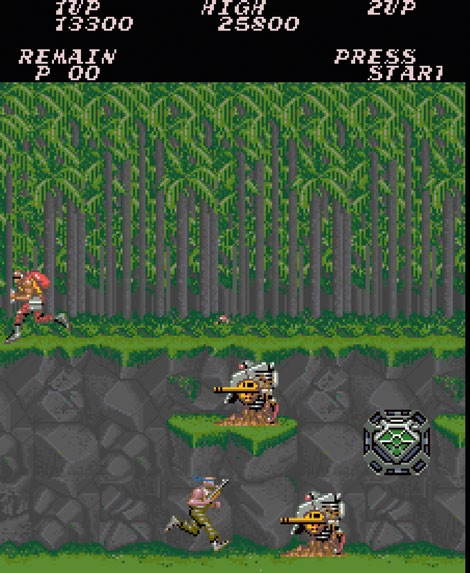
Konami’s Contra emerged in arcades in 1987
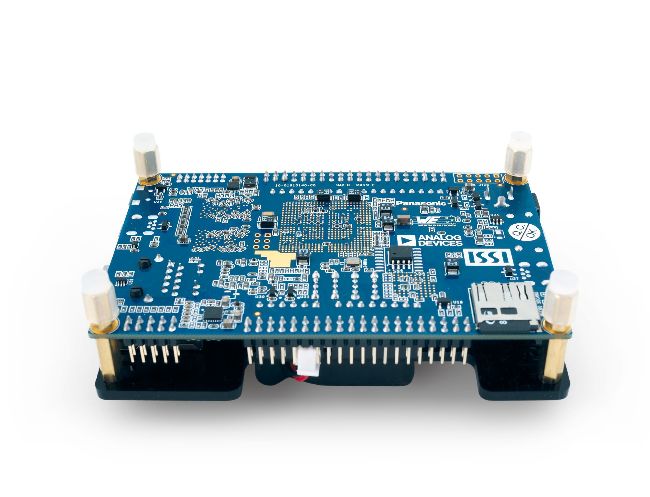
The underside of the DE10-Nano reveals the square bank of pins that wires its Cyclone V FPGA to the board. Other than a display and USB controllers and keyboard, most of MiSTer’s cores need no other hardware
WHAT YOU NEED
To get started with a MiSTer, you only absolutely need one thing: a Terasic DE10-Nano, which costs around £120 from a specialised electronics merchant such as Digi-Key. After flashing its supplied 8GB mini SD card with Mr Fusion, the MiSTer installation image, and running it, most systems will simply work.
Exceptions such as the Neo Geo core require the 128MB SDRAM add-on (£53). Most cores won’t need it, but a £13 heatsink and fan are recommended for the most demanding use cases, such as the ao486. If you want to output to a CRT display, you’ll need an I/O board with VGA and audio ports, and to avoid needing to plug a USB hub into the DE10-Nano’s single USB port, there’s a neater MiSTer USB board. For purists, SNAC adapters offer latency-free support for original console controllers, though they’re not officially part of the MiSTer project, while an audio tape input allows you to enjoy loading ZX Spectrum cores from cassette (assuming your tapes haven’t crumbled to dust by now, naturally).
This detail is the tiniest of footnotes in the annals of gaming history, but it shows the level of precision that modern recreations of old games, like those of Jotego, can reach. Or more specifically, recreations of old games running on MiSTer, an opensource retrogaming system using a programmable chip called an FPGA to recreate hundreds of different arcade PCBs, consoles and computers. MiSTer can run a PDP-1, Spacewar!, ZX Spectrum, DoDonPachi, PC Engine, a 486 PC, Neo Geo, Super Nintendo, Street Fighter II Turbo: Hyper Fighting; the list swells with each passing month, as its community of programmers and engineers makes new ’cores’ – sets of configurations for MiSTer’s FPGA which make it behave just like original hardware.