MIND GAMES
How developers, scientists and business leaders are wrestling with the complicated prospect of games as tools for mental health
By Edwin Evans-Thirlwell
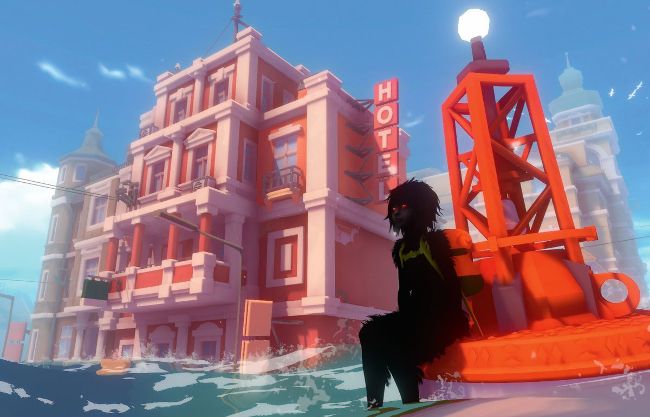
Sea Of Solitude is a messily heartfelt portrayal of loneliness and depression, in which a young woman tries to reconcile with projections of self-loathing while roaming a strange, flooded city
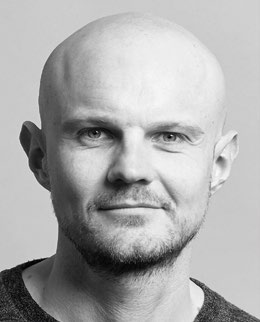
James Marsden, founder and co-CEO, FuturLab
POWERWASH SIMULATOR ACTUALLY BEGAN LIFE AS AN IMPROVISED SELF-CARE TOOL FOR INTERNAL USE AT FUTURLAB
What are the mental health impacts of landing a headshot in a firstperson shooter? If you go by tabloid headlines – or, more reasonably, the studies that indicate shortterm correlations between certain game mechanics and aggression – you might say it cultivates and rewards bloodlust. But you could also argue, citing research into the causes of clinical anxiety, that a headshot fulfils a more innocent, albeit macabre desire for closure. “Your task is done, you no longer need to worry about that part of the world, and you can move on to the next,” as FuturLab founder and CEO James Marsden observes.
While no scholar of mental health himself, Marsden feels that much the same basic need for “finality” underpins FuturLab’s PowerWash Simulator, one of several projects which suggest that playing videogames can have therapeutic benefits. A game about hosing down mucky level maps, released via the Square Enix Collective, PowerWash Simulator is “sort of doing headshots on every pixel at 60 frames per second”. Every blast of water alters the world unambiguously, making it ‘safe’ to move on. “It gets you into this flow state really, really quickly,” Marsden says. “And it’s got this perfect difficulty curve, completely by accident, where the first mark you make is the easiest you’ll ever make, and as you progress towards the end, you’re trying to find that last bit of dirt, and it just ramps up.”
If PowerWash Simulator is a steadying, cathartic experience, that’s because it actually began life as an improvised self-care tool for internal use. “[Development director] Kirsty Rigden, my business partner and wife, was the person who came up with it,” Marsden says. “She was using powerwashing videos to self-soothe during a particularly stressful period at work and our personal lives as well. Our lead programmer and lead artist worked on a prototype for a week, and we found that incredibly relaxing, just to play at lunchtimes. We had no real plans to release the demo, but one of our marketing coordinators at the time said, you know, it’d be a public service to give this out for free right now, because it was the start of lockdown, and people were very anxious.”
Fast forward two years, and PowerWash Simulator has won enthusiastic reactions from people with a variety of mental health conditions, including anxiety and ADHD. Futurlab has also heard from neurodivergent players who find other games overwhelming. “A friend reached out to me who said that his autistic son loves playing videogames, but often can be very wound up after playing them, and finds it a challenge to manage their temperament,” Marsden recalls. “Whereas with PowerWash, he can play for a good amount of time and not have that perceived negative temperament following play.” Inspired by these responses, FuturLab approached UKIE about the possibility of clinical research into the game’s mental health benefits. Now, the developer is creating a bespoke version of the game for an Oxford University investigation into the links between playing videogames and wellbeing.