EXPERT MODELLERS SHOW YOU HOW
HOW TO CREATE LANDSCAPE CONTOURS
George Dent does his bit for the planet by recycling expanded polystyrene packaging foam to create the scenic contours on his layout.
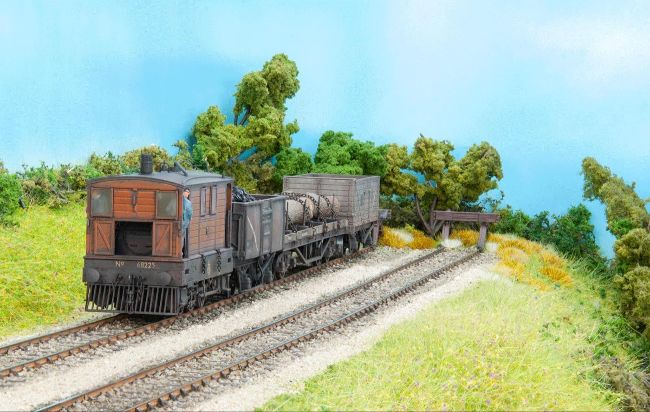
Adding scenic contours to a model railway, above or below the rails (or both), is a simple way to add realism and a sense of place.
PHOTOGRAPHY: GEORGE DENT
Most of us began our model railway journey with a train set laid atop a flat wooden board or table top. One of the easiest ways to begin adding extra realism is to introduce scenic contours, in the shape of hills, cliffs or cuttings, allowing bridges and tunnels to be introduced.
But that will only allow scenery to be added above the level of the tracks, which may be relevant to certain real-life locations, but does limit the viewer’s experience. Introducing scenic features below the tracks, such as embankments, underpasses, rivers and viaducts, can have a transformative effect to miniature scenes. Modellers have employed all manner of methods and materials to achieve these ends over the years, such as open-framed timber baseboards with the trackbed surrounded by swathes of chicken wire topped with papier-mâché. In most cases, especially for portable layouts, whatever materials are employed need to be lightweight.
Furthermore, cost is a constant factor for most of us, especially those of us building larger layouts with wide expanses of scenery. Expanded polystyrene foam makes for a lightweight and economical option, especially when re-purposing scrap packaging material.
Polystyrene foam is also available in flat sheets and blocks of varying dimensions, from hardware stores (sold as home insulation) or craft suppliers. The latter usually offer the sheets and blocks in more manageable sizes, and having pieces of consistent thickness and width makes it easier to create flat trackbeds.