EXPERT MODELLERS SHOW YOU HOW
MODELLING ‘THE SHOUT’
Marking the bi-centenary of the RNLI, Chris Leigh installs the Scalescenes lifeboat house and lifeboat into a coastal scene to show how to model cliffs and a stormy sea.
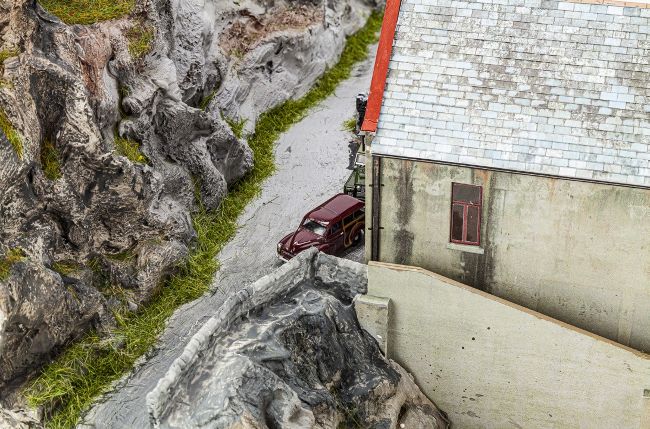
PHOTOGRAPHY: CHRIS LEIGH
200 YEARS OF BRAVERY
Since the RNLI charity was founded in 1824, its volunteer crews have launched the lifeboats over 380,000 times, saving over 144,000 lives, while its lifeguards – who became part of the RNLI’s lifesaving service in 2001 – have saved thousands of lives at beaches across the UK.
• To help or donate, go to www.rnli.org
The Royal National Lifeboat Institution (RNLI) marked its 200th anniversary earlier this year. It operates 238 lifeboat stations using over 400 lifeboats, varying from inflatables to fast all-weather vessels and hovercraft. It relies entirely on volunteers and fundraising, as accepting government money would probably mean accepting government interference.
Today the volunteer crews are summoned to a call-out by a pager, activated by HM Coastguard. Back in the period covered by the Scalescenes model kits (see Model Rail issues 328 and 329) crews needed to live close to the lifeboat station as they would be called to action by the firing of a ‘maroon’ (a rocket-propelled explosive charge) which would crack above the coastal town or village loud enough to be heard above the storm. The RNLI calls these emergency life-saving missions a ‘shout’.