HOW TO TWEAK A ‘J70’ TRAM ENGINE
Inspired by one of this month’s layouts, George Dent whiled away a few evenings by titivating a Model Rail exclusive LNER ‘J70’ locomotive.
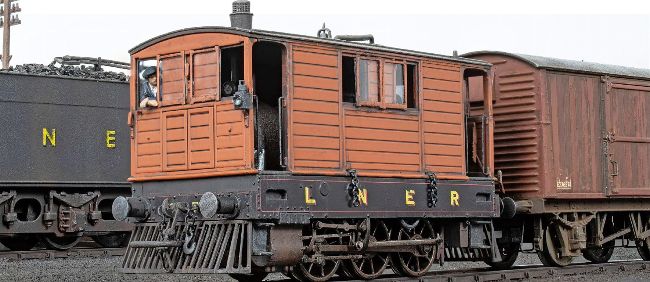
PHOTOGRAPHY: GEORGE DENT
Isn’t it funny how quickly you start taking things for granted? Model Rail’s exclusive ‘OO’ gauge rendition of the famous LNER ‘J70’ 0‐6‐0T, was first released in 2019 and, since then, I’ve had a couple of examples in a display cabinet beside my desk.
While I’ve enjoyed looking at them, I’d forgotten just how lovely they are when you take a much closer look (although obviously I’m a little biased!). After recently dismantling a model in order to impart a comprehensive weathering job, it was great to be reminded of what a gem this little tram locomotive is.
What gave me the impetus to tweak a ‘J70’? It was reading about Alan Price’s lovely ‘Outwell Village’ layout, which features in this issue (see page 64). I’d seen this layout in the flesh at an exhibition some time ago, well before we commissioned our ‘J70s’ from Rapido Trains. Despite knowing relatively little about the Wisbech & Upwell Tramway at the time, it really caught my imagination, so I was intrigued to learn more about how Alan’s layout came into existence.
OO GAUGE MODEL MR-210 Model Rail/Rapido LNER ‘ J70’ No. 7139, LNER lined black
SPECIAL OFFER PRICE £110.00 (limited time only, no further discount for subscribers)
AVAILABILITY Call 01209 705459 www.modelrailoffers.co.uk
SEE PAGE 99
Although I’ve weathered a ‘J70’ before, that was a rushed job and was partly achieved with the help of an airbrush and without any form of dismantling. While I’m pleased with how that BR-liveried model turned out, I did have to ‘muck up’ the windows slightly to disguise the fact that much of the interior remained pristine.
This time around, however, I decided to be a bit more thorough. On the flipside, I took the decision to keep the actual weathering techniques and materials as simple as possible – so no airbrushes have been harmed in during this project…
Just a handful of acrylic paint shades and two pots of dry pigments were employed.