The Doors
Reassessing the most maligned group of the 1960s.
By Andrew Male.
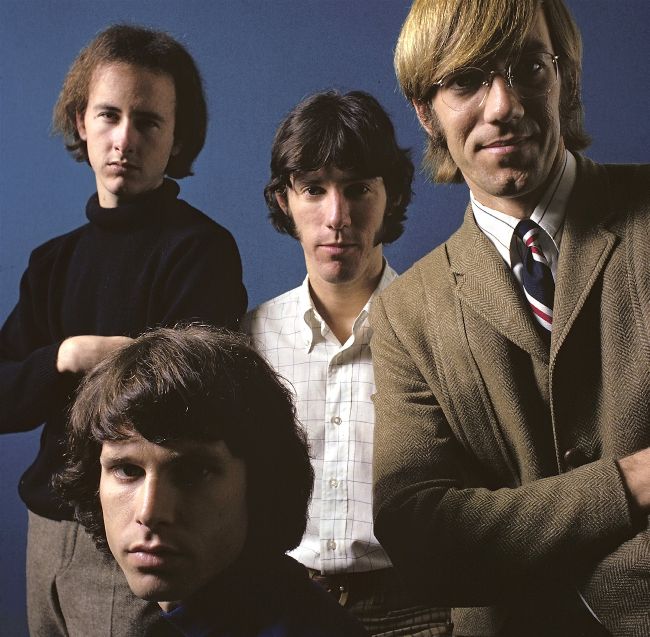
Riders on the storm: The Doors (clockwise from top left) Robby Krieger, John Densmore, Ray Manzarek and Jim Morrison made the scene in 1967.
Mptvimages/Eyevine, Getty
WHEN DID PEOPLE learn to hate The Doors? In the 1979 issue of The Rolling Stone Record Guide, arguably the first How To Buy LP guide, the recorded works of Jim Morrison, Robby Krieger, John Densmore and Ray Manzarek were accorded an array of fairly-proportioned star-ratings, ranging from two to five, with the critic responsible, Billy Altman, describing the group as “brash, courageous, intelligent, adventurous, uncompromising and unique.” Then, for the “revised” 1983 edition something happened and the book’s editor, Dave Marsh, stepped in, dismissing the group as “banal…adolescent… and pompous…”. While it was not uncommon for this San Francisco-based publication to take against LA groups, this felt like a significant shift. Although a possible kickback against Danny Sugarman and Jerry Hopkins’ sensationalist 1980 biography No One Here Gets Out Alive, the now upwardly mobile magazine was also severing ties with an emblematic band of the ’60s counterculture who it now deemed indulgent, wrong-headed, boorish and pretentious. Of course, throughout their five-year career, from their brooding 1967 debut to the thug-growl motorik blues of 1971’s L.A. Woman, The Doors became all these things. Also, there is perhaps no other US rock frontman whose demise was, in certain eyes, more pathetic; a once-beautiful hybrid of Narcissus, Dionysus and Marsyas brought low by his own arrogance, vanity and excess, Morrison became an embarrassing figurehead for the death of the ’60s: disown him at all costs.
“Iggy Pop and Patti Smith have both cited the importance of The Doors.”
Unfortunately, Oliver Stone’s well-intentioned attempt to resurrect the band with his 1991 biopic only served to make things worse, underlining the moral excesses and stylistic clichés of Morrison and co, while adding some high-blown untruths of the director’s own for good measure. In short, on Stone’s watch, The Doors became an indulgent cartoon of psychedelic profundity even easier to hate than the ’60s original. To say you hated The Doors in the ’90s sometimes meant little more than you hated that scene where Val Kilmer, Kyle MacLachlan and Kevin Dillon pretend to write Light My Fire. Yet, in recent years, a backlash against the backlash has been underway.