I Know It’s Over…
HE REALISES
THE SMITHS
WILL NEVER RE-FORM WITH HIM IN THEIR RANKS, BUT
MIKE JOYCE
ISN’T BITTER. HIS NEW MEMOIR CASTS HIS BAND’S MID-’80s MASTERY AS MIRACULOUS AND LIFE-AFFIRMING, WHILE CRITICS GASPED, FANS THREW FLOWERS AND MICK JAGGER SHOOK HIS ARSE. AND YET, POST-SPLIT, SOME QUESTIONS INTRIGUE THE DRUMMER AS MUCH AS EVER. “THAT NEXT ALBUM, COULD IT HAVE BEEN
MORE
SUCCESSFUL?” HE ASKS
IAN HARRISON
.
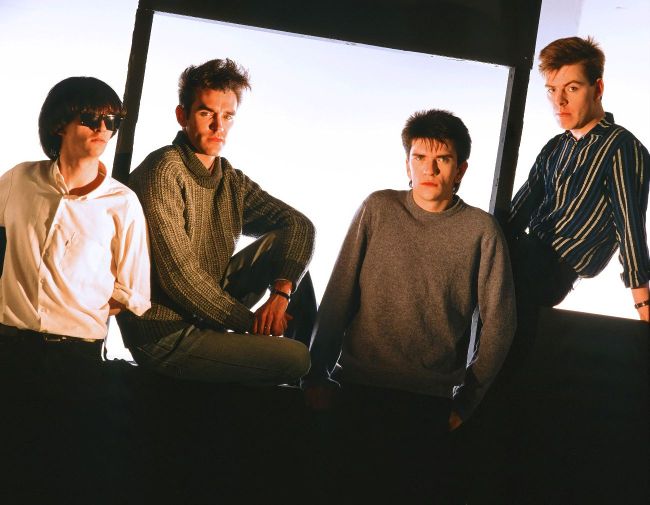
Northern powerhouse: The Smiths in 1984 (from left) Johnny Marr, Morrissey, Mike Joyce, Andy Rourke.
PORTRAIT BY
PAUL COX
.
AUGUST 9, 1983. SMITHS-MANIA HAD BEGUN. MAY’S SURGING debut single Hand In Glove was buoyant in the UK indie charts. BBC radio sessions for John Peel and David Jensen – soon to loom large in the band’s legend – had started to accumulate. And as singer and lyricist Morrissey told Kent ’zine Fun’N’Frenzy, their live shows were becoming increasingly ecstatic.
“I’ve never known such fun,” he declared of the riot of flowers now commonplace at Smiths gigs. “I simply want people to FEEL handsome and to feel good about themselves… Smiling seems to have become a mortal sin these days. But not with us.”
Songs to make you smile were heard this night at Camden dive Dingwalls, as the group delivered such provocative pop assaults as Accept Yourself and Handsome Devil. In his 2016 memoir Set The Boy Free, guitarist Johnny Marr recalled the gig as prompting The Smiths’ first full-blown stage invasion, and as the night he devised his good-luck ritual of secreting a £10 note in his pocket.
There were also songs to make you cry at Dingwalls, quite literally in drummer Mike Joyce’s case. During the delicate I Don’t Owe You Anything, he found himself overcome with emotion. “The rendition, the atmosphere, it was perfection,” he tells MOJO today. “I can see everybody in the band, I can see the crowd staring at us, transfixed. It just got too much for me – there were tears streaming down my face. It wasn’t like a gig. It was like a dream. It never happened to me before and it’s never happened to me since. I’m getting fucking goosebumps thinking about it.”
Other reasons to cry were on the horizon. Always lacking the effective management that might have resolved their internal contradictions, The Smiths’ inability to get financial obligations in writing would ultimately wreak havoc. Four breakneck years later, after repeated chart raids, pioneering albums and a transformative effect on pop culture, the greatest British group of their era would split on the verge of their greatest success.
“Because there was something that was so intense and so beautiful about what we did, I think we were all kind of in love with each other,” says Joyce. “It’s not a working relationship. It’s gone beyond that. And then it gets to being a situation where that incredibly passionate relationship… gets to falling out of love.”
After the love affair’s honeymoon, there was disillusionment and divorce. But the music The Smiths made has endured, transcending its time and place as generations of listeners tune into its exhilarating promise.
“One of the beauties of The Smiths was that we didn’t have a decline,” says Joyce. “I thought that we got better and better, from the first time we played together up until [1987 album] Strangeways, Here We Come. With The Smiths, any changes that did happen always happened for the better.” He pauses. “Well. Musically they did.”
O
CTOBER 2, 2025. MOJO MEETS MIKE Joyce in Manchester to talk about his engaging new memoir The Drums. We’re at The Lowry Hotel, a mile and a bit from The Salford Lads Club where the group were photographed for the gatefold sleeve of 1986’s The Queen Is Dead. Suitably, the rain falls hard
on the no-longer-so humdrum town, and though shiny modern buildings crowd the skyline, remnants of the old redbrick city that birthed The Smiths in 1982 poke through.
“I’ve got quite a unique perspective,” says Joyce, a well-preserved, affable 62 who is forthright and garrulous throughout our near-four hour summit. As bottles of chilled Peroni go down and nuts are chewed, he frequently expresses wonderment at what The Smiths did and stakes his claim as an essential element within the group. “I played drums on every single record The Smiths ever released and played every single gig – I’m the fucking drummer in The Smiths! But looking back on it, ’82 to ’87, it was so short…”
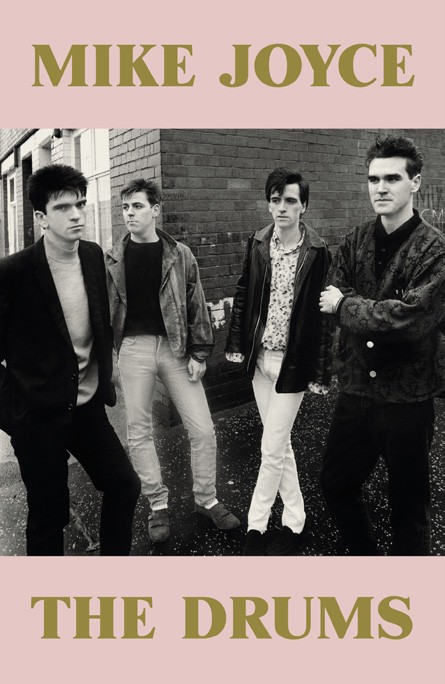
Courtesy Mike Joyce, Peter Ashworth, Paul Slattery/Camera Press, Pete Hope
“With The Smiths, changes always happened for the better. Well. Musically they did.”
MIKE JOYCE
Great pop groups are accidents of alchemy and in that The Smiths were no different. Joyce was officially still a member of punk band Victim when he entered Marr and Morrissey’s orbit in autumn 1982. But there was chemistry quite literally at work when he turned up at Spirit Studios in Manchester city centre for his audition.
“I might not have even spoken one word to Steve from Stretford –‘Morrissey’ didn’t exist yet,” he tells MOJO. “He just walked up and down in the corner of the room, with furtive glances every now and again. But Johnny was very engaging. I’d had, like, half a teaspoon of dried magic mushrooms, and at one point I looked down and saw the Saturn V rocket bending in between the bass drum pedal, in a kind of snake fashion, and then going out the other side… Then it was, we’re done. We played probably 10 to 15 minutes.”
Presumably his playing wasn’t affected, because Joyce was duly elected drummer of the nascent band. Bassist Dale Hibbert lasted for just one gig in October, while Morrissey’s friend James Maker, who played maracas and danced, managed two. Then Andy Rourke, Marr’s old bass player from funk band Freak Party, returned to help record demos for EMI at Chorlton’s Drone Studios in late 1982. Marr had earlier put a distance between them due to his friend’s heroin use, but when Rourke’s melodious bass lines commenced, The Smiths were complete. Today, Joyce recalls being “gobsmacked by his fluidity. When we played, me and Johnny were the rhythm section, like Charlie and Keith were in the Stones, with Bill Wyman playing his melody over the top. Andy did exactly the same thing.”
In The Drums, Joyce is eager to restore credit to those whose roles in The Smiths’ story have been understandably overshadowed by Morrissey and Marr. These include Rourke and John Porter, the producer of their key early releases (see panel). Joyce also stresses the importance of the late Joe Moss, whose Crazy Face clothing shop on Portland Street became The Smiths’ first rehearsal space, and whose impact, especially on Marr, was profound. As Andy Rourke told this writer in 2015, “Joe was a big influence on how Johnny looked, and he had a great taste in music. They used to hang out, smoke some weed and listen to records – girl groups, Shangri Las, The Supremes.”
“Joe was essential,” agrees Joyce today. “He bought us our PA and gave us our van. When he died [in 2015] Johnny said, ‘Without him there would have been no Smiths.’ When other people are involved, it has an effect on the band, in the same way it does when a manager comes into a football team… [but] the relationship between Morrissey and Joe was strained.”