Nvidia DGX Spark
A well-rounded toolkit for local AI thanks to the proven CUDA stack, solid performance and a spacious 128GB of RAM
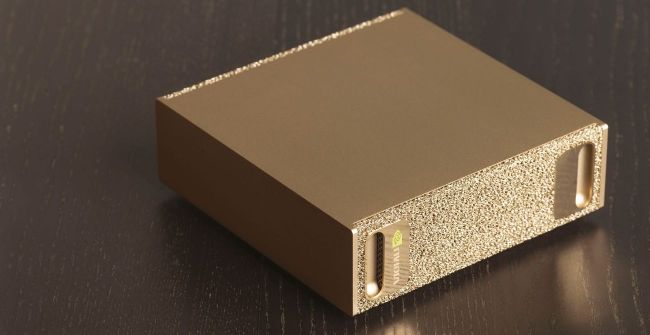
Ignore the flashy looks: the Spark is designed to get the job done
PRICE
£3,083 (£3,700 inc VAT)
from
scan.co.uk
Until now, most of the nuggets of the AI gold rush have been locked away in proprietary frontier models running in huge, remote, interconnected data centres. But as more and more open models are distilled into sizes that can fit into the VRAM of a single GPU, a burgeoning community of local AI enthusiasts has been exploring what’s possible outside the walled gardens of Anthropic, OpenAI and the rest.
However, so-called “AI PCs” with their x86 CPUs and some type of NPU aren’t up to the job. These systems rarely come with more than 32GB of RAM, and their relatively anaemic integrated GPUs can’t churn through inference at the rates enthusiasts and developers expect. Gaming GPUs bring more raw compute power, but aren’t suited to running large language models: even the RTX 5090 only has 32GB of memory on board.
Squeezing the model into RAM is just part of the problem, too. As conversations lengthen and context lengths grow, the pressure on VRAM increases. While you could solve the problem by buying an RTX Pro 6000 Blackwell GPU with its 96GB of GDDR7 RAM, that will cost north of £8,000.
In the face of this endless hunger for RAM, systems with large pools of unified memory have become attractive for those looking to explore local AI. Apple led the way with its M-series chips, with the M5 Max pairing up to 512GB of LPDDR5 memory with powerful GPUs. AMD’s Ryzen AI Max+ 395 (aka Strix Halo) platform has found a niche as a more affordable way to get 128GB of RAM alongside a relatively powerful GPU for local LLM tinkering; see the Corsair workstation on p60 for an example.
Enter Nvidia Blackwell
However, none of those systems natively supports Nvidia’s CUDA, which remains the dominant software platform for AI development. This is why Nvidia announced the DGX Spark way back at CES 2025, which brings the combo of a high-performance Arm CPU and a Blackwell GPU to desktops for the first time, alongside full support for the CUDA ecosystem.