No more Windows?
RUNNING ON EMPTY
IS TIME UP FOR WINDOWS?
From low-end hardware to gaming rigs, Windows isn’t the default choice for many PC owners any more. We explore whether you really need Windows in 2026
@PCPRO
FACEBOOK.COM/PCPRO
Windows is in a bad place and Microsoft knows it. “The feedback we’re receiving from our community of passionate customers and Windows Insiders has been clear. We need to improve Windows in ways that are meaningful for people,” said Pavan Davuluri, president of Windows and devices, in a statement to The Verge’s Notepad newsletter, written by Tom Warren, earlier this year.
For the first time in 40 years, Microsoft’s dominance of the operating system space is beginning to be questioned. At the low end, switching off support for Windows 10 (albeit half-heartedly) has shoved people to consider alternatives that are still happy to support the perfectly functional hardware.
At the relatively high end of gaming, Windows is being usurped by simpler rivals such as SteamOS and Bazzite, which give gamers a cleaner experience without the bloat and hassle of Windows 11. That’s not to mention the growing popularity of cloud gaming services such as Nvidia’s GeForce Now, which can run on practically anything.
In the education sector, the creative industries and among developers, Windows isn’t the must-have it once was. In short, it’s becoming increasingly difficult to find use cases where Windows is an unavoidable requirement.
In this feature, we’re going to examine these different categories of PCs one by one, exploring the rivals to Windows and whether you really need Microsoft’s once omnipresent OS at all.
GAMING PCs & DEVICES
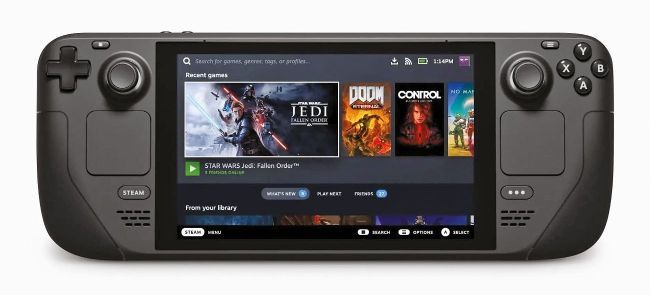
ABOVE
Valve’s Steam Deck has proved a huge hit with gamers
Gaming PCs were, until relatively recently, an impregnable stronghold for Windows. Apple has only ever paid lip service to gaming on macOS, while Linux gaming was a hobbyist niche. That’s changed significantly in recent years, with two competing forces flanking Windows: cross-platform games engines and cloud gaming.
Windows’ gaming dominance was built on DirectX. The DirectX APIs were the industry’s default means of talking to PC hardware. Games developers targeted DirectX because that’s where the market was, and gamers bought Windows PCs because that’s where the games were. The Xbox’s reliance on DirectX further reinforced the feedback loop.
Now that loop has loosened. Today’s games developers rarely target DirectX directly, instead building games on top of engines such as Unreal or Unity. Those engines can take the same instructions and send them to multiple graphics systems, including DirectX, the cross-platform Vulkan, macOS’s Metal and various Console APIs. The developer doesn’t need to rewrite the game for each new operating system; they just choose which platforms to target.
Valve’s Proton eliminated another of Windows’ big advantages: compatibility. Proton acts as a translation layer, converting DirectX calls into Vulkan instructions without a serious hit to performance. That breakthrough allowed the huge back library of games written specifically for Windows to run on Linux without modification from the developer, and it gave birth to the PC gaming hit of the 2020s: the Steam Deck.
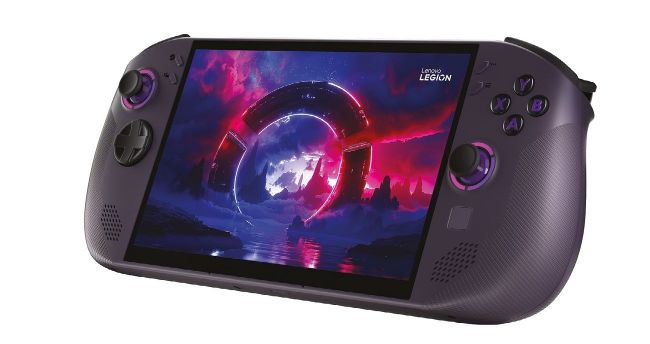
BELOW
The SteamOS version of Lenovo’s Legion S Go performed far better than the Windows 11 edition
The handheld Steam Deck, which runs on Valve’s own Linux-based OS, made the OS largely invisible. It’s more like a console interface, where users simply select a game from their Steam library and start playing, There’s no login screen, no Start menu, no pop-ups to navigate, no awkward fiddling with tiny icons on a tiny screen – all the things that make Windows handhelds a pain.
The SteamOS version consistently outperformed its Windows 11 counterpart