Playing To The Gallery
In 1975, Jethro Tull decamped to the French Riviera to record their eighth studio album, Minstrel In The Gallery. As the record celebrates its half-century, Ian Anderson recalls the story behind its creation in between breaks in a lengthy touring cycle that would eventually lead to the departure of their zebra suit-wearing bassist Jeffrey Hammond.
Words: James McNair
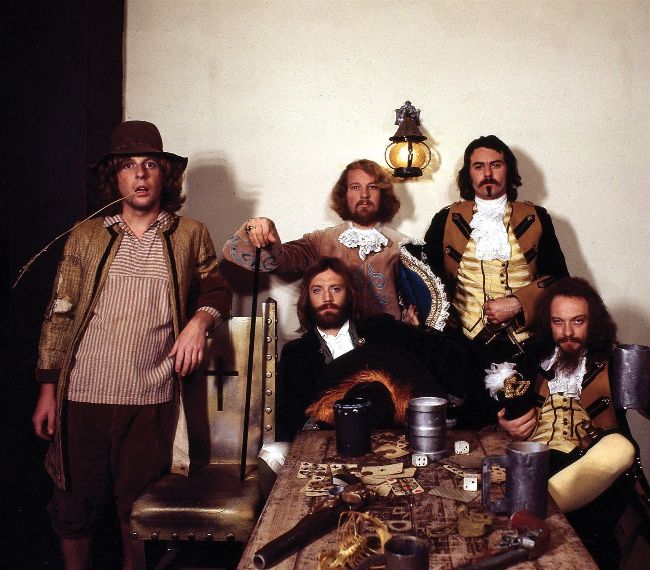
Martin Barre Tull in ’74 (that’s 1974 not 1674.)
PRESS/JETHRO TULL ARCHIVES/CHRYSALIS RECORDS
In spring 1975, had you been in the vicinity of Radio Monte Carlo’s premises in Monaco, you might have seen Ian Anderson dismount his Ossa trials motorcycle and go inside. It was there, in a sprawling live room big enough to facilitate games of badminton between takes, that Jethro Tull recorded their eighth studio album, Minstrel In The Gallery, between May 15 and June 7.

The
Minstrel In The Gallery
album cover is an altered version of Joseph Nash’s 1838 oil painting, Twelfth Night Revels, tweaked to represent the five members of the band.
“We were trying to extend the boundaries, always pushing forward. We were also quite isolated from other influences, and that made us unique.”
While Renaissance made Scheherazade And Other Stories at London’s Abbey Road and Mike Oldfield tracked Ommadawn in rural Herefordshire, Tull were getting it together in another country. It was the first time they’d recorded an LP outside the UK and they’d shipped the Maison Rouge Mobile Studio out to Monaco along with Anderson’s bike. Now all he, guitarist Martin Barre, pianist John Evan, bassist Jeffrey Hammond and drummer Barriemore Barlow had to do was resist holiday resort temptations and knuckle down.
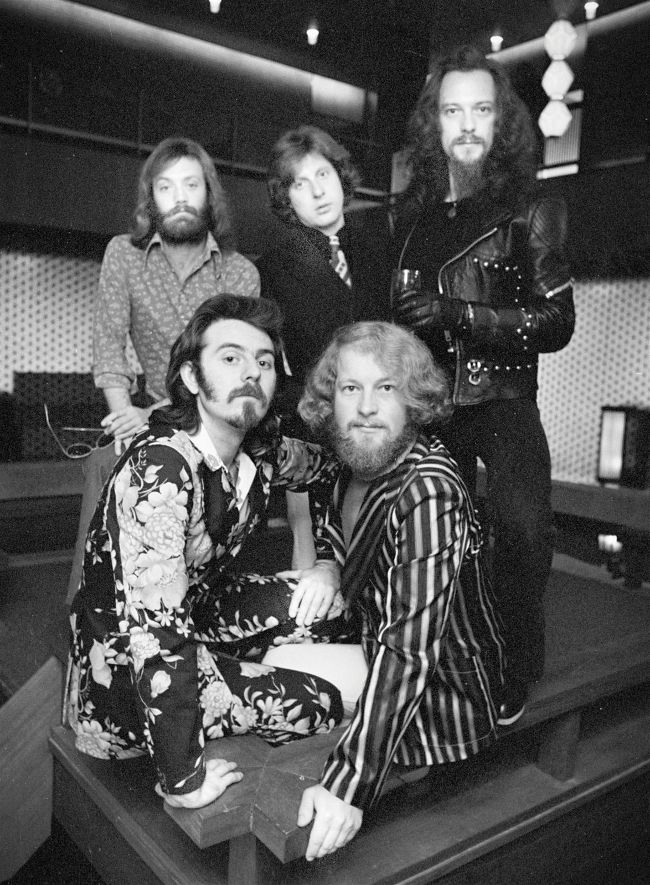
Jethro Tull in Amsterdam, Netherlands, October 12, 1974. Clockwise from back left: Barrimore Barlow, John Evan, Ian Anderson, Martin Barre and Jeffrey Hammond.
GIJSBERT HANEKROOT/REDFERNS/GETTY IMAGES
“In 1973, we’d tried to record an album [1974’s War Child] in the relatively famous residential studio Château d’Hérouville, just outside Paris,” says Anderson today. “It was awful. That notion of removing yourself from everyday life and concentrating on the music often just meant people lounging by the pool wasting time and money. But for me, personally, Monte Carlo wasn’t much of a distraction. In fact it was the antithesis of the kind of place where I’d have said, ‘Ooh, let’s go there for a holiday!’ Then, as now, it was full of affluence and snobbery.”
Anderson was in Monte Carlo under slight duress. Both Jethro Tull’s accountant and their manager Terry Ellis had recommended the band record there to gain non-resident tax advantages, but this, says Tull’s leader, made him feel uncomfortable.