The Best Of The Best
Ten years after he passed away, Chris Squire’s influence, both as a person and as a musician, remains as powerful as it has ever been. Those who knew him and played with him discuss the man, his talent and his legacy.
Words: Stephen Lambe
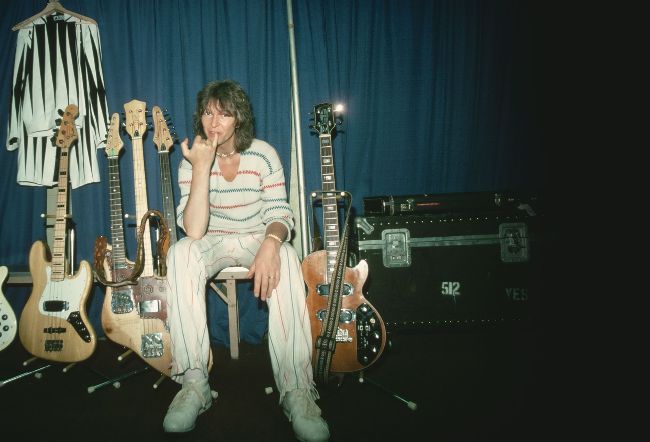
The late, lamented Chris Squire, pictured resting backstage at a concert.
Portrait: Lynn Goldsmith/Corbis/VCG via Getty Images
“He was an amazing musician; funny and a little crazy in the best way. I miss his antics. He was a true rock star.”
Jon Anderson
Chris Squire’s passing on June 27, 2015 was a massive shock to the progressive rock community. Squire was an icon – a genuinely larger-than-life figure from an era that produced so many musicians of great character and virtuosity. Although Yes co-founder Peter Banks had died two years previously, Squire was also the first artist of that stature to leave us, although his contemporaries Keith Emerson, Greg Lake and John Wetton would sadly follow within a couple of years. But when Squire died, we realised that our heroes are mortal. It was a moment of existential crisis for many of us.
During the course of his final battle with acute erythroid leukaemia, he remained defiant. His bandmate from 1982 to 1995, Trevor Rabin, was one of the last musicians to chat with him.
“The very last time I spoke to Chris, he was in hospital in Phoenix,” says Rabin. “It was days before he passed, and he wasn’t thinking about his demise. On the contrary, one of the last things he said to me was, ‘I can’t wait to get out of here so I can get back on the road.’ There was no consideration that he wasn’t going to make it right to the end.”
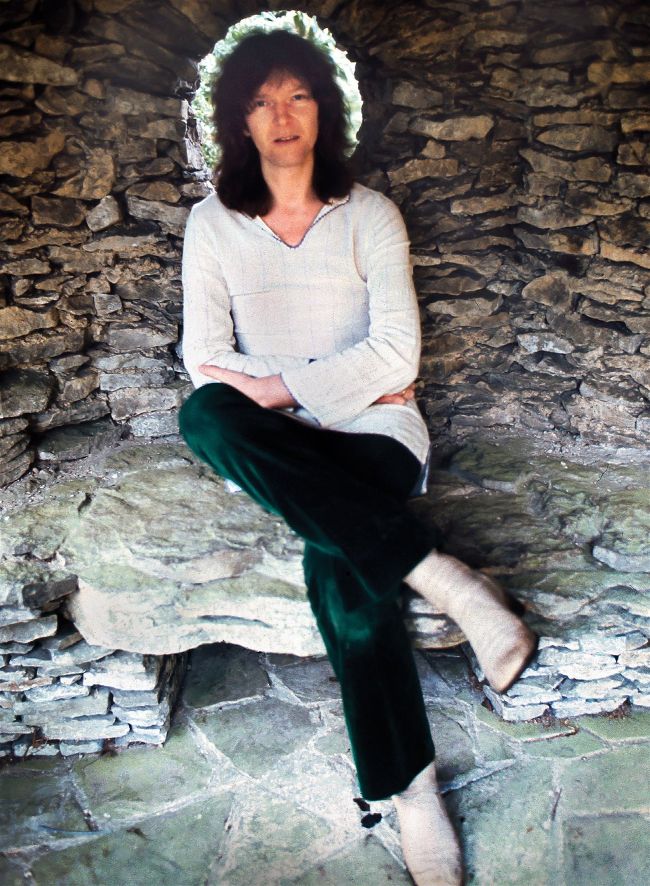
Halo there! Squire in his Japanese garden in Virginia Water, circa ’74.
MAX ADELMAN
It had already been announced that Squire would step back from Yes while he received treatment, with longtime friend and colleague Billy Sherwood stepping in for him, but suddenly Sherwood found himself having to fill those massive shoes on a permanent basis. He looks back on that difficult period with sadness.
“It happened so fast, from his diagnosis to gone within six weeks; so suddenly what was supposed to be a short-term thing became permanent. I felt a lot of pressure because as well as having to learn all this music, there was this feeling of, ‘This should be Chris.’ And, by the same token: ‘Oh my God, if I fail at this, the destruction of this band will be at my hands.’ That was very daunting. I felt joy at moments of playing this amazing music, which is in my soul, but then I felt guilty because Chris wasn’t there. That first tour was the strangest experience I’ve ever had in my life.”
Christopher Russell Edward Squire was born on March 4, 1948 in Kingsbury, north-west London. He was a church chorister and, inspired by the 60s beat music boom and the melodic playing style of Paul McCartney in particular, he took up the bass, which led to the formation of his first proper group, The Syn. He later became a member of Mabel Greer’s Toyshop, and in 1968, a fateful meeting with Jon Anderson led to the formation of Yes. Anderson recalls those early days.