GB
  
You are currently viewing the United Kingdom version of the site.
Would you like to switch to your local site?
10 MIN READ TIME

CRITICAL THINKING BOOKS

Pills, bills and heartache

A polemic on the evils of Big Pharma needs to apply more rigour to its own argument, writes Will Self
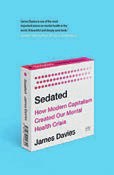
Sedated: How Modern Capitalism Created Our Mental Health Crisis by James Davies (Atlantic, £18.99)

It’s been a great year for Big Pharma—especially here in Britain, where the government displayed considerable alacrity when it came to advance ordering Covid-19 vaccines; foresight that was notably lacking when it came to instituting the measures necessary to confine the pandemic. And of the drug companies caught up in the race to save Boris Johnson’s political career, none has had a better global press than the US giant, Pfizer. It teamed up with the German company BioNTech to develop its vaccine, two 0.3ml doses of which have been injected into my upper arm, the first in late January and the second in late April, thereby—in theory at least—delivering me from the enforced reclusion known as “shielding,” which Britons with serious underlying health conditions have had to endure.

But James Davies, the author of Sedated, doesn’t want such scientific success to distract me from what he argues are Pfizer’s more questionable activities. Indeed, he wishes to finger the drug company as one of the principal actors in the UK’s so-called “mental health crisis”: a crisis that the pandemic is—according to the psy-professions, at least—set to deepen, along with the demand for all manner of nostrums and panaceas.

For Davies, Pfizer helped Britain to become the heartsick man of Europe, and they did it by sponsoring the development of two questionnaires: PHQ-9 and GAD-7. There’s a reasonable chance that you will have encountered one or both of these in your GP’s surgery. The questionnaires, which take five minutes to complete, consist of multiplechoice questions about our mental states familiar to those undertaking psychometric tests in corporate settings. PHQ-9 aims to tell doctors if we’re depressed; GAD-7 if we’re suffering from anxiety. Davies impresses on us how “low the bar” they set for patients to be diagnosed with “moderate depression,” which, according to NHS guidelines, is sufficient grounds to be prescribed antidepressants. You only have to tick the boxes saying you experience poor appetite, troubled sleep and poor concentration every day for the past fortnight and—bingo!— you could win a prescription for Zoloft (sertraline), one of the most widely prescribed psychiatric drugs in the world, manufactured by—you guessed it—Pfizer.

Read the complete article and many more in this issue of Prospect Magazine
Purchase options below
If you own the issue, Login to read the full article now.
Single Digital Issue Aug/Sept 21
 
£5.99 / issue
This issue and other back issues are not included in a new subscription. Subscriptions include the latest regular issue and new issues released during your subscription. Prospect Magazine
PRINT SUBSCRIPTION? Available at magazine.co.uk, the best magazine subscription offers online.
 

This article is from...


View Issues
Prospect Magazine
Aug/Sept 21
VIEW IN STORE

Other Articles in this Issue


In This Issue
300 not out
You need a break. Sadly, going abroad has
Letters
Stay of execution In his piece “From Hartlepool
Up front
Elderly care
Most of us will need it at some point— so why not share the costs? Andrew Dilnot makes the case
GB News
WHAT YOU NEED TO KNOW ABOUT
In fact
About 2.3m Britons hold cryptocurrencies; the median holding
Nero
IN PRAISE OF LOST CAUSES
Do not enter
Forgive us our trespasses. Trespassers will be prosecuted.
Unhappy birthday
The nation’s bicentenary is marred by an election that has settled nothing and entrenched division, writes Valeria Costa-Kostritsky
Should we ban meat?
Peter Singer YES Cal Flyn NO YES
Essays
50 thinkers to rebuild the world
We stopped, they rethought. Meet the outstanding minds who are shaping the future
England: the nation that never was
Nervous breakdowns are only to be expected in a land that was always someone else’s country
A new England
SPEED DATA
The Prime Etonian
Portrait
Beyond black and white
The real picture of race in Britain comes in shades of grey. Until we can see them, we’ll keep talking past one another— and fail to make the progress we need
Money trouble
The global financial system is addicted to quantitative easing, and going cold turkey could be lethal. The only safe way to quit is to change the system itself
Driven together
Food delivery apps, and the wider gig economy, rely on labour that can be switched on and off like a tap. But the atomised couriers are now combining—and demanding a fairer deal
9/11—the moment that postponed everything
The attack locked in America’s hubristic sense of itself as “the indispensable nation.” After 20 years of foreign policy failures, the necessary rethink about its place in the world is finally underway
What is a woman?
The ferocity of the trans rights debate reflects a faith in the biological classes “male” and “female.” But when stripped of their cultural context, these physical categories are clouded in haze
The trials of freedom
Zimbabwean novelist Tsitsi Dangarembga is today admired worldwide, but hounded at home—by the very regime whose postcolonial pathologies she helps us make sense of
Critical thinking
The three worst words
Inside the Imperial War Museum’s battle to appeal to a divided nation
The logic of the screen
Pornography doesn’t persuade, it trains. Philosopher Amia Srinivasan says it’s time to reconnect desire with creativity
Meet the cousins
When first identified, Neanderthals were viewed as merely primitive versions of humans. But there’s plenty they can teach us about surviving climate change
An ant
They might be small, but they pose big questions about the individual and the collective psyche
The enlightened economist
A former Bank of England governor argues something has gone seriously wrong with capitalism—but refuses to name the guilty parties, finds Martin Sandbu
The optimistic Indian
One of the world’s most renowned economists has led an enviable life of companionable conversation and high ideals, finds Ferdinand Mount
Merciless on principle
A new biography of DH Lawrence fails to capture a restless and sometimes perverse author, writes Freya Johnston
Books in brief
Seven Ways to Change the World: A Global
Recommends
© SALLY JUBB/COURTESY OF APPLE/SONY PICTURES Classical Alexandra
Policy & Money
Economics and investment
Paul Wallace The analyst Tax returns Finance ministers
Policy report: Transport & infrastructure
Climate change is bringing our ageing travel links into focus
And fi nally...
Puzzles
The Generalist by Didymus
Some like it hot
British summertime is plagued with uncertainty, but we enjoy moaning about that almost as much as the sun itself
BRIEF ENCOUNTER
ILLUSTRATION BY NICK TAYLOR What is the first
Chat
X
Pocketmags Support