TRUE PERSPECTIVE
HOW 2D GAMES TRIED TO SHINE IN A 3D WORLD
WHEN POLYGONS OVERTOOK PIXEL ART IN THE NINETIES, GAMERS GOT TO EXPERIENCE AN ERA OF NEW POSSIBILITIES, FRAUGHT WITH EXPERIMENTAL CONTROL SCHEMES AND WOBBLY TEXTURES. WE SPEAK TO VETERANS OF THE TRANSITION TO FIND OUT HOW PAINFUL IT REALLY WAS
Words by Stephen Wilds
Take a dive through the videogame media in the mid-Nineties and a theme quickly emerges: the future is 3D, and that future is now. The history of 3D technology can be traced back to 1974, first appearing in games like Maze War and Spasim, followed by the tank simulator Battlezone, rear cameras in racing games like Pole Position, and taking shape in first-person shooter games like Wolfenstein 3D. But a substantial wave of 3D games arrived with the fifth-generation consoles in the mid-Nineties, as the Sony PlayStation, Sega Saturn and Nintendo 64 set out to change the market. Why would anyone want to take a step back from the cutting edge?
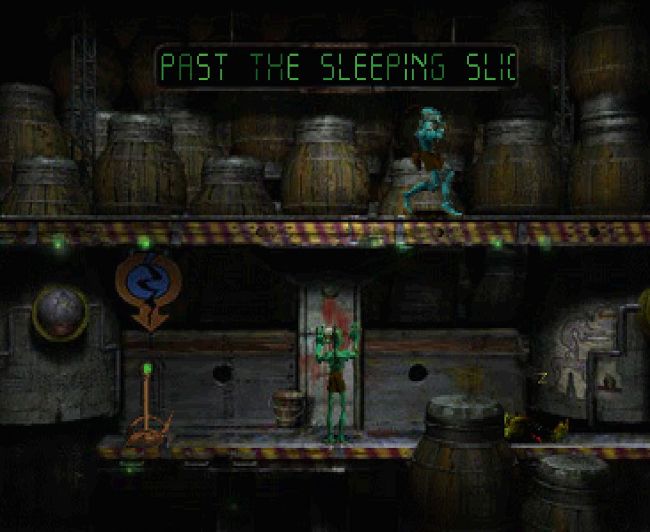
» [PlayStation] Lorne Lanning felt that real-time 3D on Nineties consoles was crude, and opted to pre-render Oddworld: Abe’s Oddysee.
An opinion piece on TechRadar in 2010 said, “Going back to an early Nineties 3D game now is almost painful. Flat faces, non-moving lips during conversations, stick-figure character models, smeary textures, and appalling animation… the list of problems goes on.” But not every title fell victim to forced polygons and age. The visuals and controls in the legendary Tomb Raider haven’t aged well, and Super Mario 64, one of the first successful 3D platformers, puts more work on players to control a flawed camera system so Mario and the environmental perils can remain visible. That didn’t take away from the sensory intimacy of the game. Ed Annunziata, creator of Ecco The Dolphin and Mr Bones told us, “The world changed when I played Super Mario 64.Specifically, the moment where I wondered, ‘Can I jump in the water?’ Then I tried it and when my Mario splashed into that beautiful clear water, my brain tasted pool chlorine for a moment.” Many games succeeded solely on an experience that couldn’t be replicated on any other home console, and the third dimension played a big role in that.
Braving a new frontier in gaming is never easy. Andy Gavin, cofounder of Naughty Dog and lead programmer on Crash Bandicoot, said recently in an interview that he had to hack the PlayStation hardware to make the 3D work the way they wanted, as it almost pushed the systems too much. “The problem has always been the same,” according to PC Plus via TechRadar, “the potential of 3D fights with the limitations of current systems, whether it’s simply displaying the graphics in the first place or making them look as good as other art styles,” he said. But many of those supposed early 3D ‘classics’ don’t quite hold up in functionality or appearance, while the alternative 2D offerings retain their charm. Games like Street Fighter III: 3rd Strike, Mega Man X4 and Castlevania: Symphony Of The Night are all still easy to play today and are continuously being ported.
While some creators abandoned the twodimensional plane when 3D became possible, others in the industry felt there was no need to deem the old style obsolete. “Ever notice that 2D games that fake 3D often look cooler than real 3D?” Ed asked us, “That’s because the 3D effect is artistically or cleverly crafted.” Many creators saw the almost abandonment of the twodimensional style as unfortunate.