D-Day remembered
It’s now 80 years since 160,000 troops arrived on Normandy’s beaches for the largest amphibious invasion in history. Here, a leading historian looks back at the sacrifices made by the men who helped bring us freedom
by JAME SHOLLAND
THEATRE / EVENTS / FILM / EXHIBITIONS / RADIO / PODCAST / TV / BOOKS
GETTY
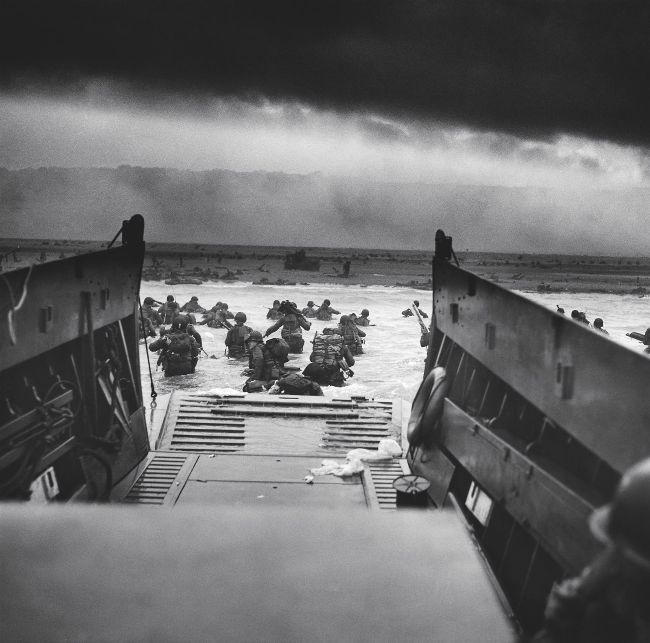
For those men crammed into landing craft in the early hours of Tuesday, 6 June 1944, it was impossible to get much of a sense of what was going on. The boats’ high metal sides, fellow soldiers standing, and the heavy load of weapons and equipment barred much of the view.
On the stormy swell, the craft was being rocked up and down and from side to side. Icy spray poured over them, soaking everyone. If the coastline ahead could be glimpsed, then
it was fleetingly; smoke from gunfire shrouded much of it. Being on one of the assault waves was no way to appreciate the immense scale of D-Day, the Allied invasion of Normandy.
Rather, the best way to view it was from the air, which was how Lieutenant Colonel Francis ‘Gabby’ Gabreski, an American fighter pilot, first saw it on that day of days. He had been airborne from southern England at 3.36am, when it was still dark, but by the time he and his flight of P-47 Thunderbolts were nearing France, the thin streaks of a cloudy dawn were casting a pale light across the sky.