NORTHERN LIGHTS
The 19th century witnessed a thriving double bass making scene in the Manchester area of England. This northern school, which had its own distinct style points, flourished for a longer time than its southern counterpart, as Thomas Martin, Martin Lawrence and George Martin explain
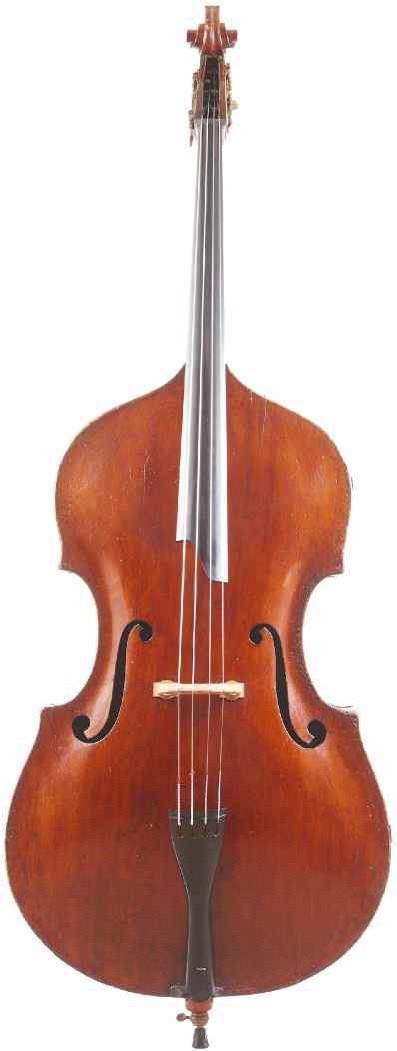
William Tarr made this double bass in around 1826. He had yet to develop his characterisic style of soundhole and outline
The English school of double bass making is widely known to players and luthiers alike, with most major orchestras likely to have an English double bass among their ranks. But to claim that there is any definitive example of the English double bass would be to misjudge entirely the nature of making in this country. Indeed, when looking at instruments produced during the heyday of the industry in England we see not one homogeneous school of production but a great number of regional variations focused around the main population centres. While the London makers are arguably the best known, there were a number of makers of considerable importance in the northern city of Manchester, including William Tarr, James Cole and James William Briggs, who pursued a distinctly different style from that of their southern neighbours.
Manchester came to importance at a relatively late period in England’s history. First established as a Roman settlement in around 79AD, it remained a small town until the turn of the 19th century, when the Industrial Revolution brought sweeping changes.The textiles industry prevalent in the surrounding county of Lancashire experienced a boom owing to advances in manufacturing technology, and this led to a rapid increase in population as the town became a centre of trade and commerce. Manchester was granted city status in 1853 and continued to grow until after the Second World War, when the UK began to deindustrialise.
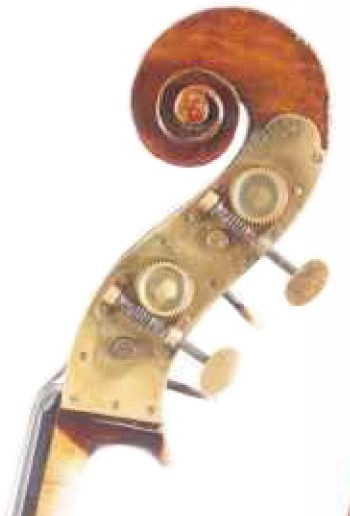
This c.1826 head is in William Tarr’s unique style that coninued to develop over the years
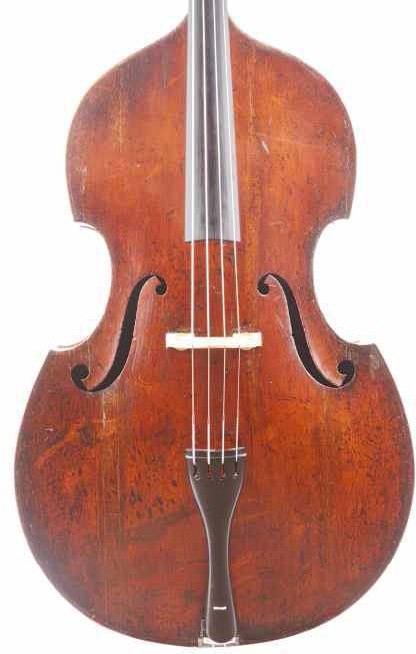
This 1851 double bass is in the viol patern with Tarr’s typical soundhole. These instruments were made in large numbers
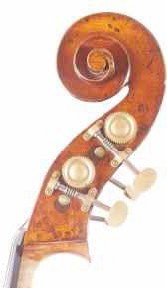
A heavier-set Tarr head made in 1851 that is seen on his later instruments
ALL PHOTOS COURTESY OF THE AUTHORS
By the 1830s, Manchester’s population had reached around 140,000, almost double that recorded at the first national census at the turn of the century. With this rising population came a greater demand for arts than ever before, yet although concerts at theatres and churches in the city were becoming a regular occurrence, there were still no privately owned double basses there. All this was soon to change with Manchester’s first major double bass maker, William Tarr.