You have control…
Fly-by-wire technology on commercial airliners was a revolution. However, such radical changes prompted some to consider the merits of automation over human control, as we discover in this exclusive extract from a new book
by Jack J Hersch
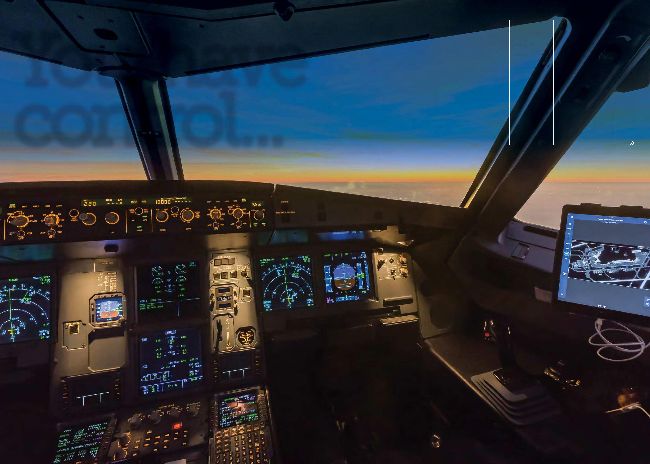
Airbus revolutionised cockpit design with the introduction of fly-by-wire technology, eliminating the need of a large yoke control column in favour of a sidestick
By 1980 Airbus zeroed in on the short-haul market as the battlefield where it could win market share from the leading American manufacturers. This segment was growing rapidly as hub-and-spoke route systems began dominating commercial aviation.
In hub-and-spoke, airlines use smaller planes to feed passengers into major hub airports, which then redirect them onto other planes bound for their final destinations. It is what propelled Amsterdam/Schiphol to the front ranks of European airports. Hub-and-spoke gained popularity in the deregulated, high-fuel-price environment of the late 1970s, as airlines sought ways to maximise capacity loads while reducing operating costs. It enabled them to move at least as many passengers as old point-to-point routes while using fewer planes. To be most cost-effective, it was important to have the right aircraft plying these short flights.
In 1981 Airbus finalised plans to produce the ideal plane for a hub-and spoke world, one it felt would give it the lead in global aircraft sales. Called the Airbus A320 (next in line after the A300B and A310), it would be a 150-seat, short-to-midrange jet that would have three key advantages over the competition.
First, it would be more fuel-efficient than every other plane of its size. The second-largest expense for any airline, behind employee salaries and benefits, is the cost of fuel. Fuel costs are, to a large extent, determined by the engines. Manufacturers building a new plane don't simply pick an engine out of a catalogue and bolt it on. Both its physical size and the amount of thrust it produces must exactly match a plane's requirements. And the way it is attached to the aircraft must be engineered with incredible precision, so the combination of airplane and engine performs the way pilots expect.
The A320 incorporated the most fuel-efficient jet engines produced in those days. Coupled with aerodynamically efficient wings, the result was a cost-effective plane where airline bean counters could gauge the fuel cost savings over its biggest competition, the current Boeing 737 models.
Second, its single-aisle cabin would be wider than the competition's. The obvious advantage of a bigger cabin is more comfort for passengers, who have the final say on the merits of any airliner. The Airbus A320's insides were 7in wider than Boeing's 737 (as well as the 727), meaning passengers in six-across seating each had an additional inch of room, plus one extra inch in the aisle. That may not sound much, but it is the difference between being shoe-horned into a seat and having a bit of space around the hips and shoulders.
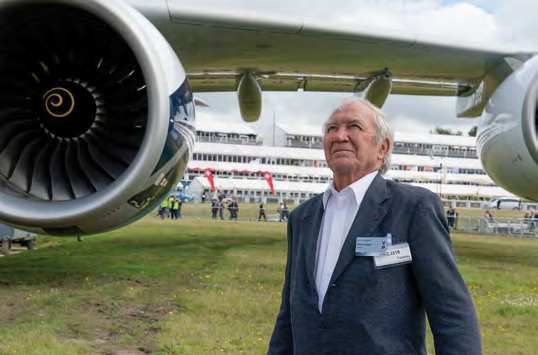
Bernard Ziegler – son of one of Airbus’ founders and first president, Henri Ziegler – is often credited for implementing fly-by-wire to subsonic airliners
AIRBUS

Before
the
A320,
Airbus
offered
the
popular
A300
and
A310.
While
both
of
the
widebody
types
had
control
columns,
the
European
airframer
had
already
introduced
electric
signalling
on
secondary
flight
controls
to
reduce
cables
and
pulleys
AIRTEAMIMAGES.COM/KEITH BLINCOW (ATI)
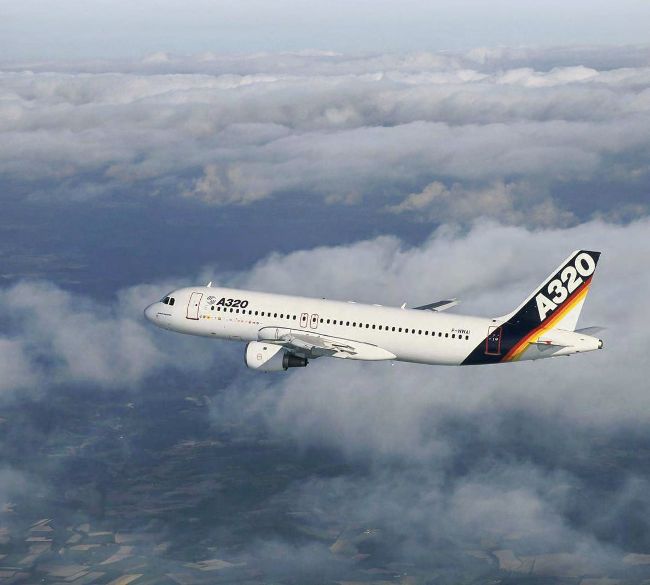
The first Airbus aircraft equipped with fly-by-wire was the A320. Here, the prototype, F-WWAI (c/n 001), is pictured on its maiden flight on February 22, 1987
AIRBUS
Juergen Weber, former chairman of the board of Lufthansa, expressed a satisfied customer's opinion of the wider cabin: “The customer acceptance of the fuselage of the A320 is better than the Boeing 737. It is pure physics, very simple, and the customer feels it.”