BEATS INTERNATIONAL
THE 90S WAS A DECADE DEFINED BY HOUSE BANGERS, BLISSED-OUT BEATS AND DEEP DROPS, BUT THESE CONCENTRIC WAVES OF SOUND WERE BEGUN MUCH EARLIER IN CHICAGO, DETROIT, DÜSSELDORF, NEW YORK AND LONDON. WE EXAMINE THE ROOTS OF THE DANCE TAKEOVER…
MATTHEW LINDSAY
It’s a hot night in Chicago, July 12, 1979. At Comiskey Park, it’s Disco Demolition night. Spurred on by recently-fired rock DJ Steve Dahl, people are destroying disco vinyl. True, ever since Saturday Night Fever, there’s been glitterball overkill with roller-skates everywhere and even Ethel Merman wanting a piece of the action. That night, however, musician Vince Lawrence noticed something: “They were just destroying records by black people.”
Despite the racist, homophobic blow dealt to dance in the Disco Sucks frenzy, it didn’t die. That year, in fact, it reached new heights, stretched across Donna Summer’s double Bad Girls and Tantra’s Hills of Katmandu epic. Barely a month after Comiskey Park’s wanton destruction, Off The Wall hit the shelves.
By 1979, disco’s metamorphosis into house was already afoot. DJ Frankie Knuckles had left disco HQ, New York, in 1977 with promoter Robert Williams, heading for Chicago and taking up residency at the Warehouse. Here he developed a unique style, emerging from friend Larry Levan’s shadow, spinning an orgy of Philly, New York and European sounds, reworking old disco, moulding it into new forms, extending and eliminating parts. Ask fellow pioneer Marshall Jefferson what exactly house is and he’ll say it’s “whatever Frankie Knuckles plays at the Warehouse” – the coolest, most underground records.
In the early 80s Knuckles relocated to Chicago’s Power Plant and Williams found another DJ, Ron Hardy. Hardy, a heroin addict, added a tougher edge than Knuckles’ grooves, pulverising the largely black, largely gay crowd with sped-up records. After 84, he’d open with Frankie Goes To Hollywood’s Pleasuredome, hinting at where this music was heading.
By this point, Chicago records had emerged that defined the house aesthetic. First there was Jesse Saunders/Vince Lawrence’s On & On, a tough new electronic sound chiselled from disco remnants (with nods to Funky Town and Player One’s Space Invaders). But the real revelation was Jamie Principle’s Your Love; shimmering, arpeggiated sequencer lines, Principle’s sensual, breathy vocal turbocharged by another rhythmic, machinemade wallop. Principle’s influences were Anglo-American – Prince/Bowie but also Depeche and The Human League, part I Feel Love, part Here Comes The Rain Again. Your Love was a Chicago sensation, played by Knuckles at first on a reel-to-reel. Everyone thought it was European.
Chicago house proliferated – issued, as was Your Love, on Larry Sherman’s Trax label, mostly made with a DIY ethos with beats supplied by any machine called Roland (808-909-707). Jack Trax came in ‘85 with Chip E’s Time To Jack – delirious, hyper-physical dance mantras – while Marshall Jefferson’s Move Your Body a year later added Elton Johninspired piano vamps; gospel inflections brought from church to dancefloor. As AIDS ravaged the gay community and Reagan ushered in a new conservative era, the hot-house of the nightclub became a congregational sanctuary like never before. Coaxing out Chicago house’s depths was maestro Larry Heard, whose muso chops gave Mysteries Of Love and Can You Feel It the refined, emotive sophistication that built deep house.
CHICAGO RECORDS DEFINED THE HOUSE AESTHETIC: JESSE SAUNDER S/VINCE LAWRENCE’S ON & ON, PLUS JAMIE PRINCIPLE’S YOUR LOVE – SHIMMERING SEQUENCER LINES TURBO-CHARGED BY A MACHINE-MADE WALLOP
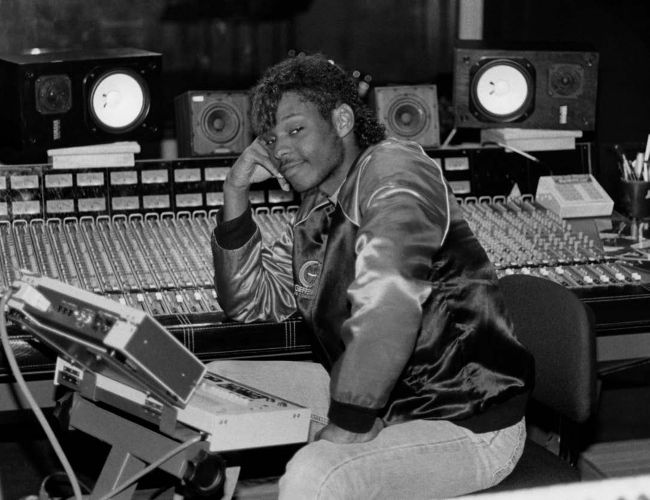
One of house music’s early pioneers, Jesse Saunders produced Love Can't Turn Around, the first house track to make the UK charts
Raymond Boyd/Getty
GOSPEL INFLECTIONS WERE BROUGHT FROM CHURCH TO DANCEFLOOR, AND AS AIDS RAVAGED THE GAY COMMUNITY AND REAGAN USHERED IN A NEW CONSERVATIVE ERA THE HOT-HOUSE OF THE NIGHTCLUB BECAME A CONGREGATIONAL SANCTUARY LIKE NEVER BEFORE