EURO BEAT
IT WAS A GLOBAL PHENOMENON THAT SWEPT THE CONTINENT AND BEYOND, STORMING THE CHARTS AND CRAMMING DANCEFLOORS WITH BIG BEATS – AND A CERTAIN KITSCHNESS. CLASSIC POP TRACKS THE INCREDIBLE RISE, REIGN, FALL AND REBIRTH OF EURODANCE
FELIX ROWE
Those among us of a certain vintage will fondly recall the sensation of fastening the straps of your boots before gliding through a wall of fog onto the rink to the sound of Rhythm Is A Dancer blasting over the PA system. It’s Friday night at the roller disco, dad’s not picking you up until at least 9.30pm, and you’ve got just about enough shrapnel in your pocket for an over-priced flat coke and a Pot Noodle. Living the dream.
With a record box stuffed with Europe’s finest 12" singles, the local DJ promises to deliver the perfect soundtrack to the evening. High-octane beats set the pace, embellished, inevitably, with nagging Casio riffs, with the obligatory tongue-twister rapped verse leading into a euphoric, soulful chorus. After dropping the tempo for a brief reprise, the DJ ramps it up again in the final quarter with the signature megamix, ending – as always – with 2 Unlimited’s No Limit.
From roller rinks in English suburbs to rather more thrilling venues such as abandoned factories in Berlin or sweaty basement clubs in Milan, thousands of variations of the same scene played out across Europe and beyond in the early 90s as millions danced their socks off to the same soundtrack. Today, the vibe is both cherished and derided in equal measure… but there’s no denying it was one hell of a ride. Welcome to Trans-Euro Expression – buckle up and enjoy your journey!
THIS IS THE WAY
As the 80s made way for the 90s, a new cultural zeitgeist was bubbling up from the heart of the Continent. Drawing upon an established clubbing culture and an unrivalled lineage of electro pioneers, Germany was fertile ground, turning out many of the earliest and most laudable Eurodance examples. But it was to become a truly pan-European phenomenon, with Italy, Sweden, Denmark and the Netherlands all producing big players.
Back in the UK, pop mogul Pete Waterman had a canny idea of which way the tide was turning. Throughout the 80s he had enjoyed phenomenal success nurturing artists in-house with his songwriting duo, Stock and Aitken. Their homegrown output had already taken cues from the burgeoning European hi-NRG sound. By the 90s, instead of creating the music, Waterman was simply importing ready-made Euro-pop from the continent.
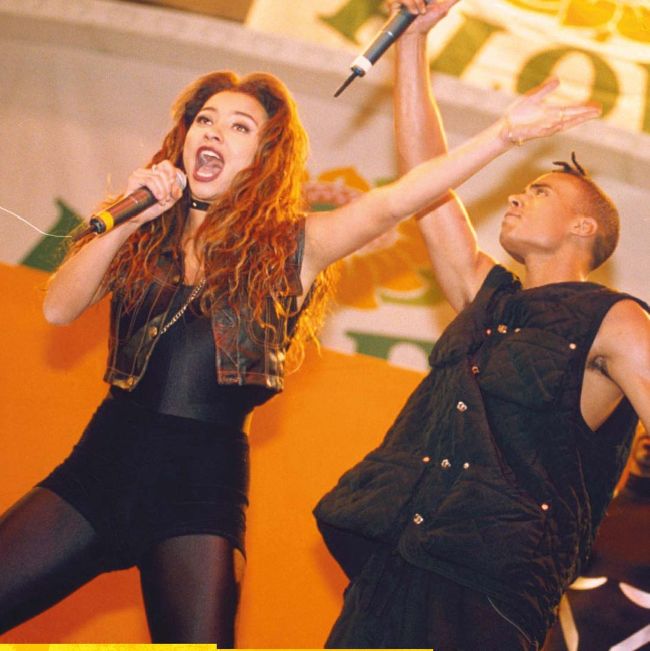
2 Unlimited, fronted by Anita Doth and Ray Slijngaard, working the crowd at London’s Earl’s Court, 1994
Brian Rasic/Getty