THE PRODIGY
VOODOO PEOPLE
THE PRODIGY COULD SO EASILY HAVE BEEN ONE-HIT NOVELTY TECHNO WONDERS, BUT THEY BECAME ONE OF THE BIGGEST BANDS IN THE WORLD. CLASSIC POP EXAMINES HOW SWAPPING RAVE FOR GRUNGE AND REGGAE HELPED THE PROVOCATEURS MOVE ON FROM PUBLIC INFORMATION FILMS TO HEADLINING FESTIVALS
JOHN EARLS
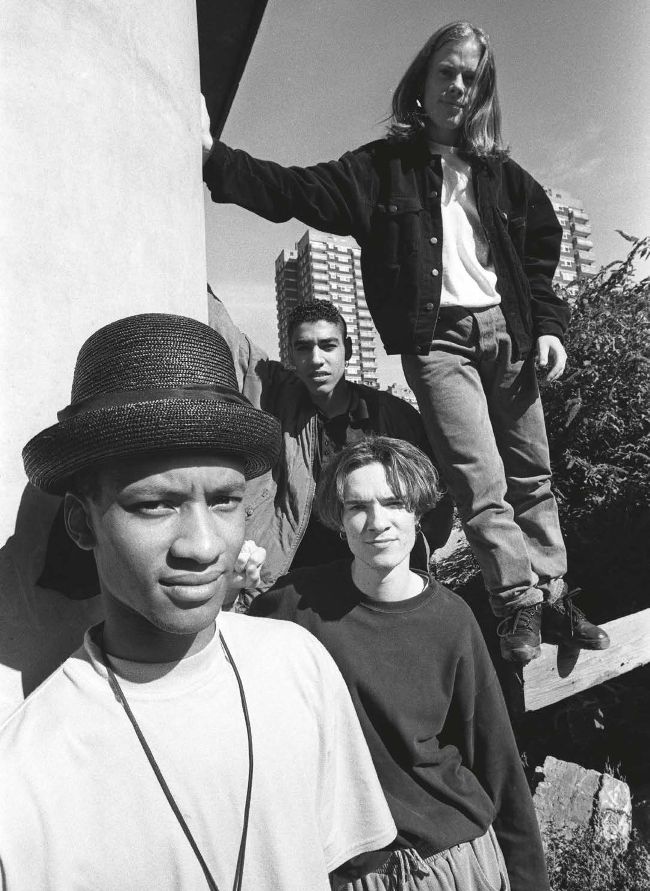
Rising high: Maxim Reality, Leeroy Thornhill, Keith Flint and Liam Howlett poised for world domination
Martyn Goodacre/Getty
There’s probably a parallel universe out there, a place where Smart E’s went on to define youth culture for a generation and The Prodigy were mere novelty rave one-hit wonders. When Charly and its sample from the 1970s Charley Says public information films charted in 1991, it launched a deluge of similarly daft breakbeat singles, all catapulted into the chart on easy nostalgia: Urban Hype’s A Trip To Trumpton, Sesame’s Treet by Smart E’s, Shaft’s Roobarb And Custard… and those involved, we should note, only had microdot careers (although admittedly Mark Pritchard, half of Shaft, did become a respected Warp Records artist.)
Fortunately for dance music, Liam Howlett was more of a visionary than the duo responsible for the delights of A Trip To Trumpton. Speaking around the time of the release of debut album The Prodigy Experience in 1992, Liam said: “If we’d tried to write another Charly, it would have been the downfall of us. We’d have been labelled cartoon samplers; the toytown techno group.”
In truth, ending up as a footnote in chart history was always an unlikely outcome for a collective as strong-willed as The Prodigy. Initially lured in by the DIY spirit of punk, Liam’s musical awakening while growing up in Essex arrived at the same time as hip hop. He was part of a local breakdancing crew formed around his high school in Braintree, before buying his first Roland W-30 keyboard.
Liam became a DJ with hip hop outfit Cut To Kill, moving to London aged just 16 in 1987, but he returned to Braintree just two years later: “London was too snobby about us,” was his summary of why Cut To Kill failed. By then, he’d become immersed in rave. Watching Adamski and Guru Josh convinced Liam he could make that music himself – so, with his hip hop writing career going nowhere, he switched to creating house tunes.
These would be house tunes instilled with hip hop’s power and energy, a point eventually made most clearly on Liam’s 1999 mix album The Dirtchamber Sessions Volume 1. Sampling issues mean it’s likely to never be reissued, but it’s become a revered compilation among dance and hip hop devotees for its rapidfire collision of Mantronix, Schooly D and JVC Force with Fatboy Slim, Meat Beat Manifesto and Primal Scream.