5 | PHOTOSHOOT
Going underground
If it’s raining outside, get your photographic fix by heading below the surface, says Wendy Evans
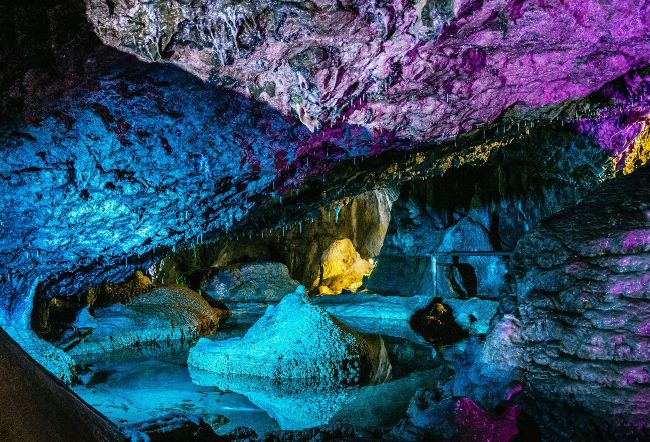
The shutter speed used here is close to the limit of what you can realistically shoot without a tripod, but with image stabilisation in the lens and a mirrorless camera, it was achievable.
In times gone by, caves provided shelter for both animals and early human beings. Often created by acidic rainwater running down through cracks in the limestone and dissolving the rock, cave systems take many thousands of years to fully form.
Features such as stalactites (the ones that hang down) and stalagmites (the ones that grow upwards) are created by rainwater loaded with dissolved calcium bicarbonate from the limestone above. As the water drips down, a small amount of calcium bicarbonate is left behind as limestone. This can form at the end of stalactites, in patterns down the walls, or on the floor as stalagmites, where the process gradually builds up into a flatter ring than the ones hanging down. The process is extremely slow, typically growing at a rate of less than 10cm every thousand years or so.