GB
  
You are currently viewing the United Kingdom version of the site.
Would you like to switch to your local site?
24 MIN READ TIME

PRECIOUS CARGO

Exploring Hideo Kojima's new Perspective as he prepares delivery of the sequel to Death stranding

Game Death Stranding 2: On The Beach Developer Kojima Productions Publisher SIE Format PS5 Release June 24

When Death Stranding arrived in November 2019, several months before the COVID-19 pandemic upended our lives and outlooks, it was widely considered the strangest mainstream videogame we’d ever seen. The first project by Hideo Kojima following a messy divorce from Konami, the company at which he made his name, the game defied convention or easy summary. Its protagonist, portrayed by The Walking Dead’s Norman Reedus, was a courier named Sam Porter Bridges, and the game mainly involved trudging across desolate, ankle-spraining terrain with an infant strapped to his chest, while burdened with luggage and chased by ghosts.

Looking back at the game, Kojima concedes that it was “weird”. One of Bridges’ first tasks was, remember, to hoist the US President’s cadaver on his back, on a cross-country dash to a local incinerator. But beneath the eccentricity there was also something vaguely humorous about its central challenge: to carry heavy cargo upon your back across North America without tripping. The taller the load, the greater the chance you’d topple. It’s the kind of idea you might expect to find in the work of an indie darling such as Bennett Foddy (see p38). And yet, with Sony’s keen backing, and Kojima’s attention-grasping reputation, a game founded on an indie-esque fancy was rendered as an extravagant epic, one featuring celebrities scanned into the game in screamingly high definition, plus a wistful, expensive soundtrack and a story whose looming relevance nobody foresaw.

THE SEQUEL, HE DECIDED, WOULD BE A CAUTIONARY TALE ABOUT THE RISKS OF RELYING UPON DIGITAL CONNECTEDNESS
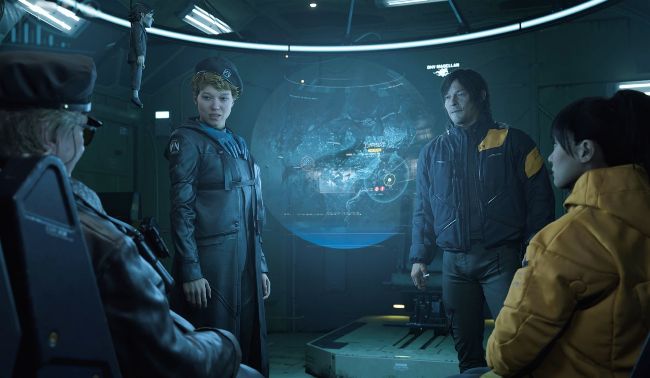
Sam Bridges is mostly a silent protagonist, acting as an eavesdropper to the interactions that occur around him between the chatty supporting cast

Set in a fragmented America, Death Stranding portrayed a world in which society had collapsed into isolated pockets, connected only by the delivery people who hauled essentials between them. Porters such as Bridges were the new lifeblood of civilisation – not soldiers, not scientists, but logistics workers. At launch, reactions were divided. Some praised the game as visionary, a slow and meditative counterpoint to the combat-heavy overfamiliarity of big-budget games; others derided it as self-indulgent and odd. And then, shortly after its release, everyone entered a world of quarantine, masks and contactless delivery. We were cut off from our friends and family members. Toilet roll became scarce. Death Stranding’s vision of human connection maintained through screens and packages suddenly felt less like speculative fiction and more like an act of prophecy.

Kojima had already written the script for a sequel. Then, during the pandemic, he fell severely ill. He won’t discuss the specifics, but it was serious enough to trigger in him something of an existential crisis, a renewed eagerness to make the kinds of games “that don’t already exist in the world”, ones with resonant messages. When he recovered, he found himself back in his studio’s cavernous office, but almost completely alone. “Everyone else was working remotely,” he says. “I felt that perhaps I would never meet anyone again.”
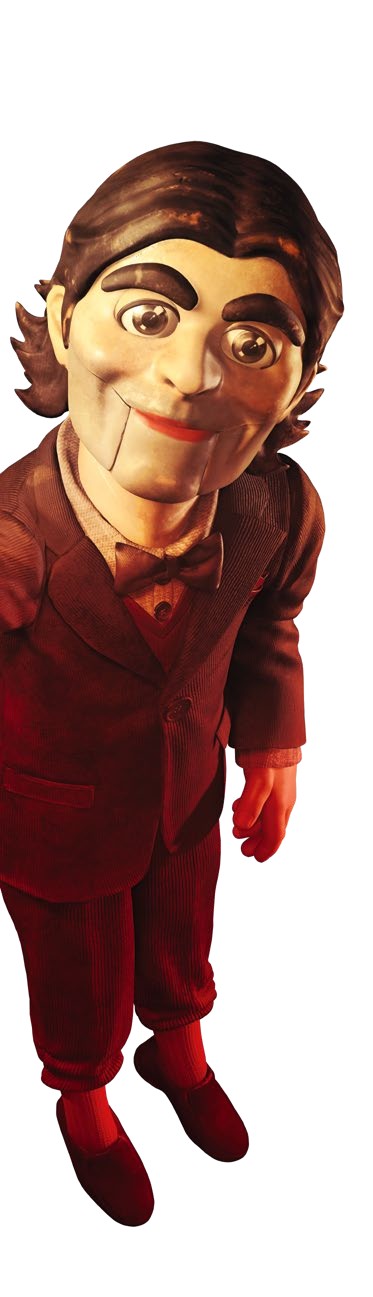
He watched as the world shifted to online meetings: “We were having drinking parties and school events, but now entirely online, an almost entirely digital existence.” It felt exactly like the chiral network, Death Stranding’s version of the Internet, which protagonist Sam Bridges was tasked with bringing online, city by city. And yet, rather than feeling the satisfaction of a proven prophet, Kojima felt only dismay. “Something had been lost,” he says. “Physically, we weren’t connected any more. Nobody could travel. Humans can’t be fully human if they can’t travel any more.” Yes, Zoom and all the other tools had ostensibly brought us together. But online connection, Kojima realised, was not the catch-all cure that his game had suggested to the global epidemic of isolation and loneliness.

The pandemic passed, but the fragmentation and yearning for reconnection? Those remained. Kojima tore up the story he had written for Death Stranding 2. The sequel, he decided, would instead be a cautionary tale about the risks of relying upon digital connectedness in lieu of physical presence. ‘Should we have connected?’ became Death Stranding 2’s motivating question.

Unlock this article and much more with
You can enjoy:
Enjoy this edition in full
Instant access to 600+ titles
Thousands of back issues
No contract or commitment
Try for 99p
SUBSCRIBE NOW
30 day trial, then just £9.99 / month. Cancel anytime. New subscribers only.


Learn more
Pocketmags Plus
Pocketmags Plus

This article is from...


View Issues
Edge
July 2025
VIEW IN STORE

Other Articles in this Issue


Edge
You’ll love this new feature. We like to call it… a mouse
In creating the original DS, Nintendo’s designers stared
EDGE
EDITORIAL Tony Mott editorial director Alex Spencer deputy
Knowledge
Artificial hope
As the first demos of AI-generated games become playable, what’s their purpose – and their cost?
Pride of India
Indie Gaming Utsav shows the growth of development in an up-and-coming region
Escape artistry
How developer NikkiJay created a game by channelling her difficult upbringing within a cult
NEVER FELT BETTER
The stop-motion game following a whole new pattern
Soundbytes
Game commentary in snack-sized mouthfuls
ARCADE WATCH
Keeping an eye on the coin-op gaming scene
THIS MONTH ON EDGE
Some of the other things on our minds when we weren’t doing everything else
Dispatches
DISPATCHES JULY
Dialogue
Trigger Happy
Shoot first, ask questions later
The Outer Limits
Journeys to the farthest reaches of interactive entertainment
Walking the walk
Building on a path laid by Death Stranding
Hype
ARC RAIDERS
Extracting the best bits of a difficult genre
ERIKSHOLM: THE STOLEN DREAM
Making the most of police incompetence
BABY STEPS
Peak practice
JUMP SHIP
Playing every role in a dynamic co-op space opera
WILL: FOLLOW THE LIGHT
Alone against the elements in this unconventional walking sim
SPOOKY EXPRESS
Draknek’s superior sequel is on the fright track
MARATHON
We’re firmly in extraction-shooter territory for Bungie’s redraft
INTO THE FIRE
Following The Invincible , Starward Industries offers
PAINKILLER
Developer Anshar Studios Publisher 3D Realms Format PC,
IKUMA – THE FROZEN COMPASS
Developer/publisher Mooneye Studios Format PC, PS5, Xbox Series
STAR WARS: ZERO COMPANY
Developer Bit Reactor, Respawn Entertainment Publisher EA Format
#411
VIDEOGAME CULTURE, DEVELOPMENT, PEOPLE AND TECHNOLOGY
Features
Q+A: HIDEO KOJIMA DIRECTOR
The irrepressible Troy Baker reprises his role as
LINKED TO THE PAST
Can Switch 2 recapture the original’s magic?
MARIO KART WORLD
Beside the track you’ll find Yoshi-operated kiosks offering
DONKEY KONG BANANZA
Developer / publisher Nintendo Release
METROID PRIME 4: BEYOND
Developer Nintendo, Retro Studios Publisher
DRAG X DRIVE
Developer/publisher Nintendo Release Summer A Rocket League -infused
NINTENDO SWITCH 2 WELCOME TOUR
Developer/publisher Nintendo Release June 5 Much has been
FURY’S ROAD
When Raw Fury was founded in Stockholm a decade ago, it was as an “un-publisher”. It would “treat people like people”, would be “for happiness over profit”, and would respect videogames as “art”, granting them the same status as other, more established media. This particular approach, it said, would tip the balance more in favour of developers, allowing them to “find success, be happy, and stay independent”. It has broken some old rules along the way – not least when it revealed the specifics of its publishing deals publicly, for anyone to scrutinise – while releasing a succession of hits including the Kingdom series, Sable , Norco , Cassette Beasts and, most recently, the sublime Blue Prince . As the company arrives at its tenth anniversary, we meet with its leaders to ask if Raw Fury has delivered on its big promises
THE MAKING OF . . . SPLINTER CELL: CHAOS THEORY
How missed opportunities and difficult conditions forged a stealth classic
HOLLOW PONDS
A meeting in a pub led to a decades-long conversation, and games unlike any other
Imperfect 10?
This month we find ourselves returning to an
No More Heroes
The anarchic Japanese vision of America that gave us videogaming’s Don Quixote
Tekken 8
A progress report on the games we just can’t quit
Play
Clair Obscur: Expedition 33
Developer Sandfall Interactive Publisher Kepler Interactive Format PC,
Post Script
Expedition 33’s fantasy dismantles the world, and its genre
Forever Skies
Developer/publisher Far From Home Format PC (tested), PS5,
Post Script
All your base
Fatal Fury: City Of The Wolves
This long-awaited sequel is like the age-worn fighting
Lost Records: Bloom & Rage
They say the camera never lies; the implied
Skin Deep
Developer Blendo Games Publisher Annapurna Interactive Format PC Release
Post Trauma
Developer Red Soul Games Publisher Raw Fury Format PC
Tempest Rising
Developer Slipgate Ironworks Publisher 3D Realms, Knights Peak Format
Bionic Bay
Developer Mureena, Psychoflow Publisher Kepler Interactive Format PC,
I, Robot
Developer Llamasoft Publisher Atari Format PC (version tested),
Ghost Town
Developer/publisher Fireproof Games Format Quest (2, 3, Pro)
Rusty Rabbit
Developer Nitroplus Publisher SoFun Format PC (tested), PS5,
Old Skies
Developer/publisher Wadjet Eye Games Format PC (tested), Switch
Chat
X
Pocketmags Support