COLLECTED WORKS MARK HEALEY
The coder with an artist’s flair on 8bit beginnings, making a splash with UGC, and returning to the god game genre
BY RICK LANE
KGB SUPERAPY
Developer/publisher Codemasters Format Commodore 64, ZX Spectrum Release 1989
PAINT & CREATE
Developer/publisher Europress Software Format Amiga, Commodore 64, PC Release 1993
MAGIC CARPET
Developer Bullfrog Productions Publisher EA Format PC, PS1, Saturn Release 1994
DUNGEON KEEPER
Developer Bullfrog Productions Publisher EA Format PC Release 1997
BLACK & WHITE
Developer Lionhead Studios Publisher EA Format Mac, PC Release 2001
FABLE
Developer Big Blue Box studios/Lionhead Studios Publisher Microsoft Format PC, Xbox Release 2004
RAG DOLL KUNG FU
Developer/publisher Mark Healey Format PC Release 2005
LITTLEBIGPLANET
Developer Media Molecule Publisher SIE Format PS3 Release 2008
DREAMS
Developer Media Molecule Publisher SIE Format PS4 Release 2020
MASTERS OF ALBION
Developer/publisher 22cans Format PC Release TBA
Videogames that double as creative toolsets are an essential feature of the modern landscape, with the creators of Roblox, Fortnite and Minecraft all building empires on a synthesis of creation and play. This avalanche of user-generated content has connective tissue with 2008’s LittleBigPlanet, which sought to put the power of development directly into the hands of players. Yet for its creative director, the game that made Sackboy a star didn’t emerge from lofty projections of where the industry might be headed, but simply from a lifelong passion for the creative act, and a desire to release it from the arcane depths of programming.
“I’ve always been more interested in making games than playing them,” Mark Healey admits. “From when I first got my Commodore 64, the idea that I could make stuff happen on the television that I was in control of was really exciting to me.”
Teaching himself BASIC and later machine code, Healey first made “silly little games” for his sisters to play, before copying his work to cassette tapes and selling them in his school playground. “I did one called Agoraphobia,” he says. “It was a little text adventure game where you had to wander around and work out how to escape the house.” Another was a “ripoff ” of the fighting game The Way Of The Exploding Fist – named, naturally, The Way Of The Imploding Fist.
Healey’s enthusiasm for game design eventually brought him to the attention of Codemasters co-founder David Darling, landing him his first commercial gig while still a teenager, producing a Commodore 64 iteration of side-scrolling shoot-’em-up KGB Superspy. Working as a contractor, his priorities began to shift: “I love coding, but that wasn’t really my strongest point. It was a struggle for me to code. It gave me headaches, whereas art came more naturally.”
Healey joined Bullfrog Productions as an artist in 1994, and later left the company alongside game designer Peter Molyneux for the formation of Lionhead Studios, where he remained until 2005, when he co-founded Media Molecule. He would reunite with Molyneux later in life, but in the meantime Healey directed LittleBigPlanet and its sequel, before spearheading his most ambitious attempt yet to package the act of creation into videogame form, Dreams.
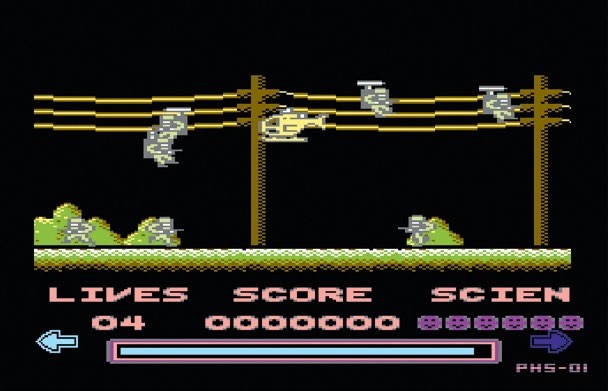
Designed by Christian Pennycate,
KGB Superspy
is a late-’80s sidescrolling shooter in the vein of
Choplifter
“CODING GAVE ME HEADACHES, WHEREAS ART CAME MORE NATURALLY”
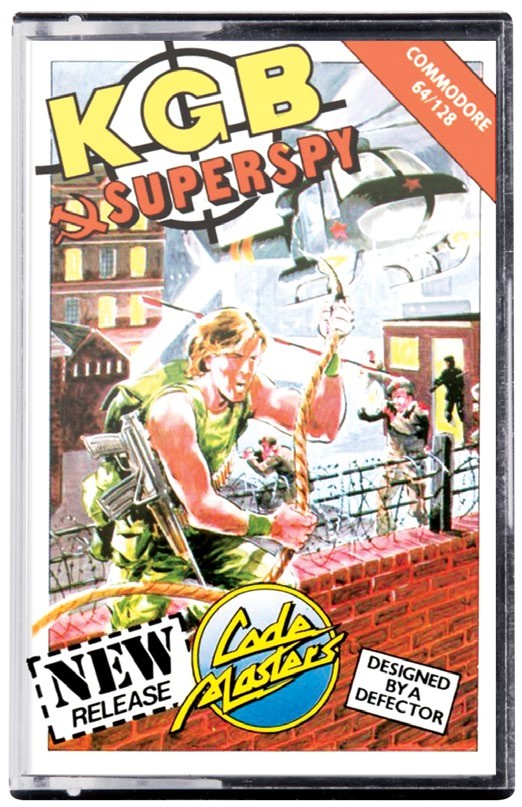
“It was really exciting to go into a computer shop and see it on the shelf,” Healey says of his 8bit debut game
KGB SUPERSPY
Developer/publisher Codemasters Format Commodore 64, ZX Spectrum Release 1989
I was at college at the time, doing a business programming course, but I was like, “I don’t want to do business programming – I want to make games”. Luckily, the tutor of that college knew someone at the night class she was doing, whose boyfriend [Christian Pennycate] was making ZX Spectrum games. She organised for him to come in and meet me, which was really nice of her, and I showed him some demos and things that I’d done. And he was like, “Let’s introduce you to Codemasters, see if we can get you a contract for a game”.