EXCLUSIVE!
DELIVERANCE
In autumn 2025, the stark landscapes of BRUCE SPRINGSTEEN’s Nebraska swim back into focus, as its fabled electric version emerges and a Bruce biopic explores the struggles behind the songs. On p42, director Scott Cooper reveals Springsteen’s role in shaping Deliver Me From Nowhere, but not before the Boss himself has his say. “It was an exploratory period,” he tells WARREN ZANES, “and that affected everything I was doing.”
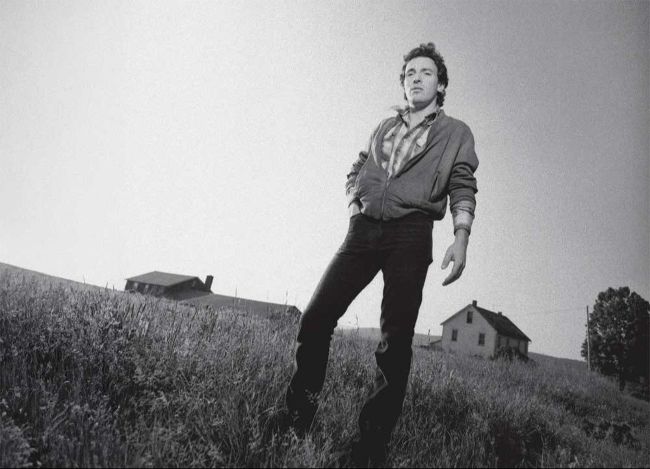
Nowhere man: Bruce Springsteen, upstate New York, June 1982.
Photograph by DAVID MICHAEL KENNEDY
AS THE RIVER TOUR – THE BIGGEST AND MOST successful of Bruce Springsteen’s 31-year-old life – wound down in September 1981, the group that had gone through it all together dispersed. E Street Band guitarist Steve Van Zandt and saxophonist Clarence Clemons would be getting married. Drummer Max Weinberg had done the same that June. “Up to that point, we were like a street gang,” Weinberg explains to MOJO today. “It seemed like we were together all the time, not a lot of friends outside of the band. And suddenly that stopped.”
Weinberg remembers the lunch in LA where he first told Springsteen he was getting hitched. “On one hand, he was really happy for me. On the other, I think he was kind of like, ‘Why?’”
With no set plans to record or rehearse, the band went their separate ways. Springsteen moved into a small rental house in Colts Neck, New Jersey. “I didn’t know where he lived,” says Weinberg. “It was almost like he didn’t want anyone to know where he lived.”
One person who did know was Mike Batlan, Springsteen’s roadie and more. It was Batlan who helped Bruce set up a TEAC 144 4-track recorder in the rented home’s bedroom. “I can see what Max is saying,” Batlan tells me. “People are getting married and going off into these lives outside of, you know, the band only. I’m sure Bruce was reflecting on it. Some of that I could see, just sitting there in the bedroom with him. We’d all go to these weddings. I had this beautiful girlfriend at the time. I distinctly remember being at one of them, Bruce giving me a little poke in the side, saying, ‘When’s your turn, Mike?’ And me, laughing nervously. It was all just changing. We were getting older.”
It was a sound man at The Stone Pony music club in Asbury Park – already a significant location in Springsteen’s life – who showed Batlan a picture of the TEAC 144 in a musicians’ magazine ad. With that machine, Batlan would, in the months after The River tour, record the songs that would comprise Nebraska.
For what could have been a quiet release, a “departure” meant to show another side of a beloved artist, a collection of recordings originally meant to be demos only, Nebraska wasn’t quiet. Instead, since the album’s original release in September 1982, it’s only raised its voice, assuming a very central place in the narrative surrounding Springsteen’s creative life. Springsteen has said that the album “still may be my best.” Its making has become a thing of legend and lore. Other than Springsteen, Batlan was the only person in the room when the recording took place.
“When Bruce first told me they’d be putting out the bedroom recordings, I was confused,” Batlan recalls. “He called me up to tell me. I said, You mean the work tapes? Bruce laughed. He knew I’d be shocked. I’ve reflected on it since, understand that this was one of those turning points in music, but I didn’t realise it at the time. I’m just there to help out. I’d never used a TEAC 144, and I wanted to get it right.”