REAL GONE
Breakfast Special
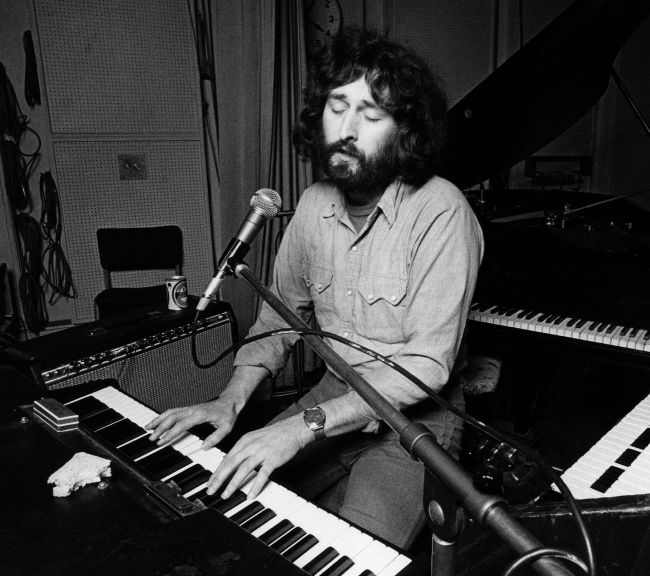
Super’ trouper: keyboard king Rick Davies at work, Olympic Studios, Barnes, 1974.
Fin Costello/Redferns/Getty
Supertramp founder and co-frontman Rick Davies left us on September 6.
IN 1969 Rick Davies was spotted performing with a group called The Joint in a Munich club by a young Dutch millionaire. Stanley ‘Sam’ Miesegaes was convinced the singer-keyboardist had far more talent than his bandmates and offered to bankroll a new band. After an ad in Melody Maker brought in another songwriter, Roger Hodgson, Supertramp was born. However, their first two albums, prog-heavy and overblown, flopped badly and Miesegaes pulled out, having splurged some £80,000. Davies and Hodgson decided to have one last stab with three new recruits. If only Davies’ benefactor had waited.
Assembled in a remote farm in Dorset, the album Crime Of The Century hit the charts across the UK, Europe and the US in 1974. The same year Hodgson’s Dreamer was a hit single in the UK, while the US preferred the Davies-written B-side, Bloody Well Right, which reached Number 35 there. Thus began a dazzling run of success for the band, peaking with the 20-million-selling Breakfast In America in 1979. While Hodgson and Davies mostly wrote contrasting songs independently, at the heart of the group sound was Davies’ jabbing electric piano, which, with falsetto vocal harmonies, offered a hook-laden, radio-friendly house style. Rock’s primal weapon, the electric guitar, was demoted. Princess Diana declared Supertramp her favourite band, though when she took her husband to see them, the now-King Charles dozed off.
Davies, born to a working-class family in Swindon, on July 22, 1944, was attracted to drums as a boy after hearing a Gene Krupa record, but later found he won more applause playing a Hohner electric piano. His college band featured one Gilbert O’Sullivan on drums (O’Sullivan would be best man at Davies’ wedding in 1977).
In 1978, Davies told Melody Maker, “this group… does reach a lot of crisis points, but it never quite blows up.” Yet, worn out by touring and disagreements with the older, prog and R&B-leaning Davies about musical direction, Hodgson left Supertramp in 1983. The band eventually expired in the late 1980s and Davies, by now relocated to homes in LA and New York state spent several years “enjoying the spoils” before the urge to record resurfaced. Attempts to work with Hodgson foundered, but two Supertramp studio albums almost entirely written by Davies were released in 1997 and 2002. However, it was the touring, not the records, that won hearts as fans flocked to hear The Logical Song and Goodbye Stranger once again in Europe and the US.
A farewell tour in 2015 had to be scrapped after Davies was diagnosed with multiple myeloma, a blood cancer. There were occasional club performances as Ricky And The Rockets, a reminder of his R&B roots with some Supertramp hits, before his death at his home in Long Island aged 81.
John Bungey
Upright Man
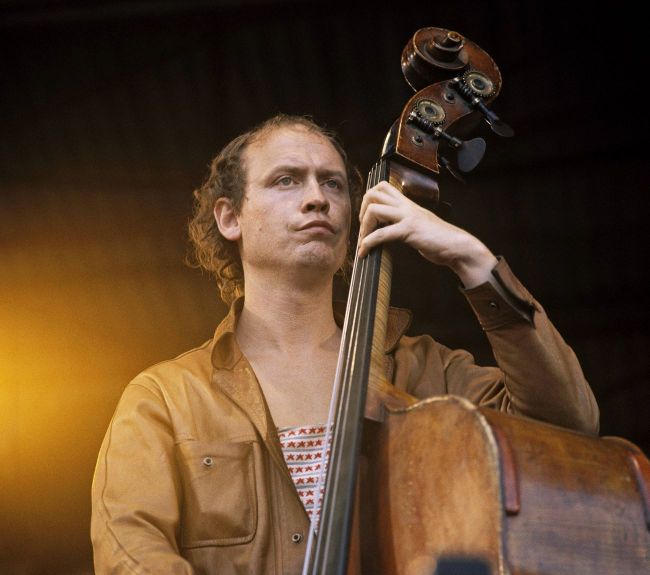
Double exposure: Danny Thompson with Victoria, on-stage with Pentangle at 1970’s Isle Of Wight festival.
David Redfern/Redferns/Getty
Storied double bassist supreme Danny Thompson left us on September 23.
“YOU GOT lost in your music,” Danny Thompson told MOJO three years ago, discussing his troubled childhood and early years as a teenage bassist. “It just takes you away from everything.”
A youthful blues obsessive who was to enjoy a near-seven-decade career as one of the world’s best-known double bass players, Thompson’s head-spinning CV – ranging from Alexis Korner to Roy Orbison, Pentangle to John Martyn, along with sessions for such disparate artists as Donovan, Cliff Richard, Tim Buckley, Nick Drake, Rod Stewart, T. Rex, Kate Bush, David Sylvian, Talk Talk, Richard Thompson, Toumani Diabaté and Paul Weller – spotlit his musically-questing nature.