REAL GONE
Sunshine Man
Roy Ayers, vibes trailblazer who cross-pollinated jazz with soul and funk, left us on March 4.
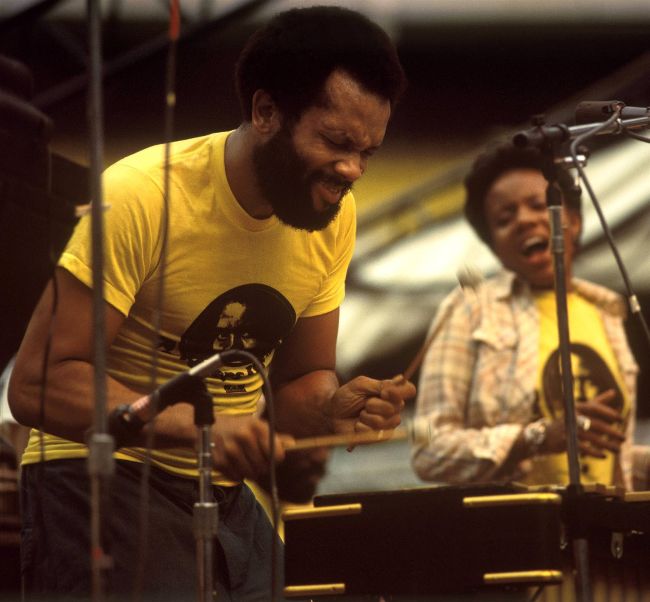
Groove is in the heart: Roy Ayers brings the good vibes to Cincinnati, 1976.
David Redfern/Getty
THE LEGACY
The album:Everybody Loves The Sunshine (Polydor, 1976) The sound: With its shimmering vibraphone solos, quirky vocal chants, and wispy synth tendrils wafting over syncopated dance grooves and lubricious slow jams, Everybody Loves The Sunshine epitomised Ayers’ jazz-funk aesthetic. Besides the luminous, much-sampled title track, Ayers served up cosmic meditations (The Third Eye), Latin-rock nuggets (It Ain’t Your Sign It’s Your Mind), and zany Parliamentesque funk (Lonesome Cowboy). Agroovology masterclass.
WHEN FIVE-YEAR-OLD Roy Ayers was given a pair of mallets by the jazz vibraphone virtuoso Lionel Hampton at a concert, his mother saw it as a sign that he was destined to become a musician. “She said he laid some spiritual vibes on me and saw my name up in lights,” Ayers told me in 2008, revealing he didn’t touch a vibraphone until he was 17. Even so, he progressed astonishingly quickly; at 23, he released his debut LP, West Coast Vibes, the first significant step in a recording career that would yield 41 albums in 57 years.
Ayers was born in Los Angeles on September 10, 1940. Encouraged by his mother, an amateur musician whom he described as “inspirational”, he took piano lessons from age 5. He also sang in his local church choir and later, as a teenager, cut a single called The Vows Of Love with a doo wop group, The Poets.
“Roy Ayers reframed the vibraphone in a contemporary context.”
But when his mother gave him a vibraphone in 1957, it felt like destiny was calling. After taking lessons from his neighbour, rising vibraphone star Bobby Hutcherson, he earned renown in the early ’60s playing with soul jazz pianist Jack Wilson’s group. In 1966, he joined the band of flautist Herbie Mann, who helped Ayers get a solo deal at Atlantic Records.