HOW TO BUY
Don Cherry
The legendary jazz trumpeter, arranger and collaborator.
By Andrew Male.
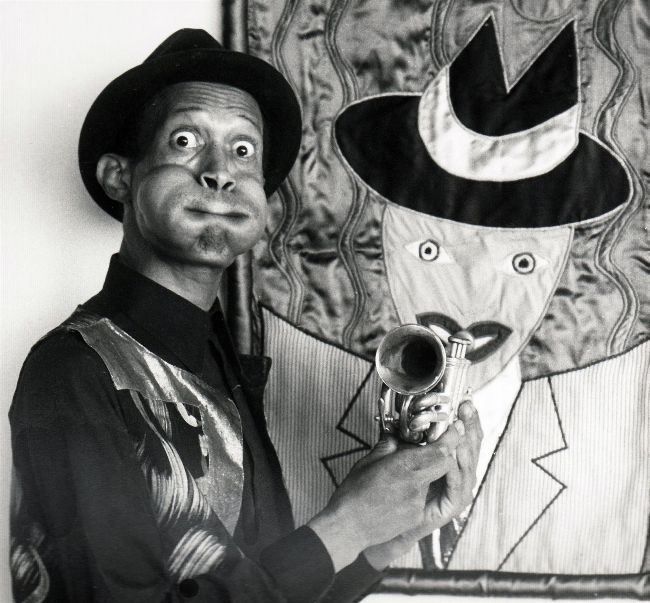
Blow your own trumpet: Don Cherry does his best Dizzy impersonation, New York, 1983.
OF ALL THE MOJO How To Buys, this has been one of the hardest to compile. That’s partly to do with Don Cherry’s genius as a trumpeter, arranger and collaborator, meaning that the 10 records opposite could have easily been swapped out for 10 others and there would be no dip in brilliance, invention or quality. But it’s also down to his mercurial nature and his collaborative, communal approach to music making. Thirty-seven years after first hearing his sharp, slippery sound, the heart of his uniqueness remains elusive.
Growing up in 1940s Los Angeles, with a pianist mother of Choctaw descent and an African-American trumpeter father who ran the Plantation Jazz Club on Central Avenue, Cherry was surrounded by music but received his major education from neighbourhood friend, Jayne Richardson, AKA future Black Arts Movement poet Jayne Cortez, who hipped the young student to all the best jazz, blues and R&B sides, cultivating an absorptive musical taste that would remain throughout his life.
In 1954, Jayne married Ornette Coleman, and Cherry became what jazz writer Val Wilmer called “Coleman’s musical and personal alter ego”, the sharp, peppery jabs of his cheap pocket trumpet adding an air of spontaneous cool to the jump-blues blaze and blast of Coleman’s Atlantic-era quartets. After leaving Coleman and following a short period recording as a bandleader for Blue Note in the mid-’60s, Cherry embarked upon a nomadic journey across Europe, India, Morocco and South Africa, studying in India with dhrupad master Pandit Pran Nath, assimilating different musical styles and developing a new collaborative, elusive, exploratory sound. After settling in Sweden with his wife, the designer, poet and textile artist Moki Cherry, the two transformed an old schoolhouse into a site of radical communal living and music making. Don’s new ‘Organic Music’ was a collage of world influences: Indian ragas, Brazilian ceremonial hymns and African rhythms, significantly influenced by Moki’s colourful appliqué artworks. From 1976 to 1987, Cherry reunited with former Coleman alumni Dewey Redman, Charlie Haden and Ed Blackwell in the band Old And New Dreams, incorporated his world fusion ideas into a series of recordings for Manfred Eicher’s ECM label and played with such unlikely collaborators as Lou Reed, Bongwater and Rip, Rig & Panic.