LIFE AFTER DEATH
With the tragedy that consumed his family in July 2015, everything changed for NICK CAVE, inhislifeandhiswork. Inthisextract from a stunningly candid series of interviews with writer SEÁN O’HAGAN published this month, he recalls the “spirits and demons” that blew through Ghosteen, the sturm und drang of the Mick/Blixa Bad Seeds, and glimpses a future where grief looms in more manageable proportions. “Sometimes I try to bring to mind what Arthur has given to me, not just when he was alive but in his absence, too.”
Portrait by MEGAN CULLEN.
Megan Cullen
THE IDEA OF DOING A BOOK OF CONVERSATIONS WITH NICK CAVE CAME TO me after we had spoken on the phone several times in early 2020 just prior to, and during, the early weeks of the Covid pandemic. Like everyone else, we suddenly found ourselves with time on our hands and a chance, amid the anxiety and uncertainty, to reflect. Though I had known Nick for a long time – since 1989, when I helped host an unruly NME summit between him, Mark E Smith and Shane MacGowan – and we had kept in touch intermit-tently, the pandemic phone chats were of a different order: longer, deeper and stranger.
Around the same time, I’d also been re-reading some of the classic long-form interviews with writers that had been published in the Paris Review under its former editor, George Plimpton. It suddenly struck me that, given the richness and mystery of our conversations, Nick would be a good subject for that kind of in-depth enquiry. He agreed.
We jumped in headfirst not really knowing where the journey would lead. The end result is Faith, Hope And Carnage, a book that emerged from around 40 hours of recorded conversations conducted over the ensuing year. In the one that follows, Nick talks about the heightened nature of the music he and Warren Ellis created on his album, Ghosteen, his embrace of a radically new approach to songwriting, and, more profoundly, how the loss of his son, A rthur, in 2015, “ultimately became a motivating force” on his life and his work.
He also recalls an emotional meeting with Lou Reed, his friendship with the late Hal Willner, and the unlikely role that Coldplay’s Chris Martin played in the creation of a song on Ghosteen. Cave is not much given to looking back, but there are revealing glimpses of some of the more combative musical relationships he has had with members of the Bad Seeds in the past. More in-triguingly, there is also a suggestion of his future direction in “a world that feels more put back together” than the one he inhabited when he recorded Ghosteen. The book was a leap of faith in many ways. I hope that comes across in the extended fragment that follows.
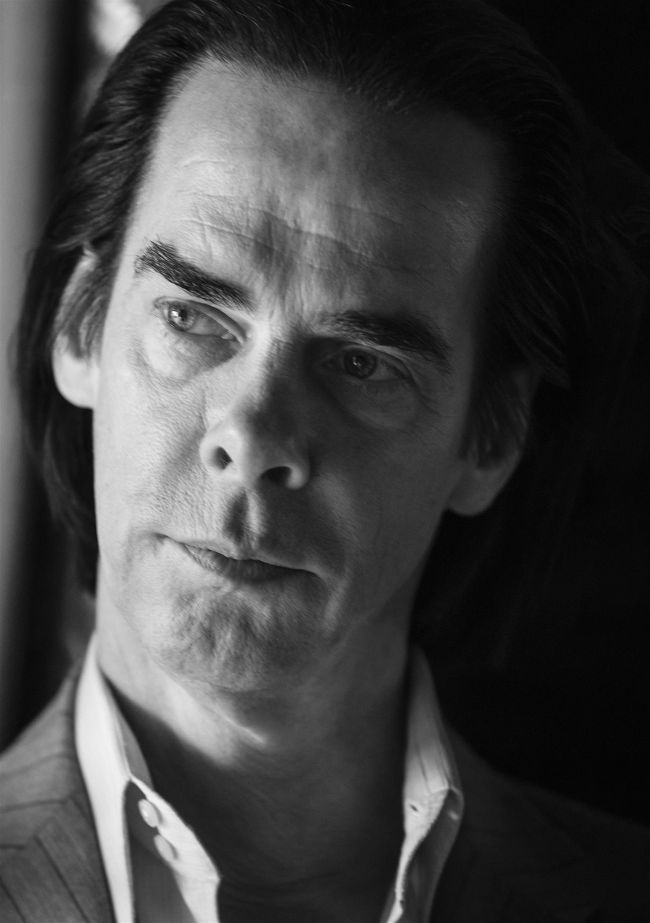
Putting it back together: Nick Cave, 2022.
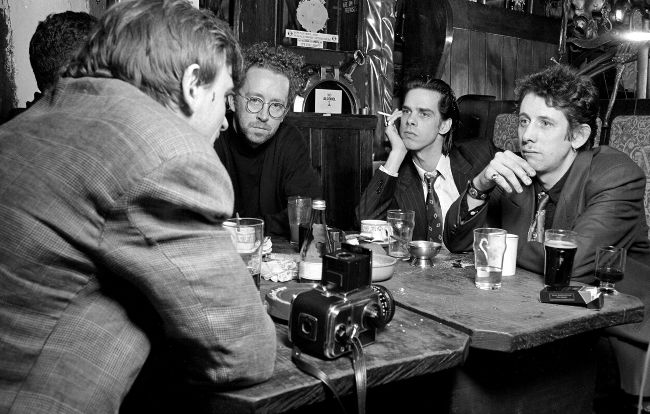
Cave with (from left) Mark E Smith, Seán O’Hagan and Shane MacGowan, Montague Arms, south London, January 12, 1989
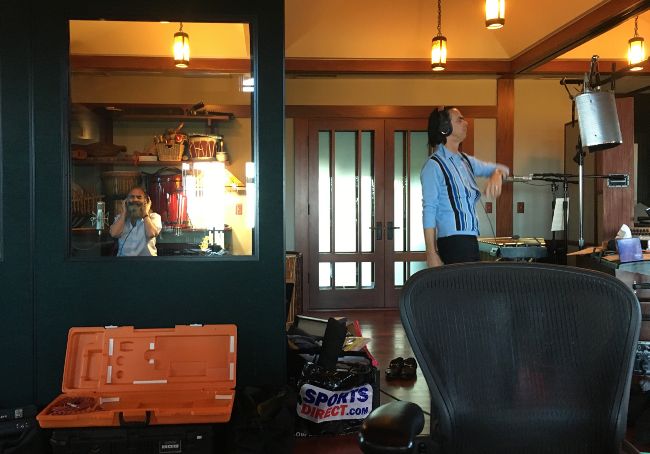
Warren Ellis and Cave recording Ghosteen in Malibu, 2019.
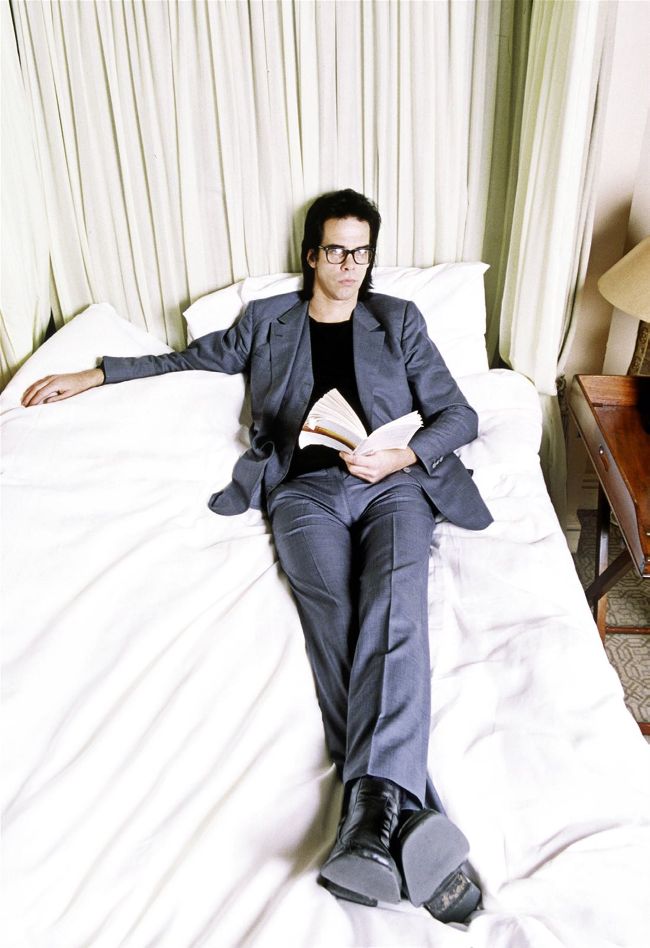
Leaps of faith: Cave alone with a good book circa The Boatman’s Call
Bleddyn Butcher, Camera Press, Lance Powell
Seán O’Hagan
I was listening to Ghosteen last night and it struck me that the heightened aura of the songs is very much transmitted not just through the words and the music, but your voice, which seems altered somehow.
I know what you mean. When I listen to those songs, I almost feel that someone else, or something else, is performing them, and stranger still, that I am their intended audience. It’s weirdly disconcerting.
As if you are singing to yourself? Or for yourself?
Yes, maybe. I think there was something about the way Warren [Ellis] and I recorded Ghosteen – the unconscious interior quality of it all – that brought certain forces to bear on it. There is a prayer-like aspect to the record.
And I think our prayers make demands on us; they require something of us, they turn our atten-tion inward. To me, Ghosteen feels unique in that way, like a lot of religious music.