FILTER ALBUMS
Earth Mutha
Avant-pop matriarch digs deep into the earth; examines her roots; hatches “biological techno” opus.By Tom Doyle. Illustration by Chris Nurse.
Björk
★★★★
Fossora
ONE LITTLE INDIAN. CD/DL/LP
IN ROBERT Macfarlane’s 2019 book Underland, a study-cum-travelogue exploring the subterranean, he writes of the discovery of an “underground social network” in forests, involving the web-like strands or “hyphae” sent out by fungi that appear to provide a support system linking trees. If one tree is ailing, the others supply nourishment.
It’s a head-spinning idea but one that Björk appears to reference nine tracks into her tenth album, in Fungal City, as she sings, over a skipping electronic kick drum and flitting woodwind shapes, of “Trunks bursting through the moss from our love,” and wonders, “Should I soften the blow of life on him?” The fact that she uses “him”, blurring the distinction between trees and humans, is telling and underlines the main theme of Fossora (a feminine derivation of “fossor”, the Latin name for diggers or burrowing animals): plants and people are not so different, and thrive thanks to a delicate ecology. It’s a notion extended here into family trees growing through the decades.
Björk has, of course, been here or thereabouts before. On 2011’s Biophilia, she wrote about life on Earth in the context of the universe. Now, she has returned to terra firma, and gone sub terra, for a record of what she has termed “biological techno”. In her intervening albums, she has weathered emotional storms – describing the pain of her breakup with artist Matthew Barney in Vulnicura (2015); creating the brighter colours of a world filled with flutes and birdsong in Utopia (2017). In comparison, Fossora was created during an extended period at home in Iceland that she’s said made her feel “grounded”.
Still, it’s a record made during a time of transition for Björk: empty-nested after her 19-year-old daughter Ísadóra left home (making an appearance here as the co-singer/-writer of floaty, transcendent album closer Her Mother’s House); in mourning for the death of her mother, Hildur Rúna Hauksdóttir. Two consecutive songs are dedicated to the latter. The first, Sorrowful Soil (described in the lyric book as “a eulogy”), seems to treat grief as life-giving organic material and ends with the touching message to her mum: “You did well.” The second, the elaborate seven-minute-long orchestration of Ancestress (“an epitaph”) – featuring her 36-year-old son Sindri on vocals – is equally thankful in tone but reveals the rebellious spirit of Hauksdóttir. “The doctors she despised put a pacemaker inside her,” she sings, before her voice turns hushed when detailing the actual moment of her mother’s death. It’s heavy stuff, but reliably gorgeous musically. If each new Björk album brings with it a different sonic palette, on Fossora it’s woodwind mixed with the chest-battering beats of Netherlands-originated ’90s techno sub-genre gabber. Here, it’s a version remoulded in Indonesia by the hands of contemporary Balinese duo Gabber Modus Operandi, who have fittingly recorded gamelan drums half-buried in the ground for their stark beats, further edited by the singer, to provide the thumpingly demented moments in the album where it feels as if the listener has been transported to Glastonbury sometime in the mid ’90s, only to wander into some far-flung Techno Nutter Field.
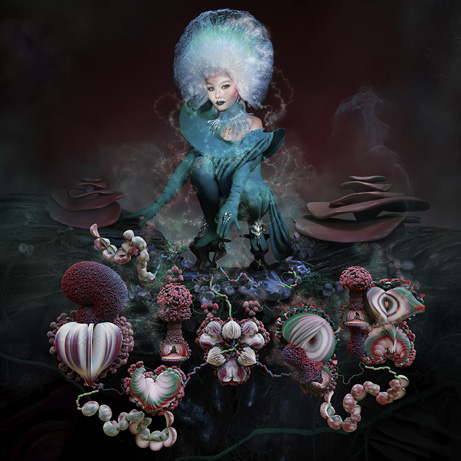
“Fossora may involve a strange ecosystem, but it’s one filled with hope and joy and life, in all its forms, moving forward.”
Hammering electro rhythms have been a central feature of Björk’s solo albums since 1993’s Debut, but elsewhere her music has gradually morphed into a post-rave neoclassicism with song structures so contorted that they’re unrecognisable as normal verse-chorus-bridge forms. The general, and fair, criticism of this development is that she has forfeited melody along the way – there’s no earwormy Hyperballad or Bachelorette here. A demanding listen initially, only really with repeated plays of Fossora does it really begin, as its title suggests, to burrow its way under your skin.
It’s worth remembering that Björk is inherently drawn to the outré – the Associates’ Sulk and Joni Mitchell’s Don Juan’s Reckless Daughter being among her favourite LPs. And so Fossora is not for the faint of heart, and in some ways bears comparisons to the aural challenges of latter-day Scott Walker. The other guests on the LPsimilarly tend towards the left-field: Norwegian jazz electronicist Emilie Nicolas on Allow, Brooklyn’s dream popper Josiah Wise AKA serpentwithfeet on Fungal City.
Bit by bit, though, these songs increasingly reveal their beauty. Over its five-and-a-half minutes, Allow revisits the flute arrangements of Utopia, and in its insistently hypnotic chorus, as Björk and Nicolas’s voices entwine with the words “allow, allow, allow, allow you to grow”, the effect is like watching a plant expanding in a sped-up time-lapse film. At the other end of the spectrum there is Victimhood, a dark place filled with unsettling bass clarinets, like creeping shadows, and the singer finding herself in a crater in the ground and trying to imagine herself from a high vantage point. “Only a bird’s eye view,” she frets, “can help me transgress out of this hole.”
While they’re unlikely to send the listener off whistling their tunes, two songs feature slightly more traditional melodic structures. The push-and-pull delivery of the lines in the trombone-and-timpani-driven Ovule makes little sense at first, but slowly pulls into focus before the melody wends its ways to the none-more-Björk reminiscence: “When I was a girl/I fell in love with a building/I marched towards.” Then there is the lovely Freefall, a song of oblique romance written for string quintet and voice, that sounds like Rezro Seress’s 1933 “Hungarian suicide song” Gloomy Sunday re-imagined for a film score in 1940s Hollywood. As Björk’s overlapping vocals gracefully and timelessly climb up an octave and into the chorus, reminding us that likely she would have been a world-famous singer in any age, the effect is soul-stirring.
By digging in the dirt and placing herself in a world of ovules and mycelia, moles and slugs, Björk has literally earthed herself. In Allow, she has “hair fossilised with salt and crust”. In the title track, past hurt is something that can be clawed to pieces and “dug down to rot”. Fossora may involve a strange ecosystem, but it’s one filled with hope and joy and life, in all its forms, moving forwards.
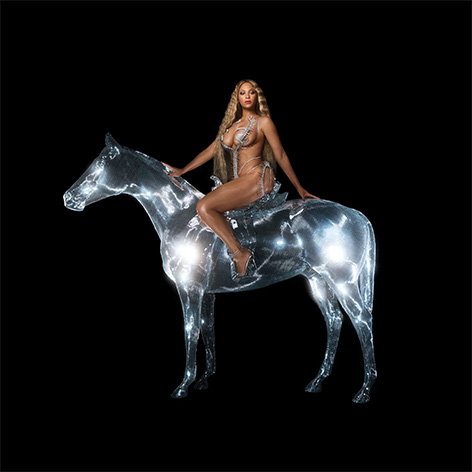
Larry Niehues
Beyoncé
★★★★
Renaissance
COLUMBIA. CD/DL/LP
Thorough, cohesive history of the dancefloor from disco onwards. Fun, too.
The noise around blockbuster albums can obscure their historical nuances: it’s not always easy to see records in a long musical tradition when their creators are so perma-nently the subject of contem-porary headlines. With the seventh solo album by Beyon-cé, however, it’s actually pretty easy. Renaissance presents Beyoncé as a meticulous dancefloor auteur, alive to vintage resonances and futur-ist aesthetics, to how diverse communities have contributed to a cultural continuum. So, Nile Rodgers (on Cuff), Grace Jones (Move) and a hefty sam-ple of I Feel Love (the spec-tacular closing Summer Renaissance) provide explicit connections to the past, even as Renaissance leans hard into contemporary bounce and bass music, while Plastic Off The Sofa gorgeously evokes Perfect Angel-era Minnie Riper-ton. There’s little of the bom-bast that’s sometimes destabi-lised Beyoncé solo albums – just a continuous mix of hedonism, virtuosity, scholar-ship and, as one of her disco antecedents would have it, Good Times.
John Mulvey
Daniel Lanois
★★★
Player, Piano
MODERN RECORDINGS/BMG. CD/DL/LP
Lanois in reflective mood via meditative, treated piano compositions.
Packing subtler charms than 2021’s exuber-ant soul and gospel LP Heavy Sun, Player, Piano nods at Erik Satie, Oscar Peterson and Harold Budd as well as such famed Lanois collaborators as Kate Bush, Brian Eno and Peter Gabriel. Intimate and unguard-ed, wordless and evocative, it was Lanois’ way of navigating recent isolation at his Toronto studio, and a certain wistful-ness and/or melancholy per-vades. With bells and gentle organ motifs occasionally ornamenting pianos damp-ened in loving homage to ’40s and ’50s recordings, “back when piano was soft and beautiful”, the listener is calmed and transported. Keep-ing things succinct and tightly focused, Lanois taps childhood memories of small-town Mexi-co (Puebla), time-specific milieus (Twilight), and dubby flavours of Cuban and Jamai-can street-life (Lighthouse). It’s rewarding terrain for his ambient adventures; a place to retreat into, then emerge from unburdened.
James
McNair
Various
★★★
Luke Schneider Presents Imaginational Anthem Vol. XI: Chrome Universal – A Survey Of Modern Pedal Steel
TOMPKINS SQUARE. CD/DL/LP
Pushing the boundaries of pedal steel playing.
If you’re expecting twangsome vibes and honky tonk good times, look away now. The latest instalment of the long-running Imaginational Anthems series explores plac-es the pedal steel has never gone before outside of its greatest living exponents’ home meanderings. Modern masters of the instrument – BJ Cole, Susan Alcorn, Spencer Cullum, album curator Luke Schneider himself – explore the instrument’s outer reaches, sounding less like Sneaky Pete Kleinow’s Flying Burrito Broth-ers outtakes and more like a lost Brian Eno ambient album, a kind of ‘Music For Sea Life Centres’. The closest thing to a traditional song comes from Dane Maggie Björklund, but by then you’ve been transported to a drifting raft on some hazy azure lagoon in the middle of nowhere, and anything resem-bling traditional form sounds a little misplaced. An album not so much for two-steppin’ as laying back and being washed by soothing, melodic gauze.