REINTRODUCING THE BAND
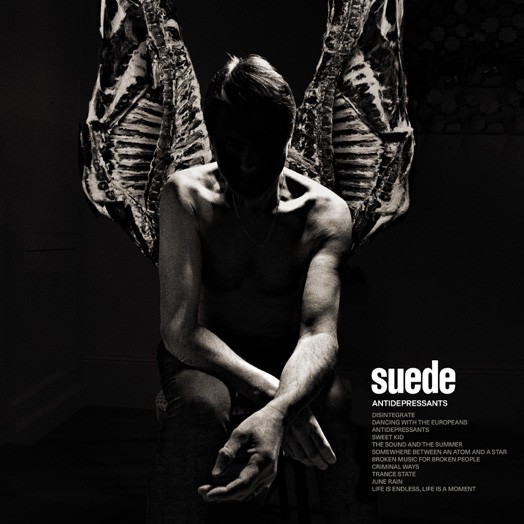
Twice derailed by egomania, hard drugs, and Britpop, SUEDE sashay on-wiser, sturdier and, they assert, more creative than ever. An upcoming new album-Antidepressants-revives formative influences (Magazine, The Cult, Crass), and points vigorously to the future. One in the eye for the pundits, and at least one notorious German sceptic? "Stubbornness is in our DNA," they tell KEITH CAMERON.

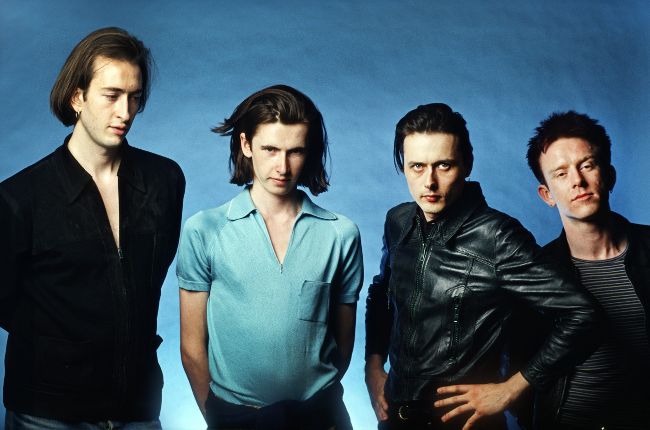
The thin black line: Suede practise mood elevation at John Henry’s Rehearsal Studios, London, June 4, 2025, (from left) Mat Osman, Brett Anderson, Richard Oakes, Simon Gilbert, Neil Codling.
Kevin Westenberg
ON SEPTEMBER 14, 1996, SUEDE’S NEW album Coming Up went straight to Number 1 in the UK chart. During the four years since debut single The Drowners reinvigorated the British pop lexicon, the band had seen their spectacular initial momentum outrun by brasher rivals and undermined by internal dramas, chiefly the disintegrating partnership between mouthy popinjay singer Brett Anderson and quiet virtuoso guitarist Bernard Butler.
When the latter quit towards the end of fraught sessions for 1994’s epically ambitious second album Dog Man Star, and was replaced by a 17-year-old schoolboy fan, Richard Oakes, Suede were written off by critics and disparaged by hardcore devotees. So for Coming Up to reach the highest peak felt like sweet vindication.
Yet touring Germany a month later, it became very clear that some still refused to accept this new model Suede as worthy of the name. In Hamburg, one audience member greeted Butler-era songs by holding up a sign saying “You are great”. Whenever a Coming Up song was played, he flipped the sign over. It now read:
“You are shit”. Things became heated when Brett Anderson attempted to confiscate the sign, and in the ensuing kerfuffle the protestor briefly ended up on-stage.
“I do remember a couple of gigs in Germany where things like that happened,” frowns Neil Codling, who joined Suede via his cousin, drummer Simon Gilbert, during the Coming Up recording sessions, initially as a keyboardist, with his remit soon encompassing guitar, songwriting and production. “There was another one where someone had a sign saying ‘Coming Up is going down’. We were always a Marmite band, even among our own fans! That hasn’t changed, it’s still this ‘I can’t believe the wrong line-up of Suede has been going for 20 or 30 years…’ The fact that we’re still here, despite being outsiders in whatever sphere you care to look at, must be a motivating factor. Stubbornness is in our DNA, I think.”
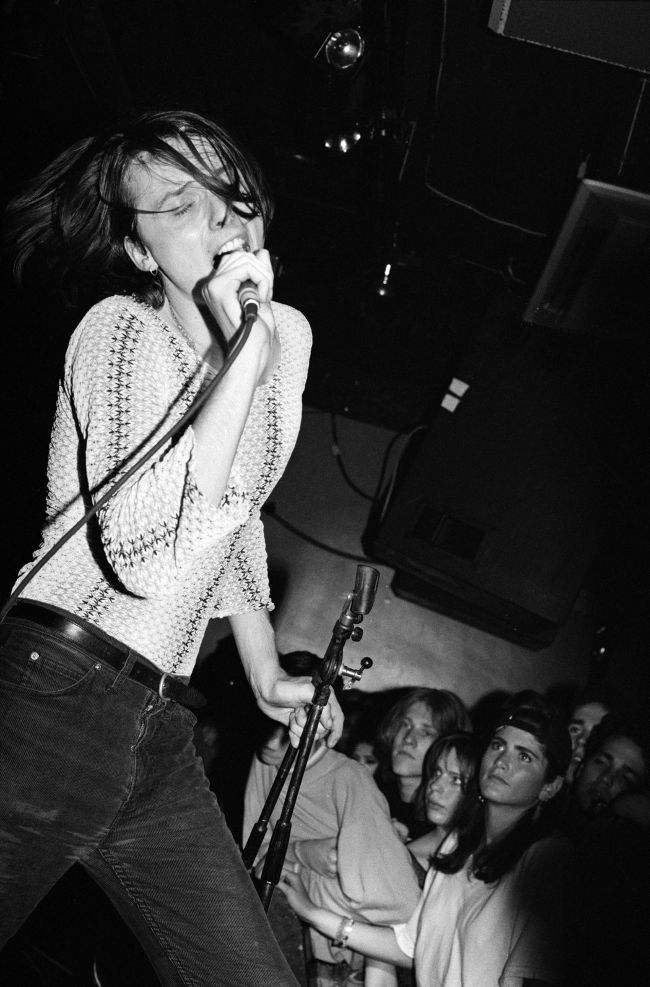
Brett Anderson remembers his German nemesis with something like nonchalance. “If I’m not mistaken,” he says, sipping tea in his west London flat, “he was throwing coins at us as well. He was just really pissed off with us for making Coming Up. He probably wanted Dog Man Star II – lots of people did.” Anderson laughs. “Yeah, quite an exciting gig! But I think the best gigs have a little bit of tension. There’s always got to be confrontation. Look at footage of a Sex Pistols gig, it’s like a fucking war zone. Mutual love-ins don’t work. And an audience changes how you respond to your own songs. I listen back to the early stuff we recorded compared to how we play it live now, and it’s toothless. So Young feels like we’re half asleep. The intent with Suede now is always to remind ourselves we’re at our best when we’re energised, and bring that to the studio. I like a bit of grit in the lens.”
On the rise: (above) the
Coming Up
-era Suede
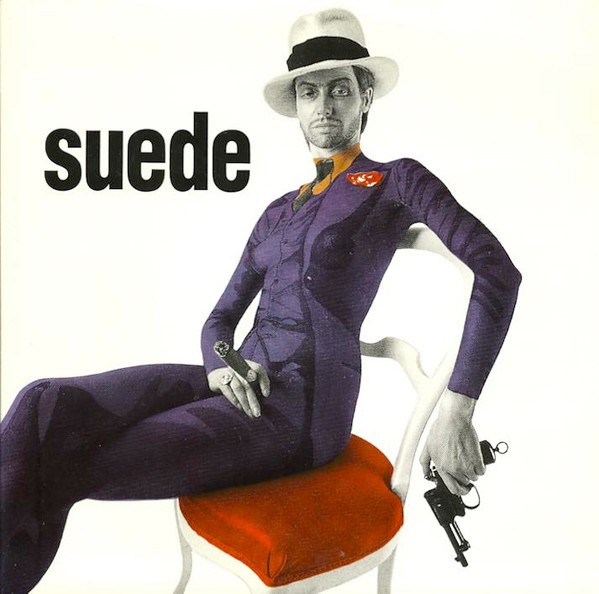
(opposite, from left) Suede circa 1993’s debut album,
(from left) Osman, Bernard Butler, Anderson, Gilbert
(from left) Gilbert, Oakes, Anderson, Osman, Codling, August 10, 1996;
Photography by KEVIN WESTENBERG.
Gie Knaeps/Getty Images , Andy Willsher/Redferns/Getty Images, James Boardman/Alamy
GRIT HAS COME TO DEFINE SUEDE. SEPTEMBER sees the release of Antidepressants, their tenth album and the fifth since 2010’s reunion, a remarkable creative streak when re-formed groups of their age typically regard making new music as an obligation to boost profile and tour revenues. Yet beneath the Byronic languor of their early public image, there was always a steely edge to the band. It took substantial quantities of grit to tough it out through the dog days of Britpop, the cultural moment that Suede arguably ignited but with which they never felt comfortable. Even after his band graced 19 music magazine front covers prior to releasing its first album, Anderson still felt like he was on the outside of everything: a Crimplene Camus, the latest manifestation of a fatalist romantic persona that coalesced in Haywards Heath, the Sussex commuter town marooned between London and Brighton, where Brett Anderson met future Suede bassist Mat Osman at sixth form college and started a Smiths-smitten bedroom band called Geoff.
Their alliance tightened at the University of London, where these two gauche products of penurious lower-middle-class England met moneyed, confident Justine Frischmann – “one of the two great loves of my life,” Anderson wrote in his 2018 memoir Coal Black Mornings – with whom they began the band that became Suede in 1989, recruiting Bernard Butler via an NME advert: “Guitarist wanted for inexperienced but important band. Influences – Smiths, Lloyd Cole, Bowie, Pet Shop Boys. No musos, no beginners.”