Dancing On A Highwire
Formed in 1975, Alan Parsons Project transformed the titular man from Abbey Road engineer into a household name, both at home and away, over the space of a few years. As The Complete Albums Collection is remastered and reissued – now with The Sicilian Defence, available on vinyl for the first time – Parsons himself takes Prog through the history behind each of the 11 LPs included in the Woolfson family-approved package. And we discover if there are any more secrets hidden in the APP vault.
Words: Dave Ling Portait: Richard E Aaron/Redferns/Getty Images

Behind the scenes: Alan Parsons takes control at Media Sound Studios in New York, 1979.
Though the encounter happened back in 1974, Alan Parsons still recalls meeting his partner in The Alan Parsons Project, Eric Woolfson, in the cafeteria at Abbey Road Studios.
“Eric had so many music business contacts,” Parsons relates enthusiastically. “I’d already had a couple of hits with John Miles and Pilot and fairly early on I asked him, ‘How do I get money into my bank account?’ When he said that he should become my manager I replied,
‘I’m an engineer and record producer, why would I need one of those?’ But Eric did a splendid job of putting money in my bank account.”
You can say that again. As The Alan Parsons Project, Parsons and Woolfson sold 50 million albums before going their separate ways in 1990 (Woolfson died back in 2009, aged 64).
“It’s interesting to think that many people will be buying some of the more recent albums on vinyl for the first time – from Eye In The Sky onwards everything was CD.”
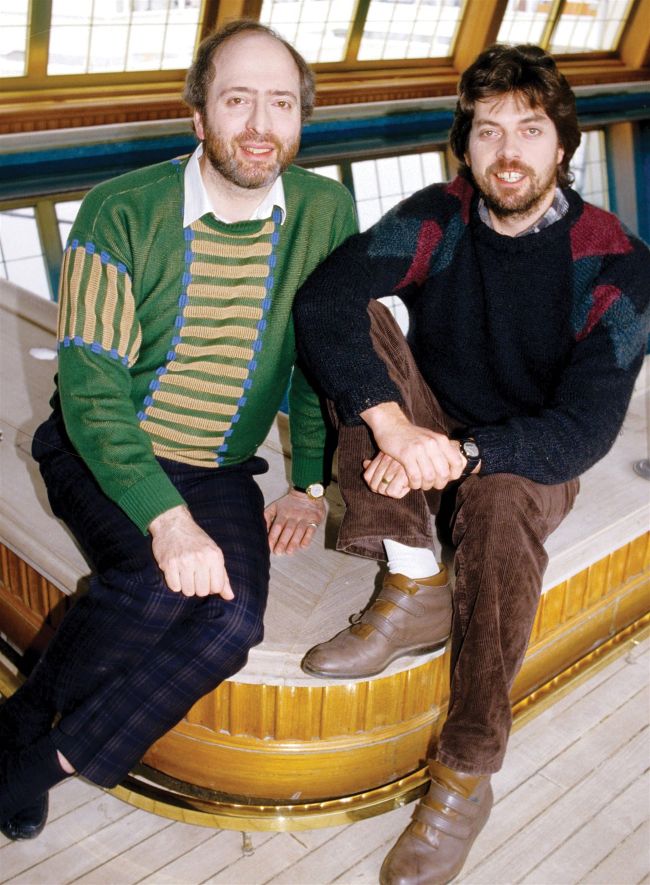
Eric Woolfson and Alan Parsons: a powerful partnership.
DALLE/AVALON
Now a vinyl box set entitled The Complete Albums Collection unites each of the Project’s records. It was firstreleased in CD-only form in 2014, although the audio content of this new edition was remastered at half-speed by Miles Showell and Parsons at Abbey Road.
“Using all of the current available technology was vital, you’ll really notice the difference,” states Parsons, before he grimaces: “The hardest thing was using the right tapes because over a 40-year period those things go walkabout. For Ammonia Avenue there were four or five choices, but we found the one that sounded best.”