Remembering the all-line timetable
To mark the 50th anniversary of British Rail’s first all-line timetable, Dr Joseph Brennan looks back over the history of such guides to services from the earliest Bradshaws to today’s digital offerings.
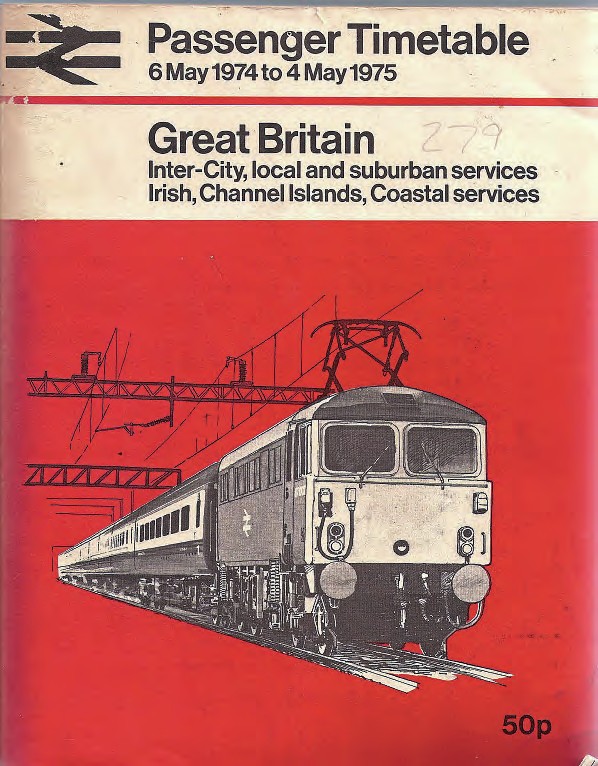
The inaugural issue of British Rail’s Passenger Timetable covering May 6, 1974 to May 4, 1975. It marked the first time since the demise of Bradshaw’s Guide in 1961 that passengers had a national all-line
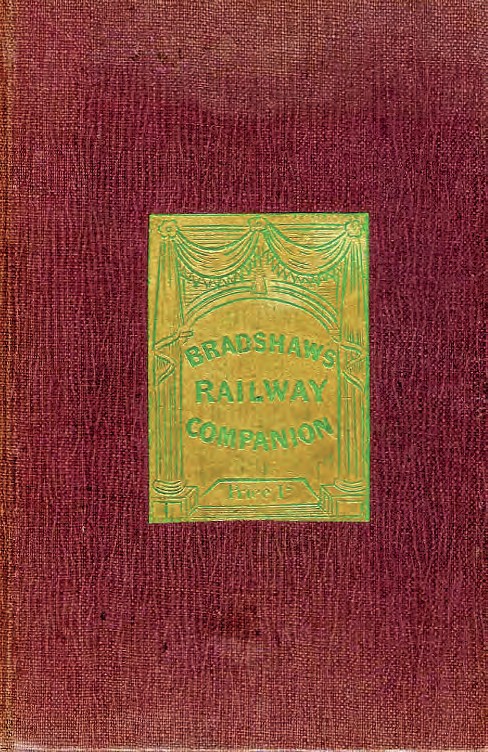
The cover of an 1839 issue of Bradshaw’s Railway Companion, priced at 1s.
WIKIMEDIA COMMONS
“FOR the first time since the demise of the Bradshaw’s Guide, Britain once again has a single comprehensive rail timetable – only this time it is the official book issued by the operator,” reported The Railway Magazine 50 years ago. Known internally at British Rail as the “All-System Timetable,” the book in question was the 1974 Passenger Timetable, which marked the first all-line (all in one) national timetable since the Bradshaw’s Guide series ceased publishing in 1961.
Though timetables had been published before and after Bradshaw, on a regional or individual company basis, BR’s all-in-one marked something long overdue and ushered in a renaissance of a love for an all-line timetable.
This looks at the shifting fortunes of all-line volumes, from the very early days of Bradshaw to the usurping omnipresence of the digital age. But given the focus is on printed all-liners, it is a ‘rise and fall’ tale tempered by the changing needs of passengers, given that very few today would look for (or indeed would be willing timetable. LUKE DAVID O’ROURKE (CC BY-ND 2.0) to print out for themselves) a timetable in physical form. Today, we generally punch our journey details into apps. But that is not to say the charm of the physical all-in-one has been lost, nor our desire to remember and catalogue the allliners of the past. For all-liners spoke volumes about much more than just train times.
Origins of a legend
George Bradshaw is known as the originator of the all-line companion, offering travellers their first all-in-one railway timetable from the launch issue dated October 19, 1839.
Strictly speaking, Bradshaw’s early timetables were in two parts, covering northern and southern companies. Bradshaw’s ‘No. 1’ was titled Bradshaw’s Railway Time Tables, and Assistant to Railway Travelling, with Illustrative Maps & Plans and was devoted to services between Liverpool, Manchester, York, Leeds, Selby, Sheffield, Preston and Bolton. These timetables were soon combined as Bradshaw’s Railway Companion.
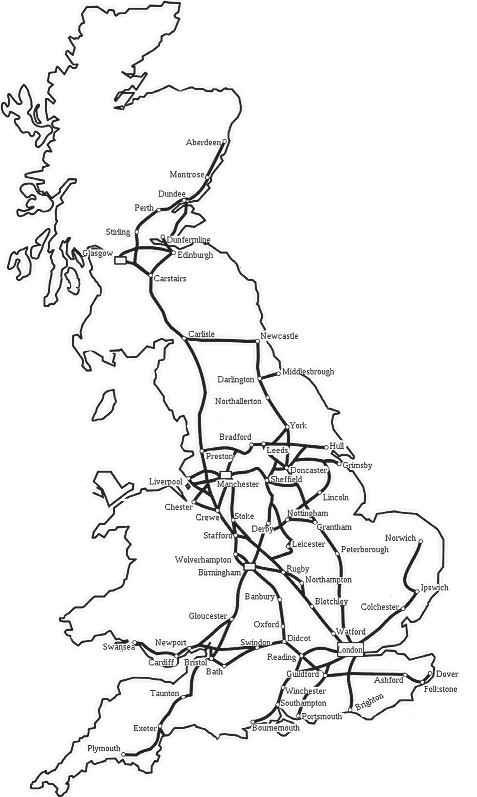
Britain’s railway network grew rapidly, as shown by this map of lines in the early 1850s, which was just over two decades on from the opening of the world’s first inter-city line, the Liverpool & Manchester Railway.
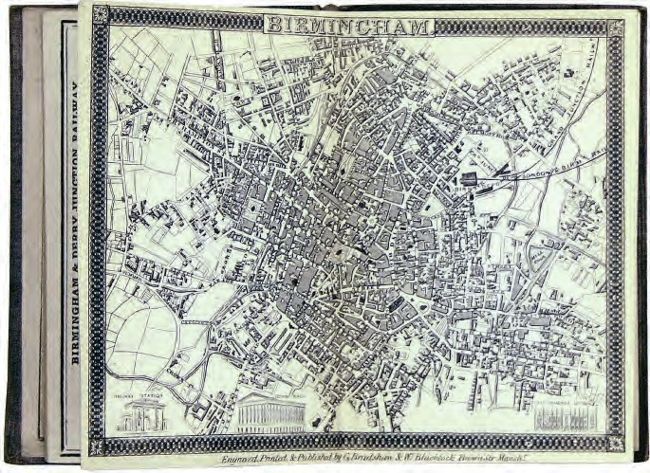
Bradshaw was an enthusiastic and gifted engraver, whose maps – such as this one of Birmingham from an 1840 issue of Bradshaw’s Railway Companion – gave his guides every chance of becoming a household name.
WIKIMEDIA COMMONS
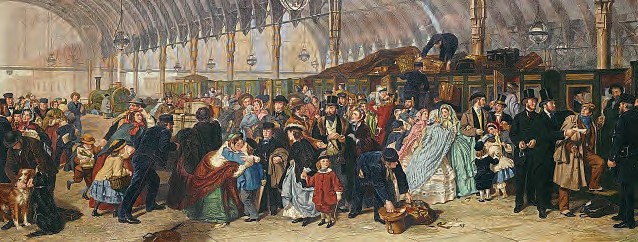
Railway travel in mid-Victorian times could be chaotic, as this 1862 depiction of Paddington station by artist William Powell Frith conveys, meaning access to reliable timetable information was essential.
“All-liners spoke volumes about much more than just train times”
It is difficult to overstate the significance of Bradshaw’s contribution, which rose to prominence at a time when the railways were a myriad of private company enterprise, and then evolved into a household name that did much to stay relevant over a 120-year period from 1839 to 1961.It is difficult to overstate the significance of Bradshaw’s contribution, which rose to prominence at a time when the railways were a myriad of private company enterprise, and then evolved into a household name that did much to stay relevant over a 120-year period from 1839 to 1961.
“As the railway network spread with hundreds of new railway lines, many operated by different companies, Bradshaw’s quickly became a household name and an essential item for any regular long-distance traveller,” says Peter Thorpe, Library & Archive Assistant at the National Railway Museum. “They were initially reasonably pocketsized, but by the end of the 19th century had expanded to nearly 1000 pages, so you required a rather large pocket!”“As the railway network spread with hundreds of new railway lines, many operated by different companies, Bradshaw’s quickly became a household name and an essential item for any regular long-distance traveller,” says Peter Thorpe, Library & Archive Assistant at the National Railway Museum. “They were initially reasonably pocketsized, but by the end of the 19th century had expanded to nearly 1000 pages, so you required a rather large pocket!”