PRACTICE AND PERFORMANCE
Yellow Submarines
John Heaton FCILT visits Merseyside to sample the new Class 777 EMUs on third-rail and battery power, whilst looking back to the outgoing Class 507 and earlier Class 502 sets.
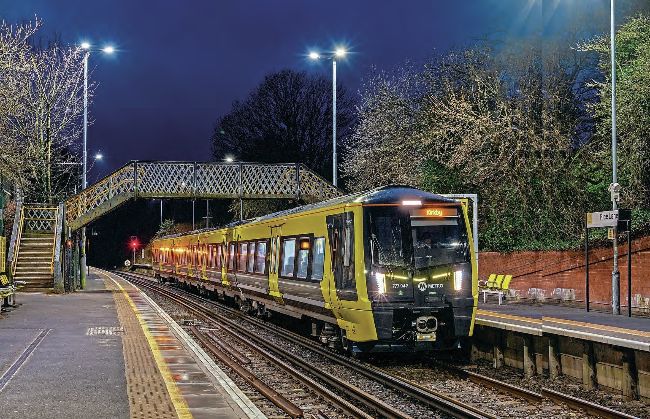
Stadler four-car set No. 777049 calls at Rice Lane on March 22, 2023 with 2K49, the 18.50 Liverpool Central to Kirkby. The station was known as Preston Road until May 1984.
TOM MCATEE.
IF you want to cross the Mersey from Birkenhead to Liverpool, you can catch one of the famous ferries or drive through the fume-filled road tunnel, but the Merseyrail electric trains will probably be the quickest. If the scenery does not match the river trip, it will be at least warm and dry.
Some years had passed since I had last taken a Merseyrail trip from Chester to Southport, partly owing to the wait for squadron service of the new Stadler four-car Class 777 units. Their introduction had been beset by a plethora of setbacks, and not a few excuses. There had been technical problems, labour disputes and training issues. Reports surfaced of bitter
exchanges between Liverpool City Region and the Swiss manufacturers questioning the slow introduction of the new trains into traffic – and who could blame the custodians of the public purse, who had paid outright for the sets rather than relying on convoluted leasing arrangements through go-betweens?
For my part, this would be my third generation of units in the area. Family visits to Southport in the 1950s and 1960s had featured the ex-LMS, Derby-built units that became Class 502. I was less familiar with the slightly smaller Wirral Class 503 units, but the Liverpool-Southport sets were the first EMUs I had encountered. My impression was that they were smooth, spacious, fast and clean – but I still preferred the Southport to Preston steam-hauled trains and the East Lancashire excursions to Southport Flower Show that punctuated the Crossens electric service I viewed from a footbridge in Churchtown.
All was swept away in September 1964 by a genuine Beeching cut that had a silver lining, at least for my cousin, who has reclaimed part of the trackbed as a duck pond in an extended garden. Sacrilege.
Not so mellow yellow
The Class 507s and 508s that replaced the ‘502s’ were prosaic British Rail York utilitarian affairs with little in the way of sophistication, but having the advantage of rugged simplicity. Whether they were an improvement in anything more than maintenance costs is debatable.
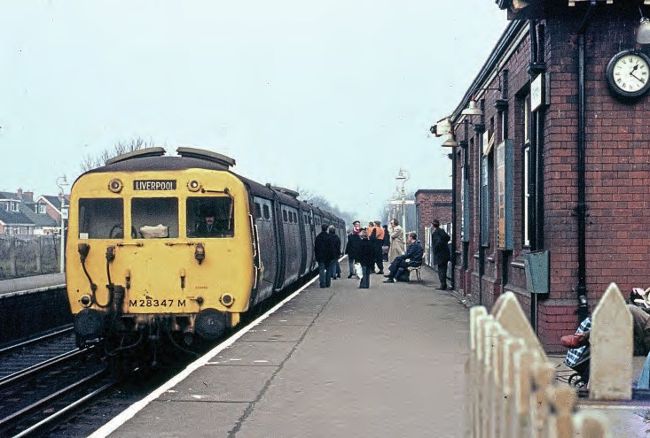
The LMS-built Class 502 EMUs were in service on the electrified lines north of Liverpool from 1939-1980. A fivecar set (2+3 cars) led by Driving Motor Brake Second No. M28347M is pictured at Formby on February 20, 1976, with a service from Southport to Liverpool Exchange.
HAWTHORNE COLLECTION
“Pragmatic and cash-strapped British Rail has been replaced by a safety authority with no direct responsibility for income and expenditure”
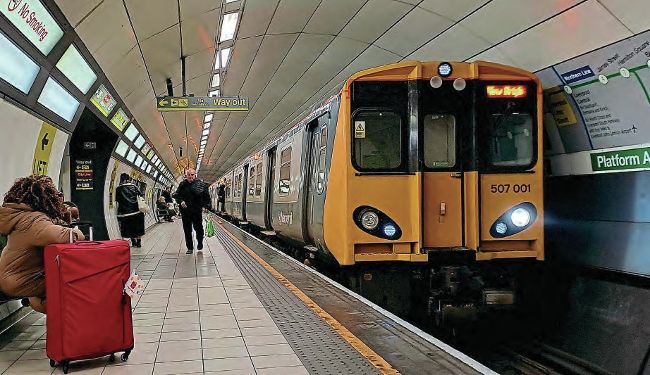
The ‘502s’ (and the Wirral Line’s Class 503s) were replaced from 1978 by new Class 507s (supplemented later with similar Class 508s), which have operated though to the arrival of the ‘777s’. No. 507001 was repainted in a retro livery of BR blue and grey in December 2023, and is pictured here at Lime Street on January 3 with a ‘circular’ service from and to New Brighton.
PHIL WALLIS
So what would my reaction be to the Class 777 imports? Setting aside what might otherwise appear as a default reaction against most new train designs, these new sets were impressive. It helped that No. 777012, forming the 12.45 from Chester to Chester (via the Wirral Line’s Liverpool Lime Street loop and back), was spotlessly clean both outside and inside. It was a bold decision of the Merseyside transport authority to use bright yellow for publicity, information and both internal and external train decor. The success of doing so depends on cleanliness. The chosen shade seems to be officially termed as a number, but free-range hen egg yolk would be more evocative. Or, with Merseyside’s Beatles connection, how about submarine yellow?