FROM SCREEN TO STRINGS
Rita Fernandes presents a curated list of string works by ten composers best known for their screen work, as well as interviews with composers and players
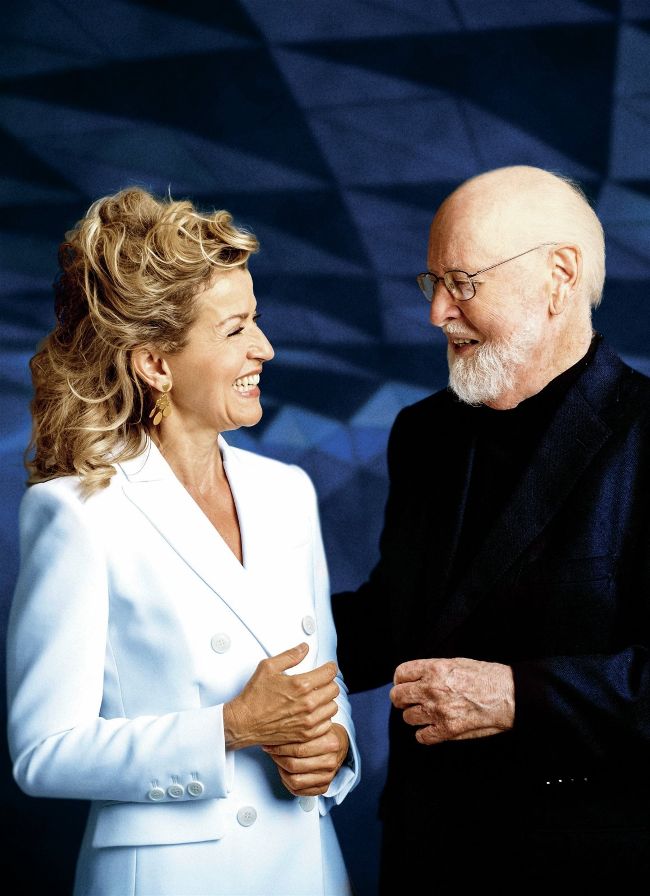
Violinist Anne-Sophie Mutter and composer John Williams
DARIO ACOSTA/DG
‘I don’t consider myself a “screen composer”, although my output happens to be mostly in screen music,’ Dario Marianelli tells me. ‘Concert music, ballet scores, music for film and for theatre: anything is an excuse for trying something new.’ The Academy Award-winning Marianelli is widely known for his film scores including Pride and Prejudice (2005) and Atonement (2007). He has also written a substantial number of concert pieces, something that is true of many composers we have come to associate mainly with screen work. And whether due to commercial considerations, time constraints or even the very labelling of ‘screen music’ or ‘concert music’ itself, many of these concert works remain hidden from the classical world.
The following overview of concert works for strings written by composers best known for their on-screen work – from those who formed part of the Golden Age of Hollywood to one of the most recent Oscar winners – offers a fascinating parallel history to that of screen composing as well as simply celebrating first-rate composers and music. Both because this list focuses on works I personally enjoy and because it is by no means exhaustive, I hope it acts as a springboard for discovering many more of these composers’ complete catalogues, regardless of genre.
ERICH WOLFGANG KORNGOLD (1897–1957)
As original scores came to the screens in the mid-1930s, dashing heroes and damsels in distress came to life with the sounds of soaring strings and heroic horn solos – in other words, to the music by Erich Wolfgang Korngold and other European composers fleeing persecution in their homeland. Originally from Austria, Korngold was an undeniable prodigy and penned his first string composition (a piano trio) at the age of just twelve. Of his string works, the 1945 Violin Concerto is, of course, the most famous, but several chamber works also reflect his multidimensional career.
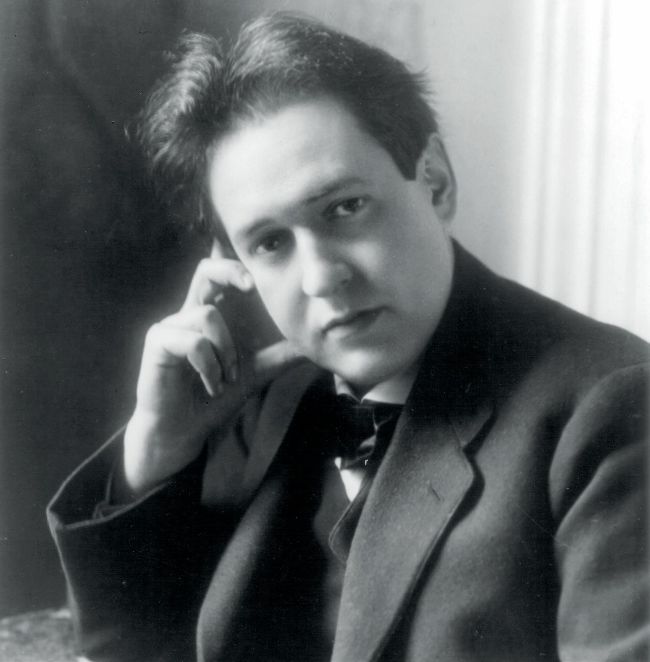
Erich Wolfgang Korngold in Hamburg in 1920
Korngold was not even 20 when he completed his String Sextet op.10, and yet it skilfully balances Brahmsian late Romanticism with the music of Korngold’s time. (Arnold Schoenberg’s Verklärte Nacht immediately springs to mind.) The textures are varied, the melodies fluid, and a distinct voice comes through. Delve into his String Quartet no.2 op.26 of 1933 – the year before his move to California – and you find a more conventional work. Amid lush harmonies and hints of a Mahlerian Ländler, you also hear what would become his ‘Hollywood sound’. One wonders whether Schoenbergian atonality might have become the sound of the silver screen had he moved to the US only a few years earlier.
His 1945 String Quartet no.3 op.34 is true to Korngold’s turn-of-the-century Austrian musical upbringing – but that era was now over. There is a late-Romantic and atonal flavour, and at times even a hint of neo-Classicism. It makes you question how exactly the past decade – filled with film scoring and an intentional concert music hiatus – had influenced his concert writing. The anachronism makes for an even more idiosyncratic musical language, reflective of a truly unparalleled career.